MAIBAHE GRAIN JOURNAL
Millet Porridge Toppings: 9 Easy Ideas for a Better Bowl
Millet porridge toppings work best when you choose one main flavor, one contrasting texture, and one small finishing ingredient. Apple and cinnamon make a simple sweet bowl; mushrooms and greens make a savory one. Start with millet prepared according to its own package instructions, taste the plain base, and add the toppings gradually. This guide gives you nine combinations plus a practical way to adapt them to your pantry.
The ideas below are serving suggestions, rather than a tested cooking specification for every millet variety or packaged congee mixture. They do not establish the ingredients of a MAIBAHE product. Check the current label, including the base grain, any added ingredients, and preparation directions, before choosing your bowl.
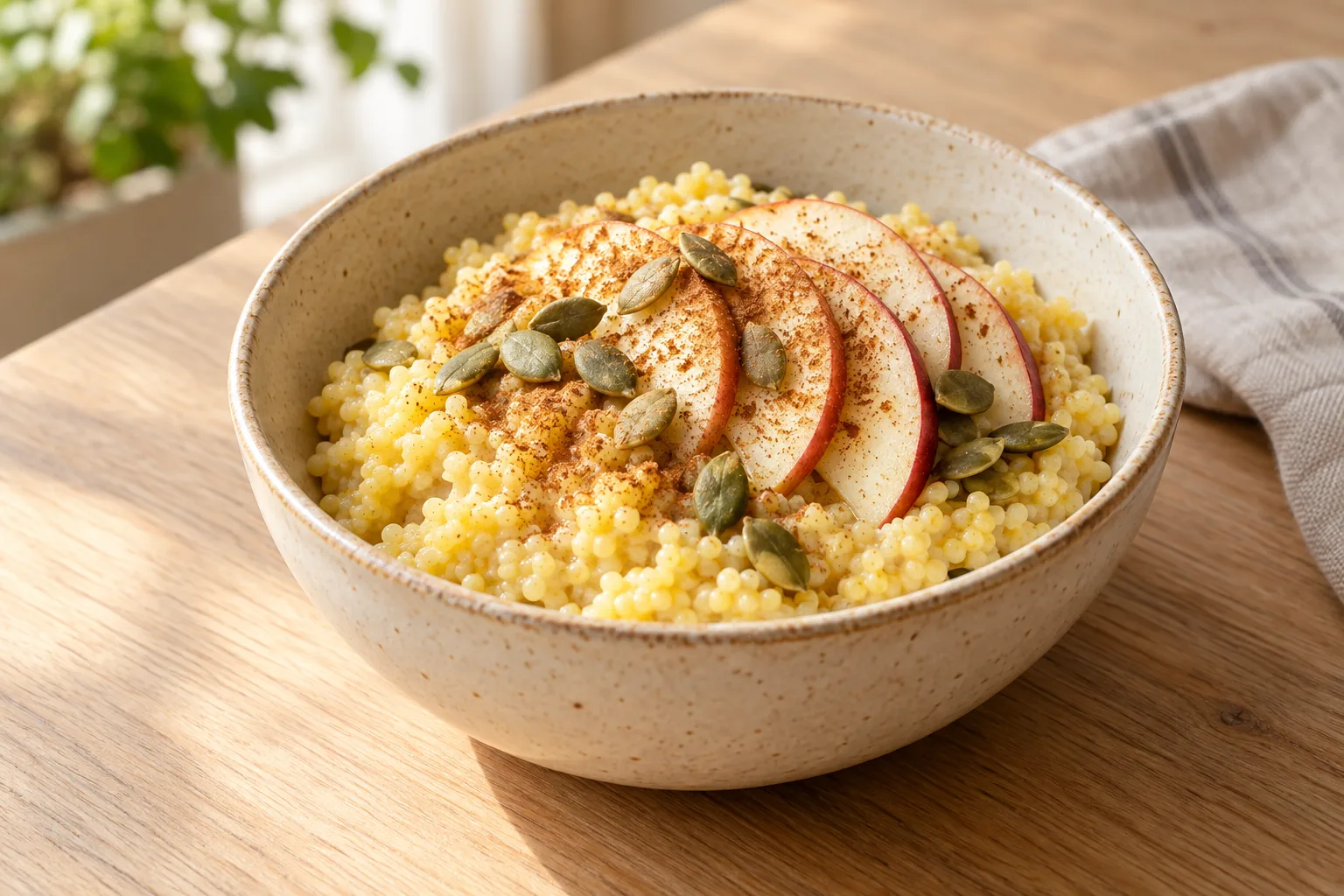
A quick guide to millet porridge toppings
Choose by the experience you want, rather than by the longest ingredient list. If you want a soft, gentle bowl, pair cooked fruit with a small creamy addition. If you prefer contrast, keep fresh fruit or toasted seeds separate until serving. For a savory bowl, select cooked vegetables and a finishing herb before deciding whether it needs an additional seasoning.
| What you want | Main topping | Contrasting detail | Finish to consider |
|---|---|---|---|
| Warm and gently sweet | Soft apple | Pumpkin seeds | Cinnamon |
| Fresh and colorful | Berries | Plain yogurt | Lemon zest |
| Rich and smooth | Banana | Chopped nuts, if suitable | A little cocoa |
| Soft and autumnal | Cooked pumpkin | Toasted seeds | Ginger |
| Savory and earthy | Cooked mushrooms | Spring onion | A small seasoning adjustment |
| Bright and savory | Cooked greens | Sesame seeds, if suitable | A squeeze of lemon |
This table is a starting point for flavor decisions. It does not compare calories, nutritional suitability or medical benefits. Any ingredient may be inappropriate for a particular diner, so check the labels of the toppings as well as the grain. Keeping optional additions in separate bowls also makes it easier to serve people with different preferences.
Match millet porridge toppings to the actual base
A topping that works with a plain millet bowl may overwhelm a flavored mixture. Before adding anything, identify whether you have plain hulled grain, millet flour, a prepared cereal, or a multigrain congee kit. These formats are not interchangeable. Their instructions and final texture can differ, and a mixture may already contain an ingredient you were planning to add.
The Whole Grains Council’s cooking guide treats grain directions as general guidance and explains that timing changes with grain variety, age and cookware. For your own breakfast, use the package directions first. The topping ideas here begin once the base is cooked to the texture you want; they are not a replacement water ratio or cooking time.
For a closer look at plain grain formats and source records, read our Chinese millet origin and cooking guide. If you are preparing a mixture instead, our multigrain porridge preparation guide helps you think through the ingredients before deciding on a method. Make that choice before shopping for extras.
Texture matters too. A loose base allows small pieces of fruit or vegetables to move through each spoonful. A thicker base holds a topping arrangement on the surface. Neither is automatically better. Choose a consistency that feels comfortable to eat, then select millet porridge toppings that complement it. A bowl should still taste of its base instead of becoming a container for unrelated garnishes.
9 easy millet porridge toppings ideas
1. Apple, cinnamon and pumpkin seeds
Apple is a useful starting point because you can change its texture without changing the whole combination. Thin fresh pieces create a crisp contrast; separately cooked apple makes a softer topping. Pick the version you prefer and add it to an already prepared bowl. A little cinnamon provides aroma, while pumpkin seeds give the combination a distinct finish.
Keep the three elements visible when you begin. Take one spoonful with apple and another with a seed, then decide whether the balance suits you. If the apple is tart, taste before adding a sweetener. If it is already sweet, cinnamon may be enough. These millet porridge toppings are especially easy to vary because the fruit, spice and seeds each do a different job.
For a neater bowl, arrange a few slices on one side rather than covering the entire surface. Add the seeds immediately before eating so they keep the contrast you wanted. You can also omit the seeds and retain the apple-and-cinnamon idea; a successful combination does not require every optional ingredient.
2. Berries, plain yogurt and lemon zest
Berries bring a different kind of contrast: their juicy pieces interrupt a creamy base. Plain yogurt can sit beside them rather than disappearing into the whole bowl. A small amount of lemon zest adds aroma without requiring a large splash of liquid. Choose a yogurt or suitable alternative whose ingredient list works for the person eating it.
Consider how the berries behave when handled. Firm berries can remain distinct on the surface, while very ripe fruit may become a soft swirl as you stir. Both can work, but the result looks and feels different. Start with a modest amount, then increase it if you want fruit to be the main flavor.
These millet porridge toppings are easiest to judge before you mix everything together. Put the yogurt on one side and fruit on the other, taste both with the grain, and then choose whether to combine them. If the bowl tastes sharper than you expected, change the balance of fruit and yogurt instead of immediately adding several extra ingredients.
3. Banana, cocoa and an optional nut topping
Banana can make a bowl feel smooth and cohesive. Slice it for distinct pieces, or mash a small amount separately if you prefer a softer addition. Cocoa brings a deeper flavor that is different from a plain fruit bowl. Begin with a light amount so it remains an accent, then taste before increasing it.
If nuts suit the diner, a few chopped pieces add another texture. If they do not, leave them out rather than treating them as necessary to the idea. The combination can remain banana and cocoa, with the millet texture doing the contrasting work. Read the cocoa product’s label too: an unsweetened powder and a sweetened drink mixture are different ingredients.
With rich millet porridge toppings, restraint is useful. A large amount of mashed fruit, a generous spoon of spread and a heavy cocoa coating can hide the grain altogether. Build the bowl one addition at a time, and keep the combination that you actually enjoy rather than the one that contains the most components.
4. Cooked pumpkin, ginger and toasted seeds
Cooked pumpkin offers a soft topping that can stay in small pieces or become a gentle swirl. Prepare it separately using a method appropriate to the ingredient, then add it to the cooked millet. Ginger supplies a different aroma from cinnamon. If you also want crunch, choose a small seed topping that fits your preferences.
Decide whether you are making a sweet or savory bowl before finishing it. Pumpkin can work in either direction, but the seasoning choice determines the character of the dish. A sweet version may need only the pumpkin and spice. A savory version can use an herb or a small seasoning adjustment instead.
This is one of the most flexible millet porridge toppings ideas because you can keep the pumpkin recognizable or blend it into the surface. Try a small portion first. When the topping is soft and the base is creamy, a little contrast may be welcome; when your grain already has a firmer texture, additional crunch may be unnecessary.
5. Pear, vanilla and a crisp finishing ingredient
Pear gives you another fruit route without repeating the apple bowl exactly. Use pieces of a size that fit comfortably on a spoon. A small vanilla addition can connect the fruit with a plain base, while an optional crisp finishing ingredient creates contrast. Check the vanilla product’s directions and ingredients rather than assuming every bottle is the same.
The firmness of the pear changes the result. A firm pear makes a more distinct topping; a ripe, soft pear settles into the porridge more readily. Choose according to the texture you want and prepare the fruit appropriately. If your main goal is a soft bowl, do not add a hard topping simply because it appears in a photograph.
For these millet porridge toppings, keep the flavor simple enough that you can taste the pear. Adding cinnamon, cocoa, syrup and several spreads at once makes it difficult to learn which combination you prefer. One fruit, one aroma and one optional texture is a useful first attempt.
6. Cooked mushrooms, spring onion and a savory finish
Millet porridge toppings do not have to be sweet. Cooked mushrooms and sliced spring onion move the bowl toward a savory meal. Prepare the mushrooms separately, then place them over the finished grain. This lets you control their texture without changing the cooking directions for the millet itself.
Taste the mushrooms and base together before adding a sauce. A prepared sauce may already contribute salt or a strong flavor, so check its label and add it gradually. If the base is a flavored congee mixture, it may need less finishing seasoning than plain millet. A simple savory bowl should feel intentional, not like a sweet breakfast with an unrelated sauce added.
Keep the spring onion as a small finishing detail rather than a thick layer. If you prefer a softer garnish, choose an appropriately prepared alternative. You can also use cooked mushrooms alone and let their shape and texture stand out against the creamy grain.
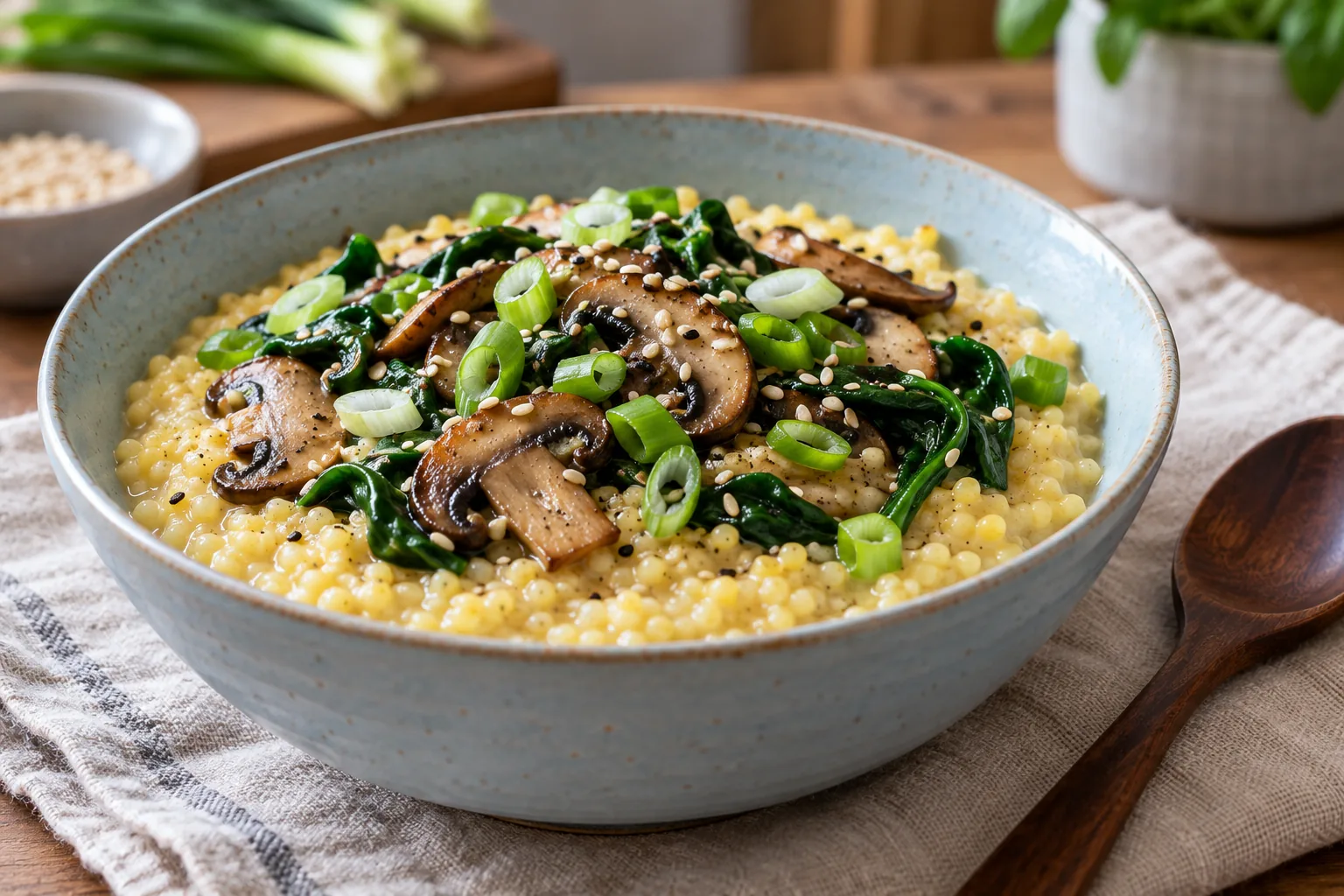
7. Cooked greens, lemon and an optional sesame finish
Cooked greens give a savory bowl a clear main topping. Cut or arrange them so they can be eaten easily with the porridge, rather than leaving long pieces that are awkward on a spoon. A small lemon finish can brighten the flavor, while sesame is an optional texture and aroma choice when suitable.
Pay attention to moisture. Greens carrying a large amount of liquid can change the surface of a thick bowl. Prepare them separately and manage that liquid before serving. Then decide whether you want the greens arranged on top or gently folded through one part of the base.
When choosing savory millet porridge toppings, there is no need to use every vegetable in the refrigerator. One well-prepared green ingredient, a small finishing addition and the grain may be enough. If you add mushrooms too, use smaller amounts of each so the bowl retains a clear balance.
8. Roasted vegetables and a fresh herb
Separately cooked vegetables offer an easy route from breakfast porridge to a savory bowl for another meal. Choose vegetables that you like together and prepare them using an appropriate cooking method. Small pieces are usually easier to combine with a spoonful of grain than a large wedge sitting across the bowl.
A fresh herb can provide the final detail. Add a little at first, taste, and decide whether the bowl needs more. The aim is to connect the vegetables and millet, rather than give every ingredient an equally strong voice. A mixed vegetable topping works best when the pieces have a compatible texture.
These millet porridge toppings are also useful for experimenting with color and shape. You might prefer a neat group of vegetable pieces on one side, or a looser arrangement throughout the bowl. Both are serving choices. Neither establishes a traditional recipe or a tested product preparation method.
9. Fruit, a small honey drizzle and a simple crunch
If you enjoy honey, treat it as a finishing accent rather than the starting point for the whole bowl. Add your chosen fruit first, taste it with the grain, and then decide whether a small drizzle is welcome. An optional crunchy addition can make the contrast more noticeable, but it is not essential.
Read the honey label before buying and avoid inferring floral source or origin from the color of a serving illustration. Our Chinese linden honey buying guide explains the questions to ask about source records, product format and processing information. The purpose here is flavor, not a claim that a topping provides a health benefit.
Sweet millet porridge toppings can become repetitive if every bowl relies on the same heavy drizzle. Try the fruit without honey first, then compare a small finished portion. That comparison helps you make a deliberate choice while keeping the grain and fruit recognizable.
Use millet porridge toppings to create a clear contrast
Think of a bowl in three layers: the prepared base, the main topping, and the finishing detail. The base sets the overall texture. The main topping supplies most of the additional flavor. The finish adds a small contrast, such as aroma, crispness or freshness. When each layer has a purpose, you usually need fewer ingredients.
For a creamy base, choose whether you want to continue that softness or interrupt it. Cooked fruit, pumpkin and yogurt continue the soft theme. Crisp fruit pieces or toasted seeds interrupt it. For a thicker grain bowl, a juicy fruit or a soft vegetable topping may provide enough contrast without another crunchy ingredient.
Keep portions proportional. If you cannot see or taste the millet, reduce the number of additions before changing the base recipe. If the bowl feels too plain, add one distinct detail instead of three similar ones. This method makes millet porridge toppings easier to repeat because you can identify what actually improved the result.
Assemble your millet porridge toppings in five steps
- Check the product. Identify the grain or mixture and read its current preparation and ingredient information.
- Prepare the base. Follow the applicable instructions and choose the finished texture you prefer.
- Choose a direction. Pick sweet or savory, then select one main topping.
- Add one contrast. Use a soft, crisp or fresh detail that has a clear role in the bowl.
- Taste and finish. Make one small flavor adjustment, then serve rather than continuing to add ingredients automatically.
Prepare optional toppings separately when serving more than one person. A shared plain base can support different combinations without requiring everyone to enjoy the same fruit, spice or sauce. Separate bowls also help you see the ingredients clearly. Follow suitable food handling instructions for each ingredient; this guide does not establish storage or reheating limits.
Adjust a bowl that tastes too sweet, wet or crowded
If a bowl tastes too sweet, identify which addition supplied most of that sweetness. Reduce that component next time and keep the fruit or grain balance that you liked. Adding more unrelated toppings rarely makes the original choice clearer. Taste a small portion before changing the entire serving.
If the texture becomes wetter than you intended, look at the topping as well as the base. Juicy fruit, yogurt, sauces and vegetables can all change the final consistency. Add them in smaller amounts, keep them on one side, or choose a firmer version where appropriate. Do not change a product’s cooking directions merely to compensate for an excessive finishing sauce.
If the bowl feels crowded, remove an ingredient. A useful check is whether two toppings are doing the same job. Two crunchy additions may be unnecessary when one gives enough contrast. Several spices can blur a fruit flavor you wanted to highlight. The best millet porridge toppings for your routine are the ones you can describe and repeat easily.
Plan a small pantry for millet porridge toppings
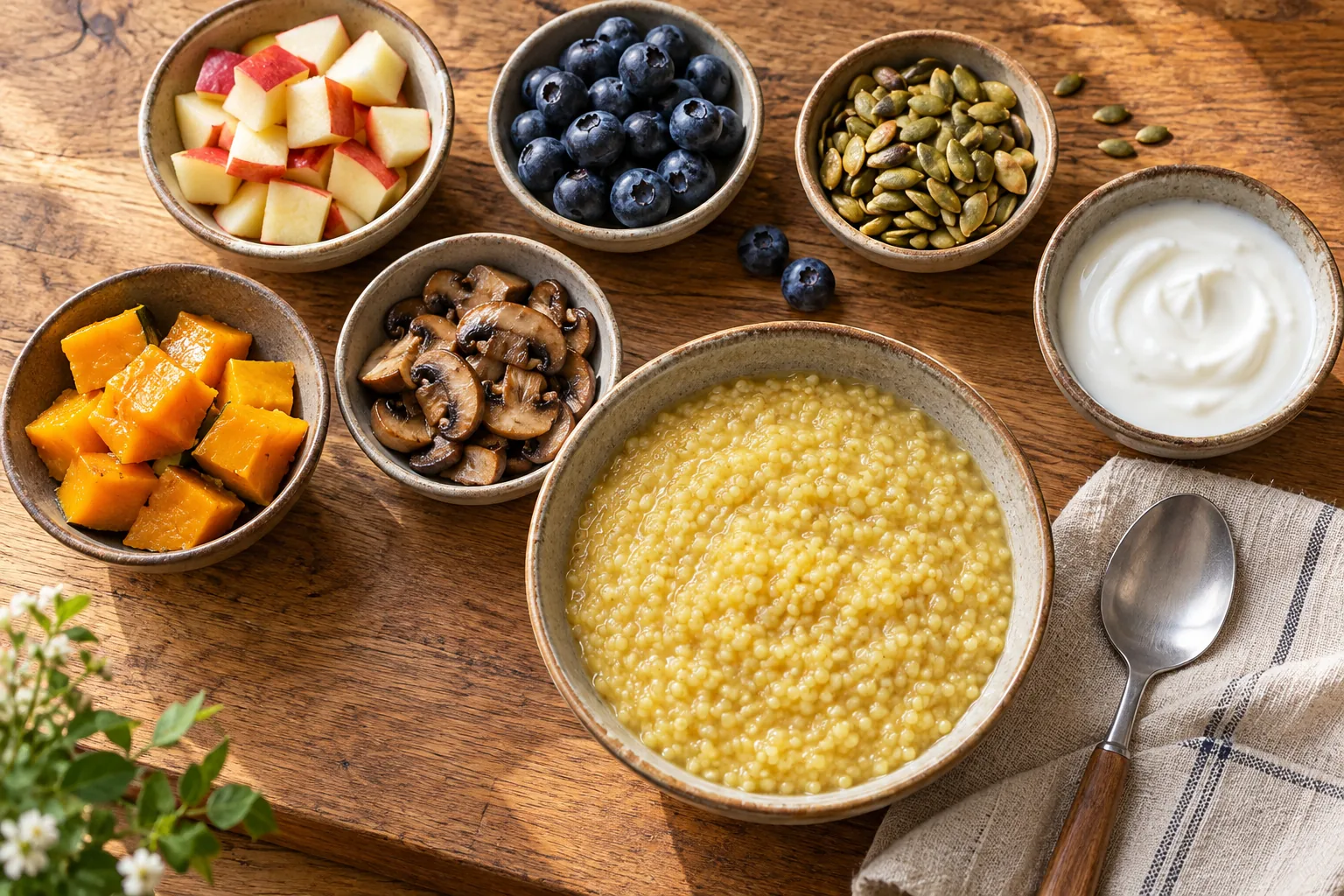
Start with ingredients you already use in other meals. One fruit, one seed or other suitable crisp topping, one spice and one savory vegetable option can create several combinations. A large collection of special ingredients is not required. Choose additions that you like, know how to prepare and can use according to their own labels.
Write down a short preference note after trying a bowl: the base format, the main topping, the finish and the texture you preferred. A note such as “soft apple, light cinnamon, seeds added at serving” is more useful than “breakfast bowl.” It gives you a practical starting point next time without turning breakfast into a complicated project.
For another grain comparison, our oatmeal versus multigrain porridge guide can help you decide which base suits your routine. Keep the decision about the base separate from the decision about toppings: enjoying an apple topping does not mean every grain product underneath it will behave the same way.
Choose a millet or congee product before choosing extras
When buying, ask whether you want plain millet for your own combinations or a prepared congee product with a specific ingredient list. Product names and illustrations alone do not answer that question. Request the current label, preparation directions and any information relevant to your household before placing an order.
The MAIBAHE Golden Grain Congee Kit page is a place to review that product and ask for its current label. It should not be assumed to be plain millet simply because this guide discusses millet porridge toppings. If you are comparing retail choices, keep the ingredient and format questions in your inquiry so you receive an answer about the actual product.
For wholesale readers, the maibahe.uk millet sourcing page distinguishes catalog varieties and invites confirmation of the current product specification. Its catalog references are a starting point for questions, not proof that a particular retail pack or batch matches your needs. Use the maibahe.uk quality and document review page to identify which current documents to request for the selected product.
If you need help selecting a retail grain or congee option, contact MAIBAHE with your product and preparation questions. Explain whether you want a plain base, a mixture, or a specific serving texture. Clear questions make the connection between the product you buy and the millet porridge toppings you plan to use much easier.
Millet porridge toppings: frequently asked questions
What are easy millet porridge toppings for a first bowl?
Start with one fruit and one finishing detail, such as apple with cinnamon or berries with plain yogurt. Taste the cooked base first. Add the main topping, then decide whether the finishing ingredient improves it. You can leave out an optional crunchy ingredient and still have a complete combination.
Can millet porridge toppings be savory?
Yes. Cooked mushrooms, cooked greens or appropriately prepared vegetables can give a plain millet bowl a savory direction. Prepare the topping separately and taste it with the grain before adding a sauce. Check whether a congee mixture already has a flavor that affects the combination.
Should I stir all the toppings into the porridge?
You do not have to. Keeping the main topping and finish separate lets you compare them with the grain before mixing. Stir soft ingredients through part of the bowl if you like a unified texture, and add a crisp detail near serving if that contrast is the point of the topping.
Do these ideas provide a cooking ratio for my millet?
No. The ideas begin with a prepared base. Plain grains, flour, prepared cereal and multigrain kits may need different methods. Follow the instructions for your actual product and use its current label to check the ingredients. A serving photograph cannot establish the required water amount or time.
How can I choose millet porridge toppings without buying many extras?
Use one fruit, one suitable texture ingredient and one spice or herb that already fit your pantry. Change one component at a time. Keeping a short note of a combination you enjoyed helps you repeat it and decide which optional ingredient is worth buying again.
Are the illustrations photographs of MAIBAHE products?
No. The three images are AI-generated serving illustrations made for this guide. They show possible combinations and do not verify a farm, product formulation, package label or measured recipe. Use the current product information when deciding what to buy and how to prepare it.
Sources and your next bowl
This guide separates general grain preparation references from original serving ideas. The Whole Grains Council provides general cooking guidance; the FAO International Year of Millets recipe collection offers examples of millet dishes across different cuisines. Neither source certifies a MAIBAHE product or validates the specific topping combinations above.
Choose one combination, keep the ingredient list short and taste as you assemble. Millet porridge toppings should make your bowl more enjoyable and easier to repeat. Whether you prefer a fruit finish or a savory vegetable bowl, let the actual grain instructions guide the base and let your own flavor preferences guide the final additions.