MAIBAHE GRAIN JOURNAL
Chinese Millet: What the Label and Origin Tell You Before Buying | MAIBAHE
Chinese millet is a small-grain pantry ingredient with a long history in northern China. For a useful purchase, identify the millet variety, check the declared origin and processing, then choose a cooking method that matches the package. An attractive regional story helps explain a grain; the current label and batch information explain the product you are buying.
This guide connects Inner Mongolia’s grain-growing context with seven practical decisions for the kitchen. It also explains how to read MAIBAHE’s historical sourcing information without confusing a catalog description with a current retail offer.

1. Identify the Chinese millet before comparing products
Millet is a group name, so a bag labeled simply “millet” does not tell you everything about its contents. The Food and Agriculture Organization of the United Nations describes several millet species and identifies northern China as the origin of foxtail millet. That background supports a cultural connection; it does not identify the species inside a particular packet. Source: FAO’s introduction to millets.
When comparing Chinese millet, start with the exact product name. Look for the species or variety when provided, whether the grain has been hulled, and whether the ingredient list contains one grain or several. These details help you decide which instructions belong to the product.
Yellow millet and black millet are retail names used in MAIBAHE’s historical catalog. They are not enough, by themselves, to establish a scientific identification. If the label does not answer your question, ask the supplier for the precise grain specification rather than guessing from the color.
That distinction matters when you save a recipe. A cooking note for hulled yellow millet is more useful than a note for “any millet.” Keep the package name alongside your notes so the next purchase is easy to compare. If you change the grain or buy a blend, treat that as a new preparation rather than assuming an identical result.
A simple identification card
- Exact product name and ingredient list.
- Named millet species or variety, if available.
- Whole, hulled, cracked, flaked or mixed presentation.
- Country and region of origin stated for that product.
- Preparation directions attached to the same packet.
2. Understand what an Inner Mongolia origin tells you
Inner Mongolia is relevant to a Chinese millet origin story, but it is a broad region rather than a single farm. Useful provenance becomes more specific as you move from country to region, production location and batch. Ask how the seller connects those levels.
FAO recognizes the Aohan Dryland Farming System in Inner Mongolia as a Globally Important Agricultural Heritage System, designated in 2012. Its description highlights foxtail millet, broomcorn millet and a long-established dryland farming culture. This is evidence about the named heritage system, not certification of every millet product from Inner Mongolia. Source: FAO’s Aohan profile.
MAIBAHE’s yellow and black millet sourcing page records two 450 g retail presentations in its May 2026 catalog and associates them with Inner Mongolia’s sandy-land growing region. Those are historical catalog details. Current packing, batch origin and availability require confirmation for the selected order.
The practical question is therefore specific: “Where was this lot grown, and which document supports that declaration?” The answer is more useful than a broad description of northern China. A seller may also distinguish the growing location from the milling or packing location. Record those separately when both are supplied.
Read regional descriptions as context for the landscape and food tradition. Avoid turning climate, soil or heritage language into a promise about a bag’s flavor, agricultural inputs or certification. Those product claims need their own evidence.
Origin details worth separating
| Detail | What it explains | What to ask |
|---|---|---|
| Country | The broad declared growing origin | Does it refer to growing, processing or packing? |
| Region | The more local sourcing story | Which location applies to the selected grain? |
| Batch reference | The particular goods being supplied | Can the origin declaration be tied to this lot? |
| Historical catalog | A previously documented assortment | Which details are still current? |
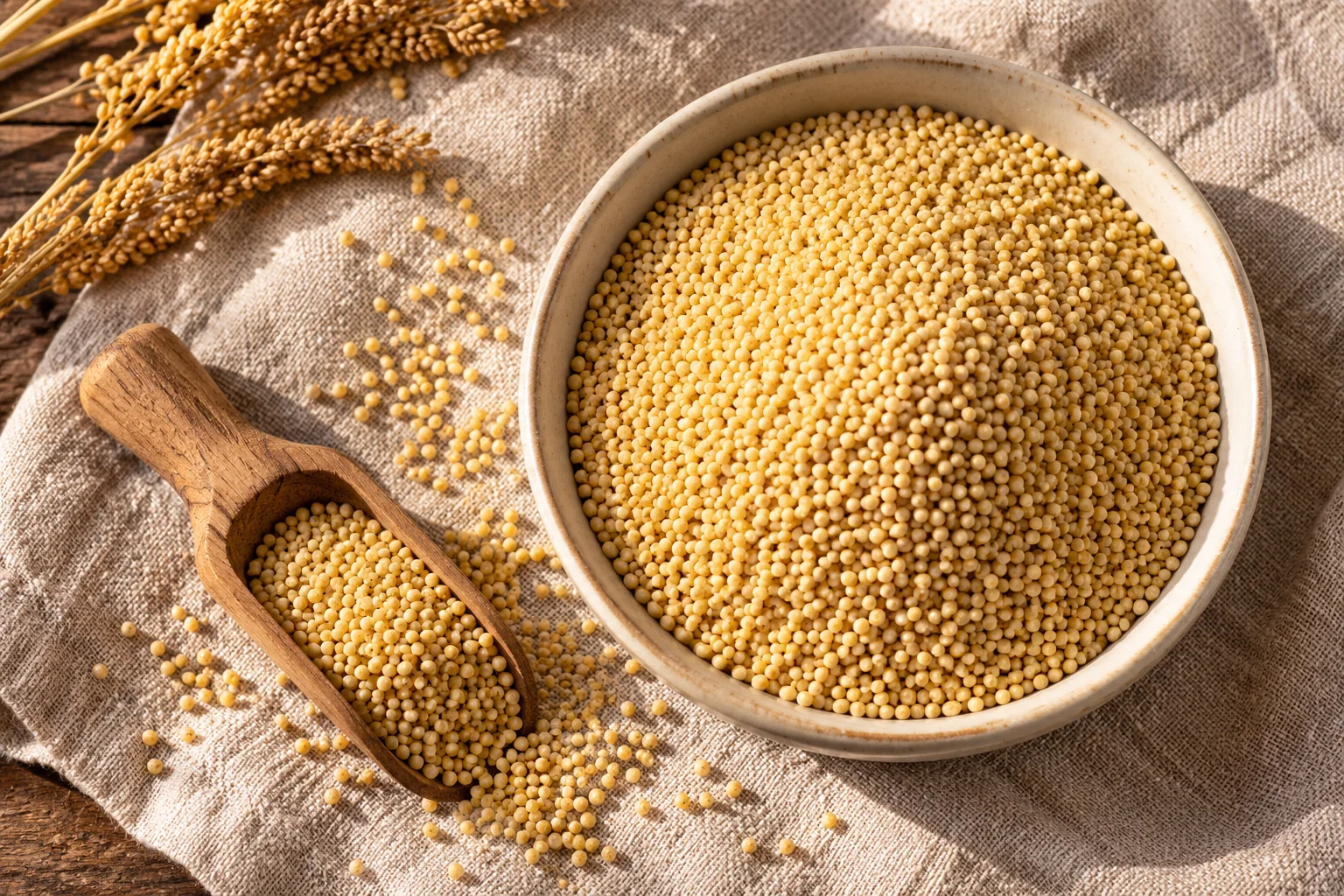
3. Compare Chinese millet formats for your intended bowl
A useful grain purchase starts with the meal you want to make. Do you want a spoonable breakfast, a grain component for a savory plate, or a mixture for porridge? Choose the presentation around that purpose, then confirm that the package supports the method.
Plain Chinese millet offers a straightforward ingredient list. A blend offers a different convenience: several ingredients in one packet. Neither description automatically tells you the finished texture or how much time to allow. The preparation directions are the bridge between the ingredient list and your meal.
For plain Chinese millet, check whether a seller supplies directions for porridge, a firmer preparation, or both. For a mixture, review every ingredient. A prominent millet name on the front is only one part of the recipe when other grains, beans or dried ingredients are present.
Make a comparison using the same unit. If one packet is smaller, compare the price per stated net weight rather than the headline price alone. Keep delivered costs separate from product costs when shipping is quoted later. That gives you a clearer view of the quantity you actually want.
Also consider how often you will cook it. A large Chinese millet packet is convenient only if the quantity fits your routine and storage arrangements. A smaller first purchase can make sense when you are learning a new grain and deciding which preparation you enjoy.
Three practical uses to consider
- Plain porridge: choose a grain with directions that support a soft, spoonable finish.
- Savory grain bowl: look for a method that suits a more separate grain texture.
- Mixed-grain porridge: review the complete mixture and its combined cooking instructions.
For a broader preparation overview, read MAIBAHE’s multigrain porridge cooking guide. Its label-first approach is useful when a mixture contains grains with different preparation needs.
4. Read the current Chinese millet label, not just the catalog
The current label is your starting point for the product in your kitchen. Read the ingredient list, preparation directions, net weight, storage instructions and date information before opening the packet. If an online description differs from the delivered label, ask which information applies to your lot.
Certification wording needs the same care. A regional reputation or a historical catalog statement does not establish that a current Chinese millet SKU carries a particular certificate. When a claim matters to your purchase, ask for a current document that names the relevant product and scope.
For an ordinary Chinese millet purchase, a clear label and a responsive product contact may answer most questions. For a wholesale project, the specification will need more detail: ingredient identity, agreed pack configuration, origin declaration and the documents requested for the destination.
MAIBAHE’s quality documentation page is a starting point for asking about supporting documents. Use it to frame a question about a specific product, rather than treating general website language as a substitute for that product’s current information.
A label-reading example
Imagine two packets with similar golden grain photography. One says “millet,” while the other lists a grain mixture and includes millet among several ingredients. Before comparing taste or preparation time, recognize that these are different products. Save the full names in your shopping notes so you do not accidentally apply a plain-grain method to a mixture.
Now imagine a catalog lists 450 g, while a sales quote offers a different pack weight. The difference is a question to resolve, not evidence that one document must be wrong. Catalog presentations and later order formats can serve different channels. Confirm the agreed current format in writing.
5. Plan an easy first Chinese millet cooking session
For the first Chinese millet cooking session, follow the instructions supplied with your exact grain. They should establish the preparation sequence, supported equipment and starting quantities. This article does not substitute a universal water ratio or cooking time for those directions.
Set out the packet, measuring tool, saucepan or supported cooker, spoon and serving bowl before you begin. Read the method all the way through. Note whether it calls for rinsing, soaking, covering the pan or resting after cooking. Follow those steps when they are specified rather than combining several unrelated recipes.
Keep the first batch simple. A plain preparation makes it easier to assess the grain’s texture. If you add several ingredients immediately, it becomes harder to tell whether the result reflects the Chinese millet, the additional ingredients or a changed cooking method.
Write down what you actually used. Record the dry quantity, liquid quantity, equipment and observed finish. The purpose is to create a reference for your kitchen, not to present an untested method as a standard recipe. Your notes become most useful when attached to the exact product name.
Assess the finish before adding toppings
Look at the bowl and taste a small portion when appropriate to the cooking directions. For porridge, ask whether the texture matches the soft finish you wanted. For a grain component, ask whether it suits the dish you planned. If the result does not match the package method, contact the seller with those observations before making large changes.
Change one variable at a time in later batches, within the supplied instructions. For example, compare a different serving finish while keeping the grain and preparation method constant. That gives you a meaningful comparison instead of several simultaneous changes.
If you are cooking for more people, check whether the instructions explain scaling or equipment limits. A larger quantity changes the practical setup. Allow enough space and attention for the method rather than assuming that a larger pan alone resolves every difference.
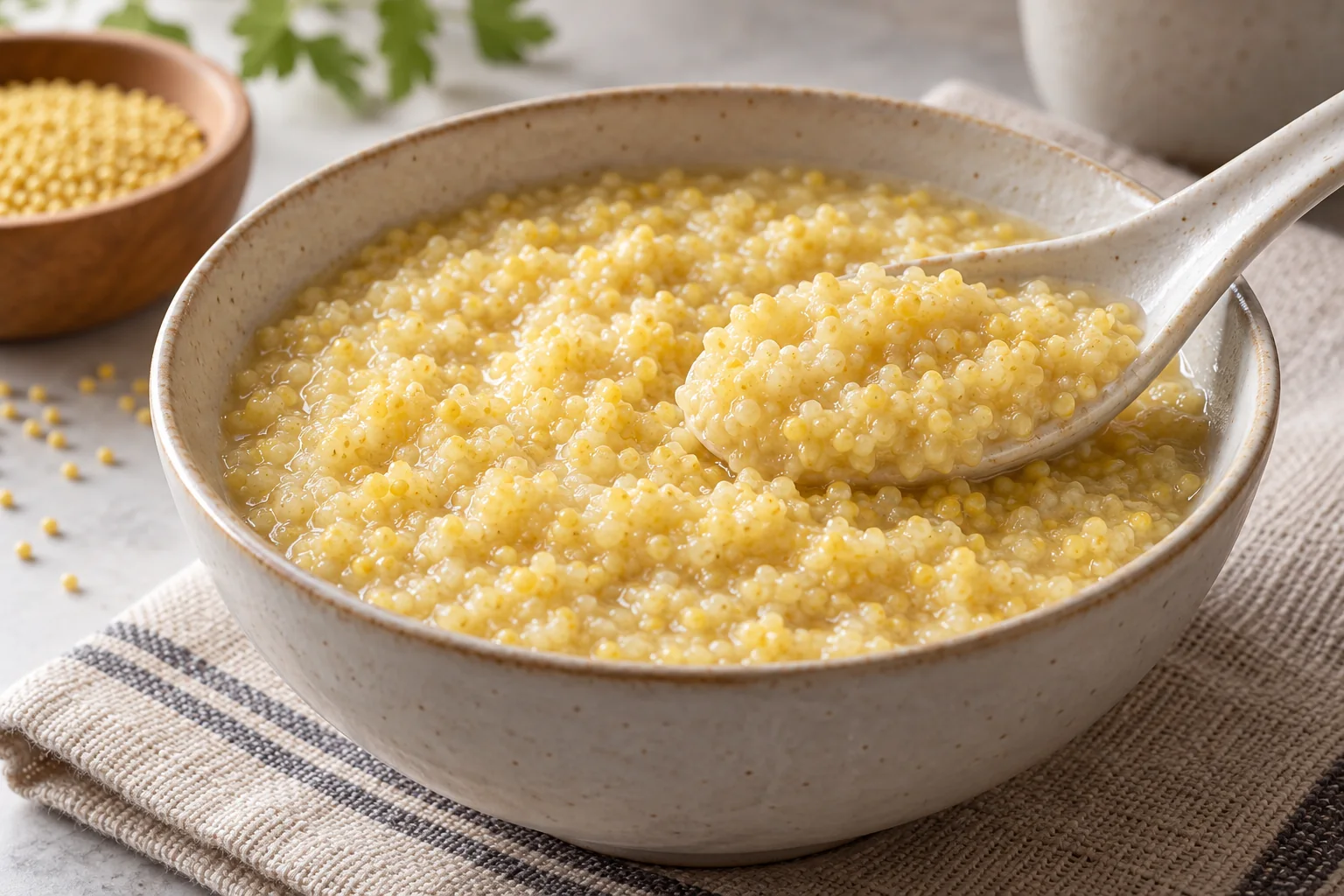
6. Choose a serving style that lets the grain lead
Chinese millet can fit a quiet breakfast or a savory meal when the product’s preparation method supports your chosen texture. Start with the finished grain and add a modest number of ingredients around it. This keeps the bowl easy to adjust to your preferences.
For a breakfast idea, consider a plain porridge with a small fruit topping added at serving. For a savory idea, pair a supported grain preparation with vegetables you already enjoy. These are flexible serving suggestions, not a tested recipe or a claim about the contents of a MAIBAHE packet.
Keep toppings distinct from the ingredient list. A photograph of fruit, seeds or vegetables beside a bowl can inspire a serving style, but it does not mean those additions are included in the product. Read the packet before purchasing, particularly when deciding between a plain grain and a prepared mixture.
Use a simple tasting comparison if you want to develop a favorite bowl. Prepare the same Chinese millet once, then finish two small portions differently. Compare the combination you prefer rather than ranking the grain as universally better or worse. The best choice is the one that works for your routine and meal.
If you are interested in a ready-mixed pantry option, explore the current MAIBAHE shop and inspect each product’s own label. The shop’s congee assortment is separate from the wholesale millet catalog discussed here.
7. Prepare a clear Chinese millet buying question
A focused Chinese millet inquiry helps the seller give you a useful answer. Name the product, state whether you want a household purchase or a wholesale discussion, and describe the information you need. Attach the exact label wording or product link when there is ambiguity.
For a home cook, a useful question might be: “Is this plain hulled millet or a mixture, and where can I find the current preparation directions?” That question is narrow enough to answer and directly relevant to the next bowl.
For a business buyer, a Chinese millet inquiry should identify the required grain, intended pack weight, destination, sales channel and proposed quantity. Ask the team to distinguish the historical catalog format from the current offer. Commercial details should be confirmed for the actual order.
“Please confirm the current millet variety, ingredient declaration, growing origin, preparation directions and available pack format for the product at this link. My intended use is porridge, and my destination is [country].”
Keep the reply with your product notes. If you later change the variety, pack or order date, check whether the earlier information still applies. A clear record is useful for both repeat home purchases and a more formal sourcing discussion.
A Chinese millet pantry plan for two different meals
Imagine you want a quiet breakfast during the week and a savory grain plate at the weekend. Begin by checking whether the same Chinese millet packet has directions suitable for both finishes. If it supports only one preparation, build that meal first and ask the seller about the alternative rather than improvising a second method.
For the breakfast, keep the base simple and decide on one topping. For the savory plate, choose the vegetables and seasoning separately. The purpose of the plan is to connect the grain to two actual meals, so your purchase has a clear place in the pantry.
Before placing the order, estimate how often you expect to prepare the grain. Note the packet’s net weight and the quantities required by its directions. This lets you compare a smaller first purchase with a larger repeat purchase using the same information.
Once the packet arrives, retain the product name, batch reference and preparation directions with your notes. Make the first meal using the supplied method. Describe the texture you obtained, the serving finish you chose and whether the quantity fitted your routine.
For the next purchase, use that record as your reference. A different Chinese millet variety or a mixture should receive a fresh comparison. You can preserve the serving idea you enjoyed while checking the new grain’s identity and method separately. The result is a practical pantry habit built around a specific food, rather than a recipe saved with no connection to the product.
Chinese millet: frequently asked questions
Is all Chinese millet foxtail millet?
No. Millet includes several species. Northern China has an important connection with foxtail millet, but a product needs its own identity information. Ask for the species or precise grain specification if the retail name is unclear.
Does an Inner Mongolia origin mean a product is from Aohan?
No. Inner Mongolia is a large region. Aohan is a particular place and heritage system. A product’s declared origin must be checked separately; this guide does not identify MAIBAHE grain as an Aohan heritage-system product.
Can I use one cooking method for every Chinese millet packet?
Use the directions for the exact grain or mixture. Variety, processing and recipe composition can change the preparation you need. Save your cooking notes with the full product name.
Are MAIBAHE’s historical 450 g millet packs a current retail offer?
The May 2026 catalog records those presentations. Current availability and order formats should be confirmed through the sourcing team. They are separate from the current assortment on maibahe.us.
What should I do next?
Review the current product label for a household purchase, or use the linked millet sourcing page to ask a precise product question. Choose Chinese millet by identity, documented origin and preparation fit, then build a bowl around the product you actually receive.