MAIBAHE GRAIN JOURNAL
Chinese Linden Honey: How to Verify Origin Before You Buy | MAIBAHE
Chinese linden honey connects a floral-source description with a country of origin. To understand a jar, separate the botanical source, declared harvesting region, processing information and current batch details. Those four pieces explain more than color, a forest photograph or a broad “black bee” name alone.
This guide uses seven practical tips to explore the Northeast China origin story, read MAIBAHE’s historical assortment and choose a useful pantry or sourcing question. It also offers simple serving ideas for grain bowls without presenting honey as a treatment or assuming a particular jar is currently offered in the MAIBAHE US shop.
1. Understand the Chinese linden honey name
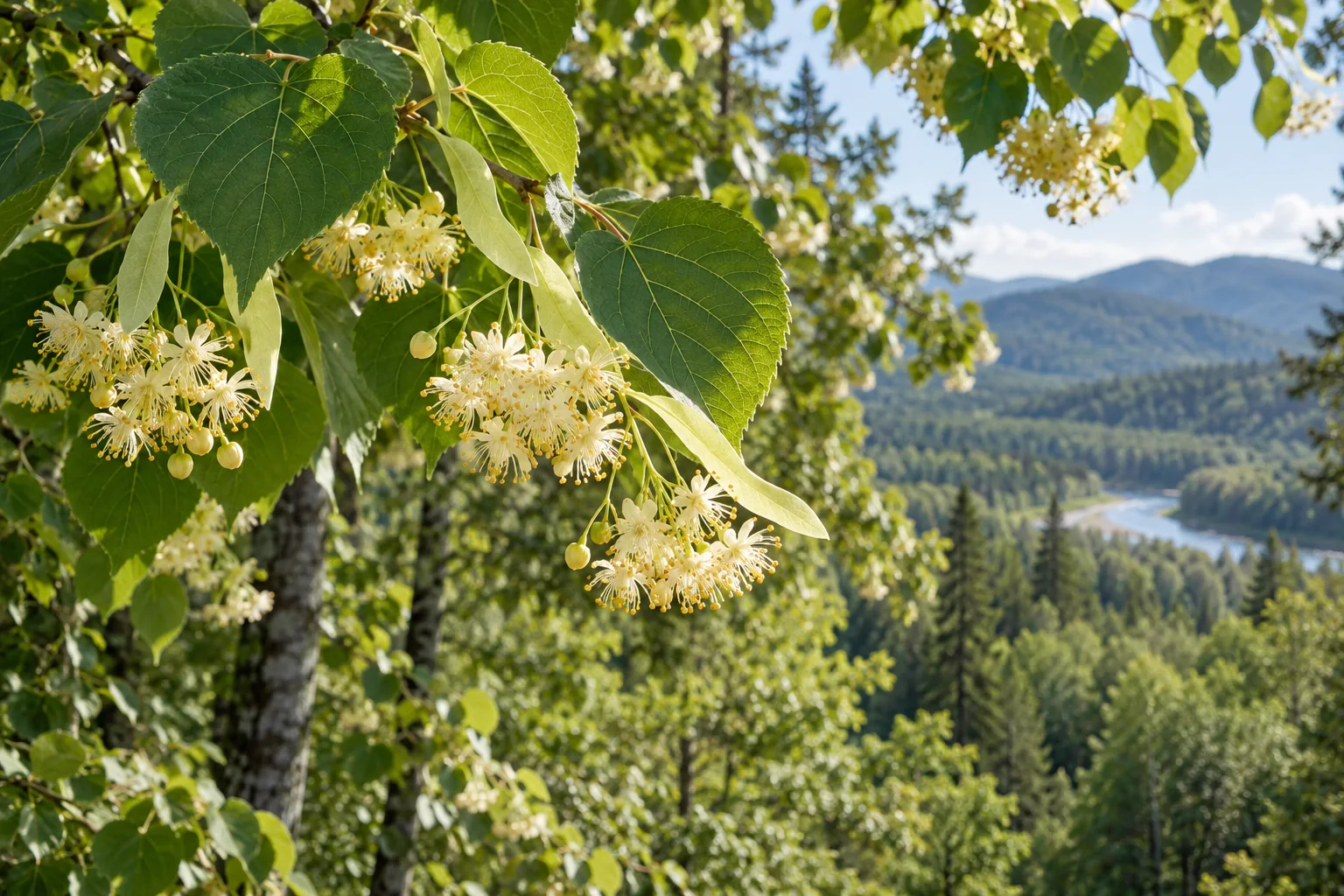
The word “linden” points to a floral source. “China” identifies a country in the provenance description. Together they are useful, but they do not supply a complete account of the honey’s harvesting, handling or packing.
FAO’s beekeeping reference explains that honey descriptions can reflect botanical and geographical origin, and discusses characteristics used to assess those origins. The practical implication is to ask for the source declaration and relevant information for the actual lot. A decorative branch beside a jar cannot establish that declaration. Source: FAO’s honey reference.
When considering Chinese linden honey, check exactly how the seller names it. Is it described as linden honey, black bee honey, a honey assortment, or something else? Those names may describe different aspects of the product, and they should not be silently treated as synonyms.
A useful Chinese linden honey identity includes the exact honey name, ingredient declaration, stated botanical source, declared origin and batch reference. If one of those is absent, ask a focused question. That is a more reliable approach than identifying a honey by its shade in a photograph.
A four-part honey identity
| Identity detail | Question it answers | Useful follow-up |
|---|---|---|
| Botanical source | Which floral source is named? | What supports the linden-source description? |
| Geographical origin | Where is the honey declared to come from? | Which location applies to this batch? |
| Processing description | How was the honey handled? | What heating, filtering or packing details are available? |
| Lot reference | Which current goods are described? | Can the supplied information be tied to the jar or order? |
Keep those details together when you compare sellers. A beautiful label may convey a clear aesthetic, while a short specification may provide a clearer identity. Assess both for what they actually tell you.
2. Separate Northeast China origin from black bee terminology
Chinese linden honey may be discussed alongside Northeast China forest sourcing and black bee products. Botanical source, geographical origin and bee-related terminology describe different things. Ask the seller how each term applies to the selected honey.
MAIBAHE’s Northeast black bee and linden honey sourcing page presents an assortment linked to its Northeast China origin project. It asks buyers to confirm current batch origin and specifications when quoting. That is the product-specific source for the MAIBAHE discussion in this guide.
A forest landscape adds context to a Chinese linden honey origin story, but it does not identify the precise apiary, harvest or floral composition of a jar. The country, region and lot should remain separate entries in your comparison notes.
The distinction becomes useful when a seller offers several honey names. A black bee honey entry and a linden honey entry may sit within the same assortment without being the same SKU. Compare their individual declarations rather than merging them into one assumed product.
Read an origin story in three steps
- Identify the source of the statement: a current label, product specification or dated catalog.
- Identify the exact honey that the statement describes.
- Ask how that statement connects to the lot currently offered.
For a household jar, a clear seller response may resolve your question. For a wholesale project, request the supporting information tied to the chosen product and destination. The amount of detail should fit the purchase you are making.
Chinese linden honey is easier to compare when the origin story stays proportionate to the evidence. A named country adds context, a region adds specificity, and a lot-linked declaration makes the information useful for an actual order.
3. Read MAIBAHE’s historical Chinese linden honey assortment
A dated Chinese linden honey catalog shows what was documented at that time. It should not be read as an automatic promise of today’s stock, packaging, processing or commercial terms. Check which parts of an older presentation still apply to the selected offer.
MAIBAHE’s May 2026 honey catalog records black bee honey at 250 g and two linden presentations at 500 g and 128 g. The 500 g listing uses raw-honey wording. The sourcing page expressly treats those as historical retail formats and asks buyers to confirm current product details.
For Chinese linden honey, the next question is therefore about the present SKU. Ask for its exact name, net weight, ingredient declaration, origin information and processing description. If a new pack is proposed, compare that pack as the current offer rather than relying on a historical jar photograph.
Royal jelly is also a separate product discussion. Its presence in a broader bee-product assortment does not make it an ingredient of the honey or a substitute for it. Ask about the specific item you want instead of assuming the assortment shares one specification.
Keep a dated-catalog note
Record the catalog date beside any detail you copy into a buying brief. For example, note “historical 500 g presentation, May 2026” rather than “available 500 g jar.” That small change makes the question clearer and avoids carrying an old commercial assumption into a new inquiry.
If you are buying for your pantry, review the current shop and product link first. This guide does not list Chinese linden honey as a current retail offer on maibahe.us. The .uk honey page is a sourcing-information route.
4. Ask about Chinese linden honey processing and texture
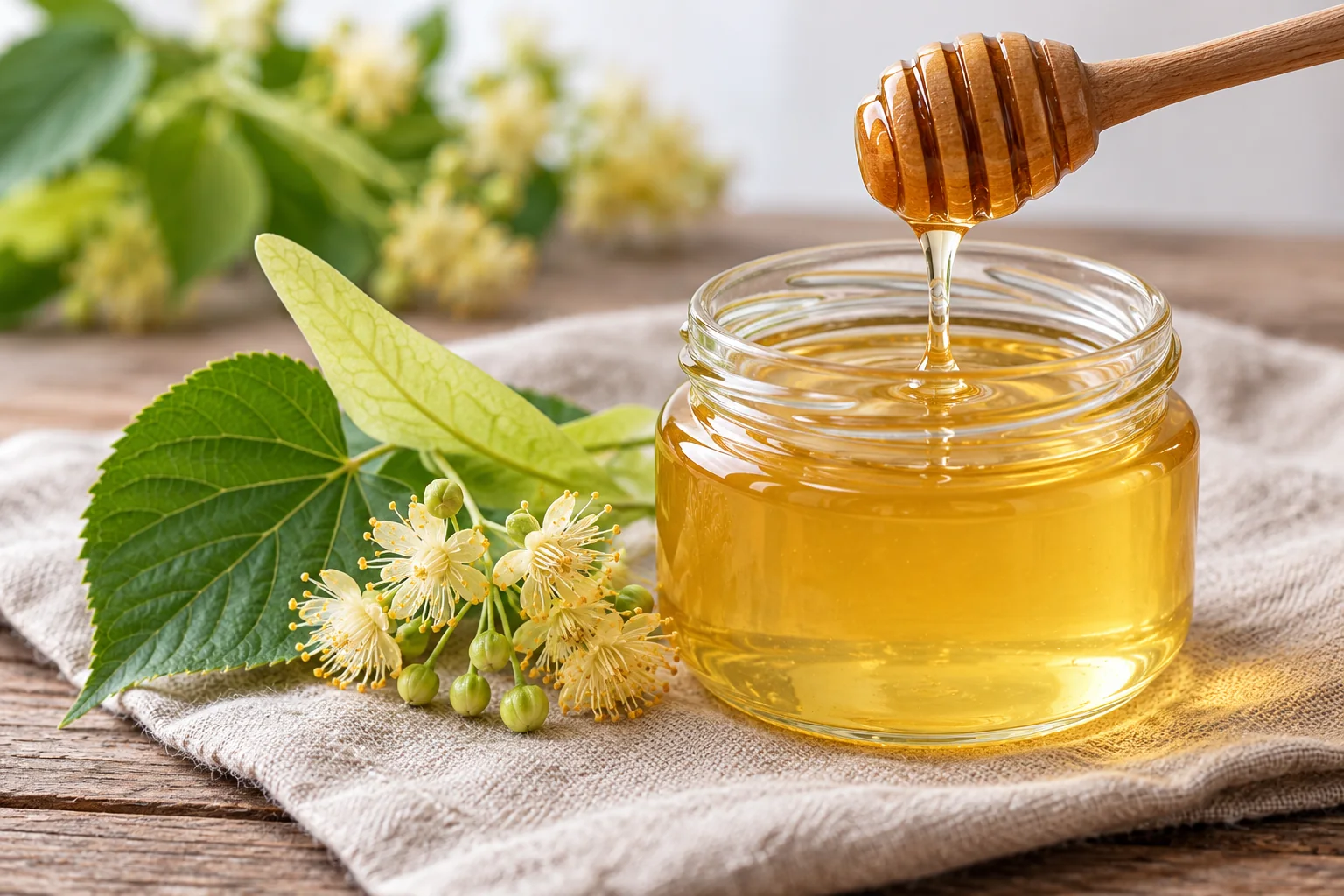
A Chinese linden honey processing description explains how the honey was handled after harvesting. Ask about the current heating, filtration and packing information available for the product. If the seller uses the word “raw,” ask what that description means for the selected SKU.
MAIBAHE’s historical raw-honey wording belongs to a dated presentation. Before repeating it in a current product description, connect the wording to the current processing information. A catalog term alone should not become a broader claim about every jar in the range.
Texture deserves a separate question. FAO’s honey reference explains that crystallization behavior varies with composition and conditions. A liquid appearance or a crystal texture should not be used as a stand-alone authenticity test. Ask how the supplier describes the expected presentation and storage for that product.
For Chinese linden honey, a useful comparison records whether the offered sample is liquid, partly crystallized or set at the time you examine it. Keep that observation alongside the supplier’s instructions. An observed texture is different from a verified production or origin claim.
Questions that clarify the jar
- What processing information is available for the current product?
- How does the supplier define any raw-honey wording used?
- What texture is expected for the offered sample or batch?
- What storage guidance belongs to the current jar?
- Which batch or product documents support the specifications supplied?
For a sourcing project, use the MAIBAHE quality-documentation page to ask about the selected honey. A document is most useful when its product, date and scope match the offer you are comparing.
Also separate your own sensory notes from supplier statements. You can describe a sample as floral, mild or strongly aromatic according to your observation, while still recognizing that the declared origin and processing need their own information.
5. Compare Chinese linden honey jars on useful terms
Begin a Chinese linden honey comparison with equivalent information. Compare the exact honey name, net weight, current product price and stated delivery terms. A small jar and a larger jar serve different pantry routines, so a lower headline price is not the whole decision.
For a first purchase, consider the quantity you expect to use and the storage arrangements described for the product. A manageable quantity can help you learn whether you enjoy that honey’s flavor in your usual meals.
For Chinese linden honey samples, make the comparison simple. Use the same base food and comparable serving amounts. Write down aroma, perceived sweetness, texture and the pairing you prefer. These are personal tasting observations, not laboratory tests or evidence of a geographical source.
A practical tasting note
Divide a plain grain preparation into two small portions. Add a modest amount of one honey to the first and another honey to the second. Keep the base identical so the comparison is focused. If one portion also contains fruit or a different seasoning, you are comparing the whole combination rather than honey alone.
Record the exact product name with the result. “Preferred on plain porridge” is a useful note. “Best honey from China” is a much broader statement that a simple kitchen comparison cannot establish.
A business sample review can use the same separation. First assess whether the presentation suits the intended range. Then review the current specification and documents. Commercial and quality decisions need more than a tasting preference.
Finally, keep the quotation date with the comparison. If a later order changes the jar size, honey specification or shipping arrangement, review those changes explicitly. A current offer is the basis for the purchase.
6. Explore an easy Chinese linden honey grain-bowl finish
A simple grain bowl gives you a clear way to explore a honey’s flavor. Prepare the grain or mixture using its own directions, then decide whether a small honey finish suits the meal. The honey is an optional addition at serving, not an assumed ingredient of the base product.
For a breakfast idea, try a modest honey swirl on a plain porridge you already enjoy. For a separate tasting comparison, serve a small amount alongside the bowl and compare the finished combination. These are flexible serving ideas, not a tested recipe for a named honey or congee SKU.
Chinese linden honey is a topic for flavor and provenance in this guide. The article does not claim that it treats symptoms, supplies a specific therapeutic benefit or changes the properties of the grain. Keep product choices grounded in the actual food and your preferred meal.
MAIBAHE’s oatmeal preparation guide and multigrain porridge guide offer label-led ways to prepare a base bowl. Use the guide suited to your actual grain before choosing an optional finish.
Keep the base and topping distinct
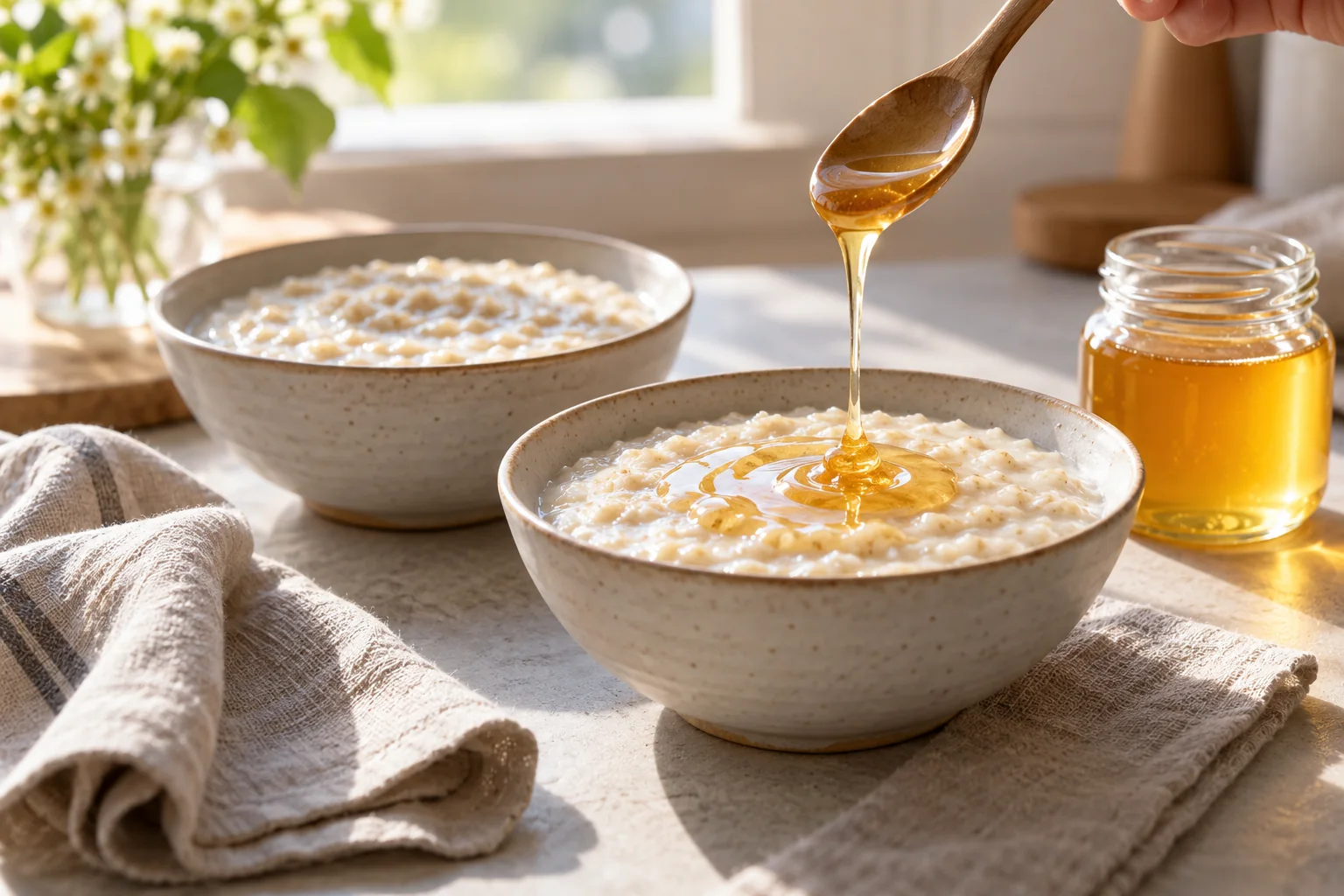
A photograph of honey beside porridge can suggest a meal without describing a packet’s contents. Check the base product’s ingredient list, then treat the honey as a separate choice. This is particularly useful for prepared mixtures that may already contain dried ingredients.
If you enjoy one combination, save a short serving note with both product names. That lets you recreate the pairing or compare a later honey purchase. Keep the method for the grain separate from your note about the finish.
7. Prepare a clear Chinese linden honey inquiry
Begin with the product link and the exact question. A focused inquiry might ask for the declared floral source, current origin, processing details or pack format. State whether you are exploring a household jar or preparing a business sourcing brief.
For a business discussion, include the destination, sales channel, desired jar size, proposed quantity and any branding request. Ask the team to identify the current product and documents rather than quoting an entire historical assortment as if every entry were available.
“I am interested in the linden honey described at this link. Please confirm the current honey name, botanical-source declaration, batch origin, processing information, available jar format and sample terms for [destination]. Which historical catalog details still apply?”
The MAIBAHE sourcing contact page is the relevant route for that discussion. This is separate from a retail inquiry about the congee and noodle assortment currently shown on maibahe.us.
Keep the reply with the quoted SKU and date. If a later response offers another jar or honey type, compare it as a separate option. That makes Chinese linden honey information useful for a real decision rather than a collection of loosely related origin claims.
A Chinese linden honey sample comparison for a small pantry
Imagine you are deciding whether to add a new honey to a breakfast routine. Begin with the current Chinese linden honey name, ingredient declaration and pack information. If you are considering a sourcing sample rather than a retail listing, establish that distinction before asking about household ordering.
Choose a familiar base food for the comparison. A plain grain bowl prepared according to its own directions is one possibility. Keep the base identical in two small portions, then compare the finishes you want to explore. Your observation is about how the honey works in that meal.
Record the exact honey name and the condition of the sample when you examine it. Note the aroma, texture and flavor impression in simple language. Keep the source and processing statements in a separate part of the record, attributed to the supplier or document that supplied them.
This separation helps you avoid confusing preference with verification. You may enjoy one finish more than another without concluding that your preferred sample has a better geographical origin or a particular processing history. Those questions still depend on the product information.
If the combination suits your routine, estimate the quantity you would use and compare available jar formats on a consistent basis. Ask whether the proposed jar matches the sample specification. A larger container should be considered as a current offer, with its own pack and storage information.
For a later purchase, retain the same comparison structure while reviewing the current lot. A Chinese linden honey origin story becomes more useful when it is connected to the jar, the supplier reply and the meal you actually plan to make. That is a modest, repeatable way to explore a specialty food.
Chinese linden honey: frequently asked questions
Does “linden honey” describe the bee or the floral source?
It describes the named floral source. Bee-related terminology and geographical origin are separate details to clarify for the actual product.
Is black bee honey automatically the same as linden honey?
No. MAIBAHE lists them as different entries in its historical assortment. Review the botanical-source and product declarations for each selected honey.
Does crystallization prove Chinese linden honey is authentic?
No. Texture alone is not a complete authenticity assessment. Review the product’s origin, processing and relevant batch information rather than relying on one visual observation.
Can I assume the historical raw-honey description still applies?
Ask for current processing information and the exact SKU. A May 2026 catalog description does not automatically establish the handling of a later offer.
Can I buy the honey from the current MAIBAHE US shop?
This guide does not establish a current .us honey listing. Use the linked .uk sourcing page for honey questions and inspect the .us shop for its current retail assortment.
What is the most useful next step?
Compare Chinese linden honey by floral source, declared origin, processing and current lot information. Choose a serving style or sourcing brief around the actual product rather than the forest image alone.