MAIBAHE GRAIN JOURNAL
Millet vs Quinoa: 9 Essential Checks for Better Bowls
Millet vs quinoa comes down to the grain you have, the texture you want and the instructions attached to that product. Millet is a group of cereal grains; quinoa is a different edible seed commonly used like a grain. For a soft breakfast bowl, look for millet with suitable porridge directions. For a separate-grain salad, consider quinoa or millet prepared for that finish. Neither name guarantees a particular cooking time, ingredient list or nutritional advantage.
This guide compares nine practical buying and cooking decisions, then shows how to run a small kitchen comparison. It focuses on plain hulled millet and plain quinoa. Flours, flakes, instant products and mixed congee kits need their own instructions. Use this comparison to choose a useful starting point for your meal, then check the actual packet before cooking.
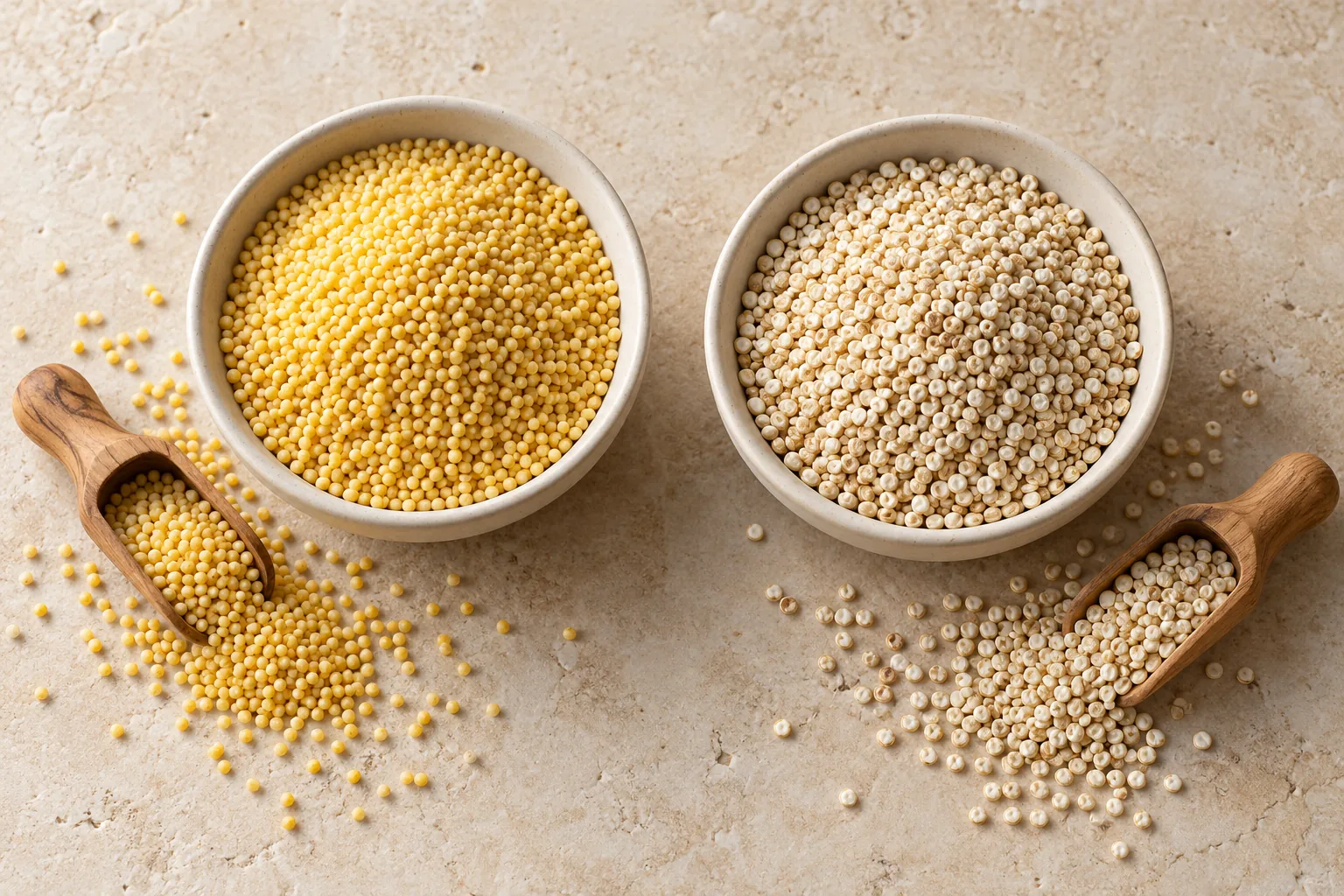
Millet vs quinoa at a glance
Begin with two clearly identified products. A packet of plain millet and a packet of plain quinoa make a useful comparison. A sweetened breakfast blend and a plain grain do not answer the same question. Separate ingredient identity from the convenience of a finished mixture before judging flavor, cost or preparation effort.
| Decision | Millet | Quinoa |
|---|---|---|
| Identity | Group name covering several cereal grains | Chenopodium quinoa, often called a pseudocereal |
| Product detail to check | Named variety and hulled, cracked or other format | Plain seeds, color mix, flakes or prepared product |
| Texture goal | Choose directions for porridge or separate grains | Choose directions for a fluffy side or other intended dish |
| Preparation question | Which method applies to this millet? | Does this packet require rinsing? |
| Useful first comparison | Cook a small batch using its own instructions | Cook a small batch using its own instructions |
| Buying priority | Clear identity, label and intended use | Clear identity, label and intended use |
The Whole Grains Council’s grain directory distinguishes the millet group from quinoa and identifies quinoa as Chenopodium quinoa. That botanical distinction explains why the names are not interchangeable. It does not establish the contents, origin or certification of a particular bag.
9 essential millet vs quinoa checks
1. Identify the millet variety before generalizing
Millet is a broad name. A recommendation for one named millet should not automatically become a rule for every product sold under that heading. Read the full description and ask for the variety when it matters to a recipe. Keep the seller’s wording with your cooking notes so you can recognize the same product next time.
A color name is useful for finding an item in a shop, but it may leave questions unanswered. Our Chinese millet origin and label guide explains how to separate regional background from the identity of the goods you are buying. In a millet vs quinoa comparison, start with identity rather than an attractive photograph or a broad origin story.
2. Compare millet vs quinoa in the same product format
Whole seeds, flour, flakes and prepared breakfast mixtures belong to different cooking situations. A packet that has already been processed for quick preparation can save steps, but it is not a fair timing comparison with an ordinary dry grain. Check both ingredient lists and both sets of directions before deciding which option fits a busy morning.
For a first comparison, choose two plain products with clear instructions. This keeps seasoning, sweeteners and additional ingredients from dominating the result. If you actually prefer a convenient mixture, compare that mixture with another product serving the same purpose. The useful question is how the whole packet works in your kitchen, including the ingredients and preparation you need.
3. Choose the finished texture first
Write down what you want to eat: spoonable porridge, a fluffy accompaniment or a salad with distinct grains. Those are different targets. A millet preparation that you enjoy as a soft breakfast may be the wrong reference for a salad. Quinoa prepared as a separate-grain side should likewise be judged against the dish you intend to make.
Use sensory descriptions you can repeat: soft, cohesive, loose, tender or pleasantly firm. Avoid calling a batch unsuccessful just because it differs from another grain. If the center is not at the tenderness you want, return to the package method and adjust within that preparation. Decide whether the result suits your meal before deciding whether you prefer the ingredient overall.
4. Check rinsing directions, especially for quinoa
The grain directory notes quinoa’s saponin coating and the role of rinsing in removing bitter residue. Products can be prepared differently before sale, so follow the rinsing directions on your own packet. A description such as prewashed is a reason to read the attached instructions carefully, rather than assuming that every quinoa product needs identical handling.
Use a sieve fine enough to retain the seeds when rinsing is required. Let them drain before measuring the cooking liquid according to the package method. For millet, also follow the specific product’s cleaning or rinsing instructions. In millet vs quinoa preparation, small practical details such as a suitable sieve can matter more than an ambitious new recipe.
5. Treat cooking charts as starting references
The Whole Grains Council’s general grain cooking guide gives different reference methods for hulled millet and quinoa. It also explains that grain age, variety and cookware affect timing. Those references help with planning, while the directions for the selected product remain the most relevant starting point.
Do not copy one grain’s liquid quantity and timer onto the other bag simply because the dry seeds look similar in size. Note the pan, lid and heat setting you used. If you change several things at once, it becomes difficult to tell why a result changed. Keep your first attempt simple enough that you can repeat or improve it.
6. Taste plain before choosing seasonings
A heavily dressed salad or very sweet breakfast can hide the difference you are trying to understand. Taste a little of each cooked grain before adding toppings. Note the aroma, the texture and how the flavor changes with a small amount of your usual seasoning. This is a preference exercise, not a test that determines product authenticity.
Then try the same accompaniment with both. A spoonful of the same vegetable mixture gives you a clearer comparison than serving one grain with rich sauce and the other completely plain. Keep notes short and concrete. “Good with roasted pepper” is more useful for next week’s dinner than an elaborate tasting description that you cannot connect to an ordinary meal.
7. Read nutrition information on a consistent basis
If nutrition is part of your millet vs quinoa decision, compare the labels using the same basis. Dry weight, cooked weight and a suggested serving are different reference points. Added ingredients also change the comparison. A plain grain and a seasoned blend may have different declarations because you are comparing different foods, not merely different names.
Choose a portion and meal that make sense for your own routine, then read the corresponding information. This guide does not rank either grain as a treatment or promise a health outcome. Where a specific dietary requirement affects your purchase, check the finished product’s ingredients and relevant declarations rather than relying on a general grain comparison.
8. Compare the cost of the quantity you will use
Compare net weights and the same currency before comparing headline prices. Keep delivery charges separate until the seller has confirmed them. A larger bag can be convenient for a familiar ingredient; a smaller first purchase can be practical when you are deciding whether the texture works for the meals you cook regularly.
Also consider the preparation you are willing to do. A cheap packet that stays unopened does not help with dinner. A useful purchase is one you understand how to prepare and expect to enjoy. Avoid assuming that either millet or quinoa is always cheaper, locally available or sold in the same pack sizes. Check the current offer you are considering.
9. Separate provenance from product performance
Country, region, variety and batch are different pieces of information. A regional story can explain a food tradition without proving that a particular packet comes from a named farm. Ask which origin declaration applies to the actual product. Keep growing origin separate from processing or packing location when the seller provides both.
For trade questions, MAIBAHE’s yellow and black millet sourcing page describes a historical catalog assortment and the information to request for a current quotation. Its catalog details do not establish today’s stock, export terms or certification. The millet vs quinoa choice at home still depends on a clearly identified packet and a preparation you enjoy.
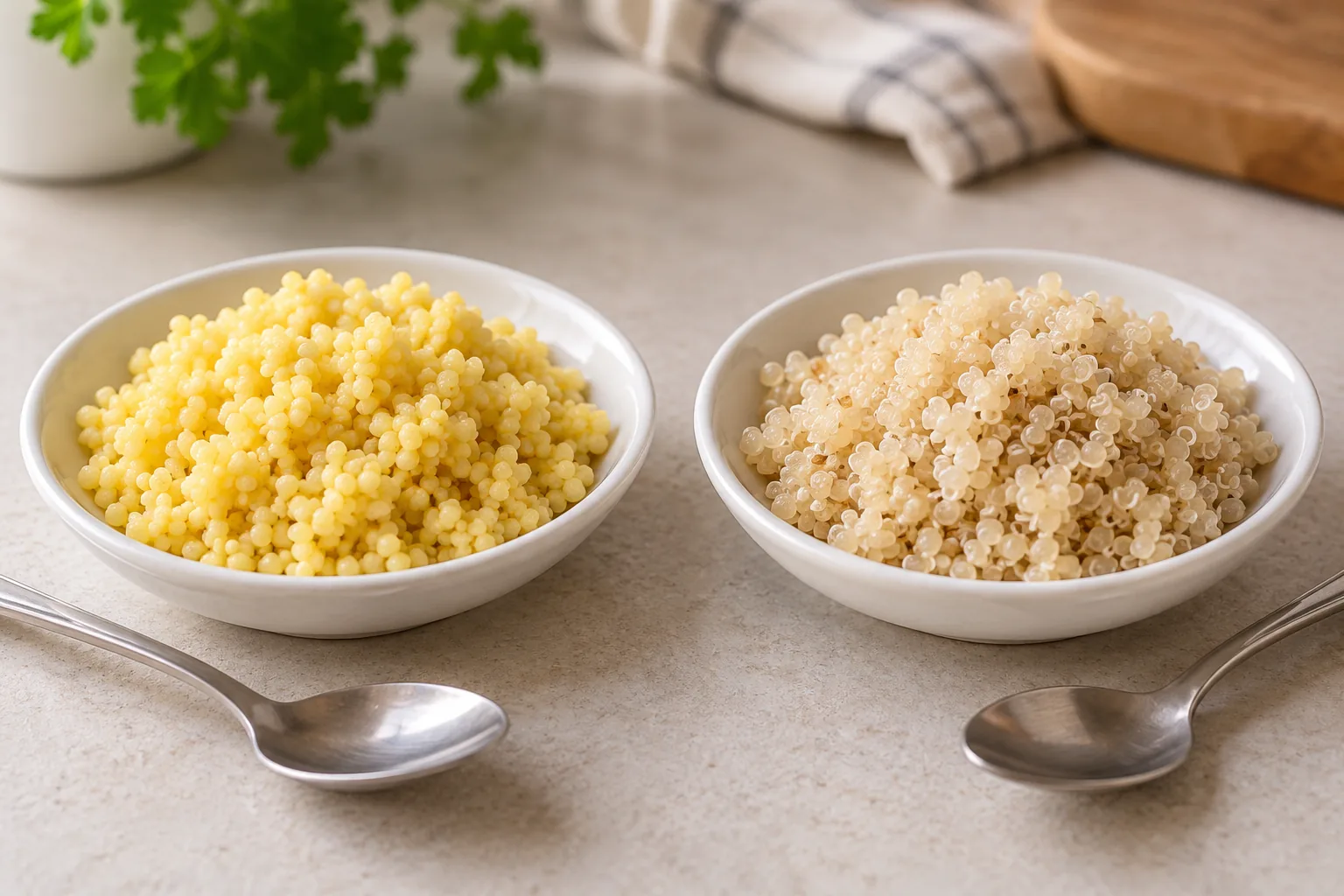
Choose millet vs quinoa for the meal you want
For a warm breakfast bowl
If you want a soft, spoonable breakfast, start with a product whose directions support that texture. A millet porridge preparation offers a straightforward place to begin. Keep the first bowl plain enough to judge the base, then add a topping you already enjoy. Fruit, a little spice or a savory accompaniment changes the whole eating experience.
Quinoa can also be used in breakfast dishes, but do not expect an identical result from an unchanged millet method. Decide whether you enjoy the seed texture as part of breakfast. For ideas once you have a suitable base, explore our millet porridge topping combinations. Those serving decisions are separate from choosing and preparing the grain itself.
For a salad or a vegetable side
For a salad, ask whether you want separate grains that mix easily with vegetables and dressing. Choose the product and method around that target. Try a small amount of dressing first so you can judge the texture before making a large bowl. Add crunchy ingredients near serving if you want to preserve their contrast.
For a hot side, think about the food beside it. A grain that works with a saucy dish may be less appealing on a dry plate without an accompaniment. Compare both grains with the same vegetables or sauce before choosing your favorite. This gives the millet vs quinoa decision a practical purpose and helps you plan a complete meal.
Can you substitute millet for quinoa?
You can often change the grain component of a simple bowl or side dish, provided you prepare the replacement using its own method and accept a different texture. This is easiest when the grain is cooked separately and combined with the other ingredients afterward. It is less predictable in a dish where all ingredients cook together with a fixed liquid quantity.
For a cautious first substitution, keep the vegetables, sauce and serving arrangement familiar. Change only the grain. Taste before assembling the entire dish and add the prepared grain gradually until the balance suits you. A recipe measured by cooked volume may need a different shopping quantity from a recipe measured by dry weight.
Do not automatically replace millet flour with quinoa seeds, or whole quinoa with millet flakes. Format matters as much as the ingredient name. Baking and recipes that depend on a particular structure need more specific guidance than this bowl comparison provides. Use a recipe developed for the replacement format when the grain performs a structural role.
If you want both grains in one meal, cook them separately for your first attempt, then combine them in the proportion you like. That lets each reach your preferred finish. A commercially prepared blend should follow its own instructions. The convenience of a blend comes from its particular formulation; it does not prove that any loose combination will behave the same way.
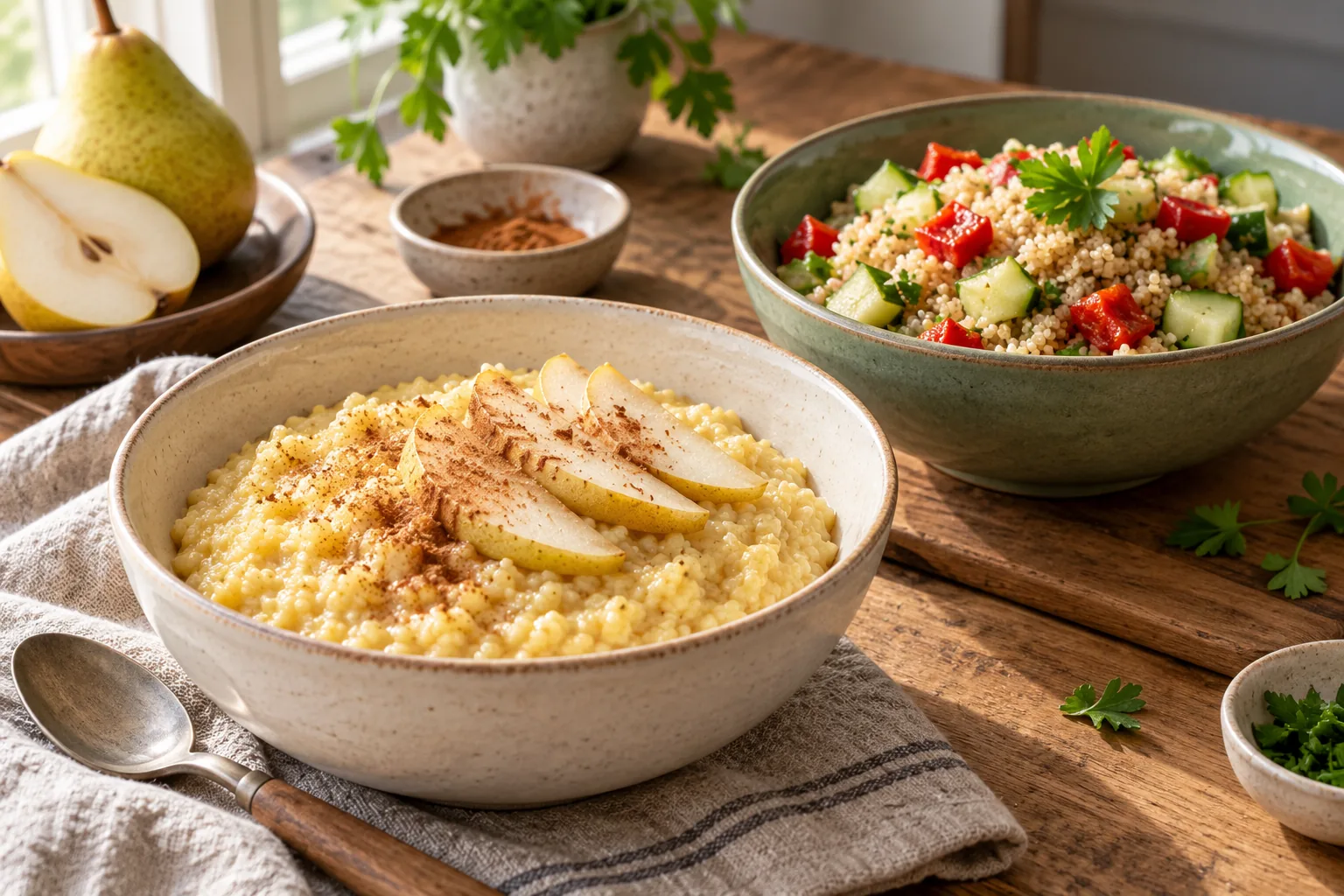
A small millet vs quinoa kitchen comparison
A useful comparison should answer one question you actually have, such as which grain you prefer beside vegetables or which breakfast you will repeat. You do not need a large tasting session. Two small, clearly identified batches and a few notes can prevent a purchase based on a photograph alone.
- Write the question. Choose one intended meal and a texture target.
- Record the packets. Note product name, format and the directions you followed.
- Prepare separately. Use each product’s method and keep seasonings simple.
- Compare at a similar serving stage. Do not judge one piping hot and the other after it has stood through the whole meal.
- Add the same accompaniment. Use a familiar vegetable, sauce or topping in modest amounts.
- Choose one next adjustment. Record a useful preference and change a single preparation detail next time.
Separate observations from explanations. “This batch felt too soft for my salad” is an observation. “All millet is unsuitable for salads” is a conclusion that this small comparison cannot support. Likewise, a bitter or unexpectedly firm result deserves a check of the preparation and product details before you dismiss a whole ingredient category.
For broader preparation ideas, visit MAIBAHE’s oatmeal and multigrain cooking guides. Keep your saved notes tied to the actual packet. If you buy a new variety or change from a plain grain to a mixture, treat it as a new preparation with its own instructions.
Millet vs quinoa: a label checklist before you buy
The most useful millet vs quinoa checklist fits beside an ordinary shopping list. Confirm the ingredient, format, net weight, directions and storage information. If the online listing is incomplete, ask for the current package details before choosing a product for a specific recipe. Keep any certification question tied to that product and the relevant current document.
- Does the ingredient list describe a plain grain or a mixture?
- Is the grain variety or product format clear enough for the intended use?
- Are preparation directions available for the packet you will receive?
- Can you compare price and quantity on the same basis?
- Are origin and product claims supported by information for the selected goods?
- Does the pack quantity fit your routine and the stated storage instructions?
For sourcing projects, the MAIBAHE product documentation guidance is a starting point for asking about current scope, issuer, validity and batch information. General quality language should lead to a specific document request. It should not become a blanket certification claim for millet, quinoa or every product sold by a business.
Frequently asked questions
Are millet and quinoa the same grain?
No. Millet names a group of cereal grains, while quinoa is a different edible seed used in many grain-style dishes. Read the product name and ingredients rather than treating the two names as synonyms. Their similar kitchen role makes comparison useful, but does not make their preparation interchangeable.
Which is better for porridge?
Choose according to the texture you want and the directions on the product. Millet with porridge instructions is a useful starting point for a soft bowl. Quinoa produces a different seed texture that some people enjoy at breakfast. A small plain batch will tell you more about your preference than a universal ranking.
Which cooks faster?
Check the two packets. General cooking charts list different methods, and a quick-cooking or precooked format changes the comparison again. Include rinsing, preparation and any instructed resting time when planning a meal. A reference time for one ordinary grain does not establish the timing for every variety or blend.
Do I need to rinse quinoa?
Follow its package instructions. Rinsing can remove bitter saponin residue, while some products have already been processed or washed before sale. Check what the seller says about the particular packet. Use an appropriately fine sieve if rinsing is required so you retain the small seeds.
Can I cook millet and quinoa together?
A blend may have directions designed for its ingredients. For your first homemade combination, preparing the grains separately lets you control each texture before mixing. Once you understand both products, you can decide whether a combined method is useful, without assuming that equal dry quantities require identical cooking.
Is millet or quinoa always the healthier choice?
This comparison does not establish a universal health ranking. Compare the actual nutrition information on the same basis and consider the whole dish, including added ingredients. Use current product declarations for specific dietary requirements. Taste, preparation and the meals you enjoy are also legitimate parts of a buying decision.
Does MAIBAHE sell both as plain retail grains?
Check the current collection and ask sales about the exact product you need. This article compares ingredients; it does not announce a plain millet or quinoa retail listing. The MAIBAHE shop currently presents congee and corn noodle products, while the sister sourcing site provides millet information for trade inquiries.
Sources and shopping next steps
This millet vs quinoa guide uses the Whole Grains Council’s grain directory for basic identity and quinoa rinsing context, and its cooking guide for the distinction between general references and product-specific preparation. The comparison steps and serving choices are editorial suggestions, not controlled trial results. All three images are newly generated illustrations and do not verify any supplier, origin or batch.
Ready to explore a grain-based pantry? Review the current MAIBAHE congee and noodle collection and ask about ingredients and preparation for the selected product. For a business purchase, use the MAIBAHE wholesale inquiry guide to prepare a specific request. A clear product question is the best next step after choosing the texture and meal you want.