MAIBAHE GRAIN JOURNAL
Corn Noodles vs Rice Noodles: 9 Essential Tips for Easy Meals
Corn noodles vs rice noodles is a choice between specific noodle products, not a reliable shortcut to a cooking time, dietary claim or nutritional winner. Start with the ingredient list, strand shape and preparation directions. Choose a corn-based noodle when its flavour and format suit your meal; choose a rice-based noodle when the recipe calls for that particular rice-noodle style. Similar-looking strands can require different treatment.
This guide helps home cooks compare two packages and plan a useful first meal. It covers dry noodles intended for cooking, with fresh or ready-to-eat formats treated as separate products. The serving ideas are suggestions rather than tested recipes. No single boiling time, soaking method or substitution ratio applies to every noodle sold under either name.
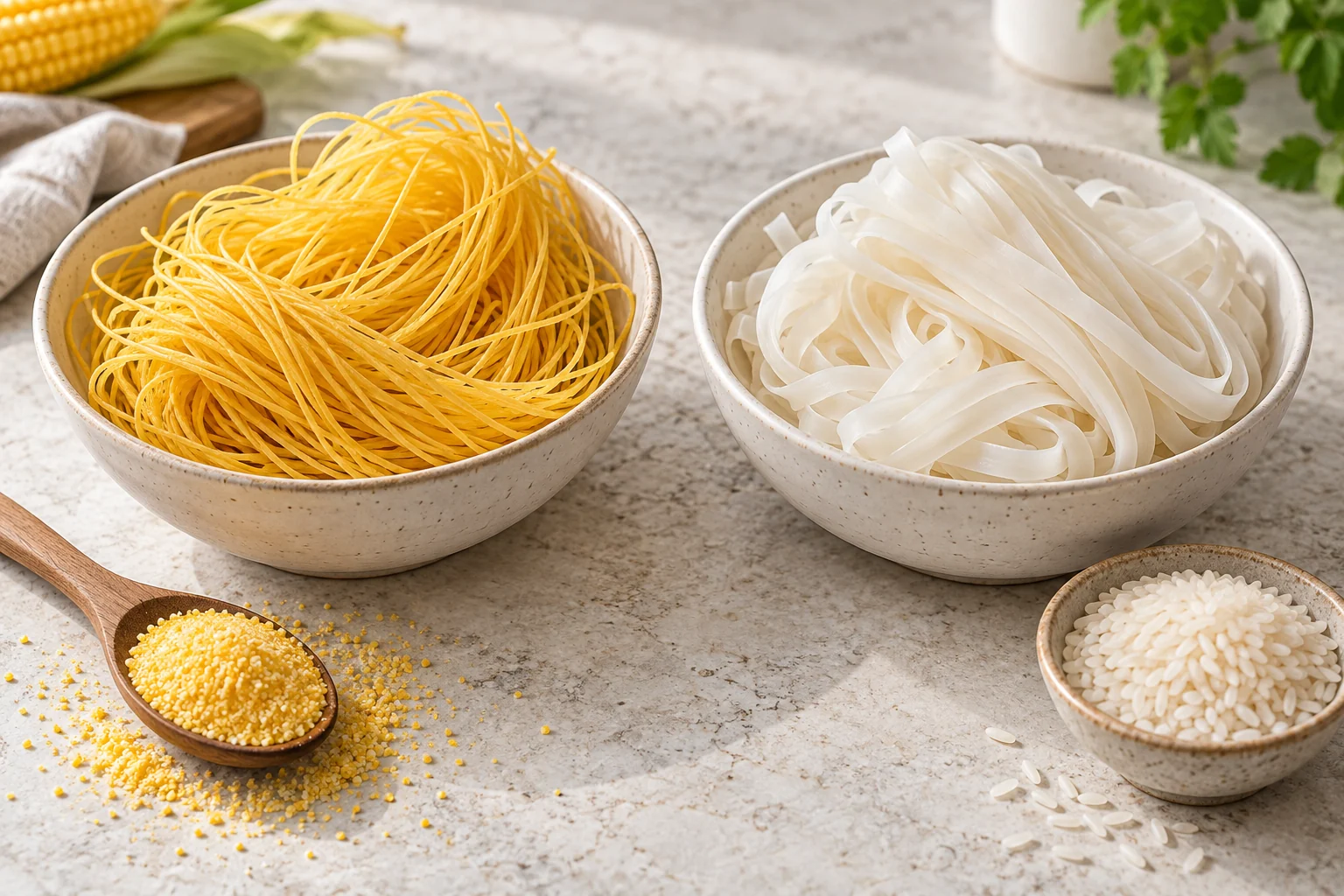
Corn noodles vs rice noodles at a glance
The most useful comparison starts with what you will actually cook. “Corn noodle” describes a corn-based product, while “rice noodle” describes a rice-based one. Neither name tells you every ingredient, the proportion of each ingredient, the thickness of the strand or whether a preparatory treatment is required. Read the back of both packages before drawing conclusions from the front.
On a narrow screen, swipe the table horizontally. Keyboard users can focus the table region and use the arrow keys.
| What to compare | Corn-based noodles | Rice-based noodles |
|---|---|---|
| Ingredient identity | Check corn ingredients and any other flours or starches | Check rice ingredients and any other flours or starches |
| Shape | Match the actual strand or pasta shape to the dish | Distinguish fine strands, flat ribbons and other formats |
| Preparation | Follow the selected product’s directions | Follow the selected product’s directions |
| Flavour and texture | Evaluate the cooked product in a small first batch | Evaluate the cooked product in a small first batch |
| Dietary suitability | Requires product-specific label information | Requires product-specific label information |
| Whole-grain status | Cannot be established from colour or the corn name | Cannot be established from colour or the rice name |
| Direct substitution | Check recipe method and finishing step first | Check recipe method and finishing step first |
For corn noodles vs rice noodles, this approach avoids comparing an imaginary standard noodle with a real package. A fine dry strand and a broad fresh ribbon differ in more than their grain ingredient. Keep format and condition alongside grain type in your shopping notes, so your comparison remains useful when you reach the stove.
9 essential tips for corn noodles vs rice noodles
1. Identify the complete product
Write down the product name, whether it is dry or fresh, its approximate strand width and the cooking directions provided. A short photograph of the front and back of the package is more useful than remembering that the noodles were yellow or white. If directions are unclear or missing, obtain them from the maker before choosing a method from an unrelated recipe.
For a first purchase, favour a product with information you can actually use. A beautiful serving picture does not tell you whether the packet contains plain noodles, a noodle blend or a seasoned meal. Our corn noodle buying guide explains the separate task of checking product and order details. This article focuses on what happens after you have identified the package.
2. Read the ingredients before judging the grain name
Compare the complete ingredient lists side by side. Note the named grain ingredients and any additional flours, starches or seasonings. A product described as corn-based is not necessarily made only from corn, and a rice-based name is not a complete formula. Do not fill gaps in the label with assumptions about how a similar brand is made.
This matters especially when you compare corn noodles vs rice noodles for a particular household requirement. The FDA’s food allergy information advises consumers with food allergies to read labels and avoid their allergens. If information is unclear, ask the manufacturer. A grain name, colour or absence of an obvious ingredient in a photograph cannot establish suitability.
3. Match the noodle shape to the job
Think about how you want to eat the meal. Long slender strands, wide ribbons and short pasta shapes sit differently on a spoon or fork and interact differently with chunky vegetables. Choosing a manageable shape can matter more to the finished bowl than choosing between two grain names. Use the shape named in a recipe when you want to reproduce its method closely.
Compare like formats when possible. Two dry noodles with similar strand dimensions provide a clearer first comparison than a dry corn pasta shape against a fresh rice sheet. If you deliberately change both grain and shape, record both changes. Otherwise, a preference for a broad ribbon may be mistaken for a preference for rice itself.
4. Let the package set the preparation method
Read the entire method, including any soaking, boiling, draining, rinsing and finishing instructions. Do not assume that all rice noodles should be soaked or that all corn noodles should be boiled for the same duration. Processing and dimensions vary. A package direction is a starting reference for that product, while a general comparison article cannot replace it.
Keep the directions beside the cooker and plan the other ingredients around them. If a recipe and the package disagree, resolve the difference before combining everything in one pan. The practical corn noodles vs rice noodles question is often not “which cooks faster?” but “which product has a method that fits the dinner I am preparing?”
5. Separate whole-grain status from colour
The Whole Grains Council’s grain reference distinguishes whole corn from degerminated corn and describes white rice as a refined grain. Those distinctions concern the grain ingredient and processing. They do not certify any noodle pictured in a shopping listing. Look for explicit product information when whole-grain content matters to you.
Yellow noodles are not automatically whole grain, and a darker noodle is not automatically a better match for your needs. Likewise, grinding a grain into flour does not by itself answer whether its original components were retained. Our guide to millet flour and intact millet explores that format-versus-composition distinction in another pantry ingredient.
6. Compare nutrition on a consistent basis
If nutritional composition is part of your corn noodles vs rice noodles decision, use the actual Nutrition Facts panels. First establish whether each panel describes the food dry or prepared. Comparing one dry serving with another product’s water-containing cooked serving can be misleading. Check the serving weights before comparing the numbers that matter to your own meal planning.
Keep the rest of the bowl in view. Broth, vegetables, sauces and accompanying protein foods change what you serve, so a noodle-only comparison cannot describe the complete meal. This guide does not rank the two categories for weight management, blood sugar or medical diets. Those questions require information beyond the grain name and, where relevant, individual professional advice.
7. Consider the final cooking step
A noodle that goes straight from the colander to a plate has a different journey from one that also spends time in hot broth or a stir-fry pan. Read whether your recipe expects the noodle to finish cooking in the dish or to arrive fully prepared. An extra finishing step can change a texture that seemed right immediately after draining.
Do not invent a universal instruction to undercook either type. Instead, choose a recipe and package combination with a clear sequence. Prepare your sauce, vegetables and serving bowls in advance so the noodles do not wait while you start another task. This small organisational choice makes a first corn noodles vs rice noodles trial easier to interpret.
8. Buy for the meals you can realistically make
A larger package is useful only when it suits your household and you can follow its storage directions. Think through the first few intended meals before ordering several packs. If the first use is an unfamiliar technique, a modest trial is more informative than a cupboard full of an ingredient whose cooking instructions you have not yet checked.
Compare the quantity you will use, the information supplied and the quoted cost together. Keep shipping and other order charges separate from the noodle comparison. There is no general rule that corn noodles cost less than rice noodles or the reverse. Package size, product formulation and the particular offer determine the purchase you are actually making.
9. Record your result rather than a category verdict
After the meal, note the package, preparation followed, finishing method and texture at serving. Use clear observations: strands stayed separate, ribbons broke during tossing, sauce coverage was uneven or the bowl was softer than you wanted. These notes point to something you can adjust. “Rice noodles are always mushy” does not.
A fair corn noodles vs rice noodles comparison recognises that one unsuccessful batch does not represent every product. Try changing one controllable factor next time, while keeping the manufacturer’s instructions as your reference. You may find that one package works well for soup and another suits a sauced plate, leaving you with two useful pantry choices.
Corn noodles vs rice noodles for different meals
For a noodle soup
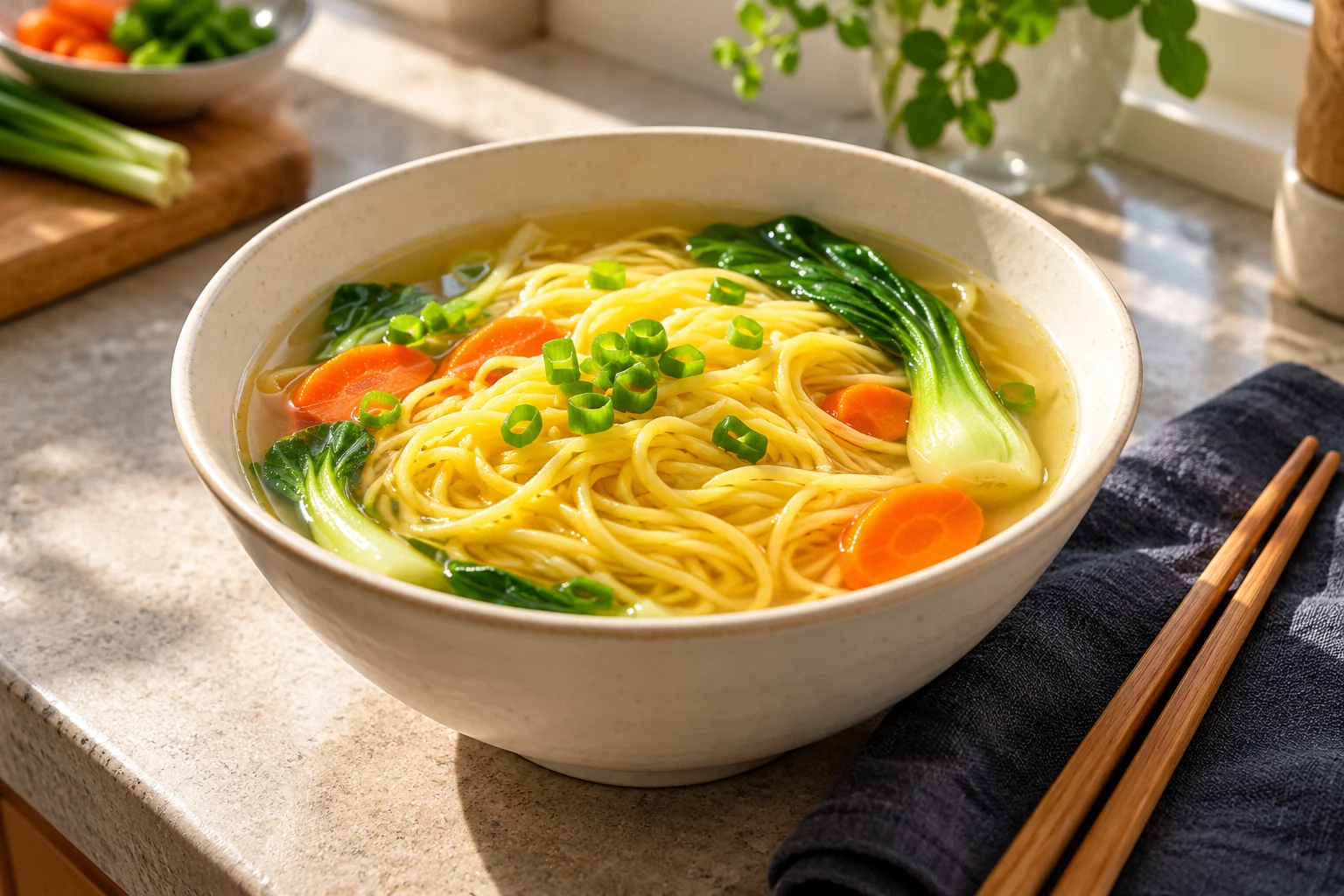
Choose a product whose directions fit your soup method. If the instructions call for separate preparation, follow that sequence rather than assuming the noodles can cook directly in broth. Plan the serving moment so the finished strands are not left sitting while you assemble garnishes. For a first attempt, use a simple broth that lets you notice the noodle texture.
The illustration below suggests a vegetable noodle bowl, not a verified formulation or cooking result. Adapt toppings to your ingredients and requirements, and check any prepared broth or sauce separately. In corn noodles vs rice noodles soup planning, the base noodle is only one component; a familiar broth does not make an unfamiliar noodle method predictable.
For a sauced or stir-fried plate
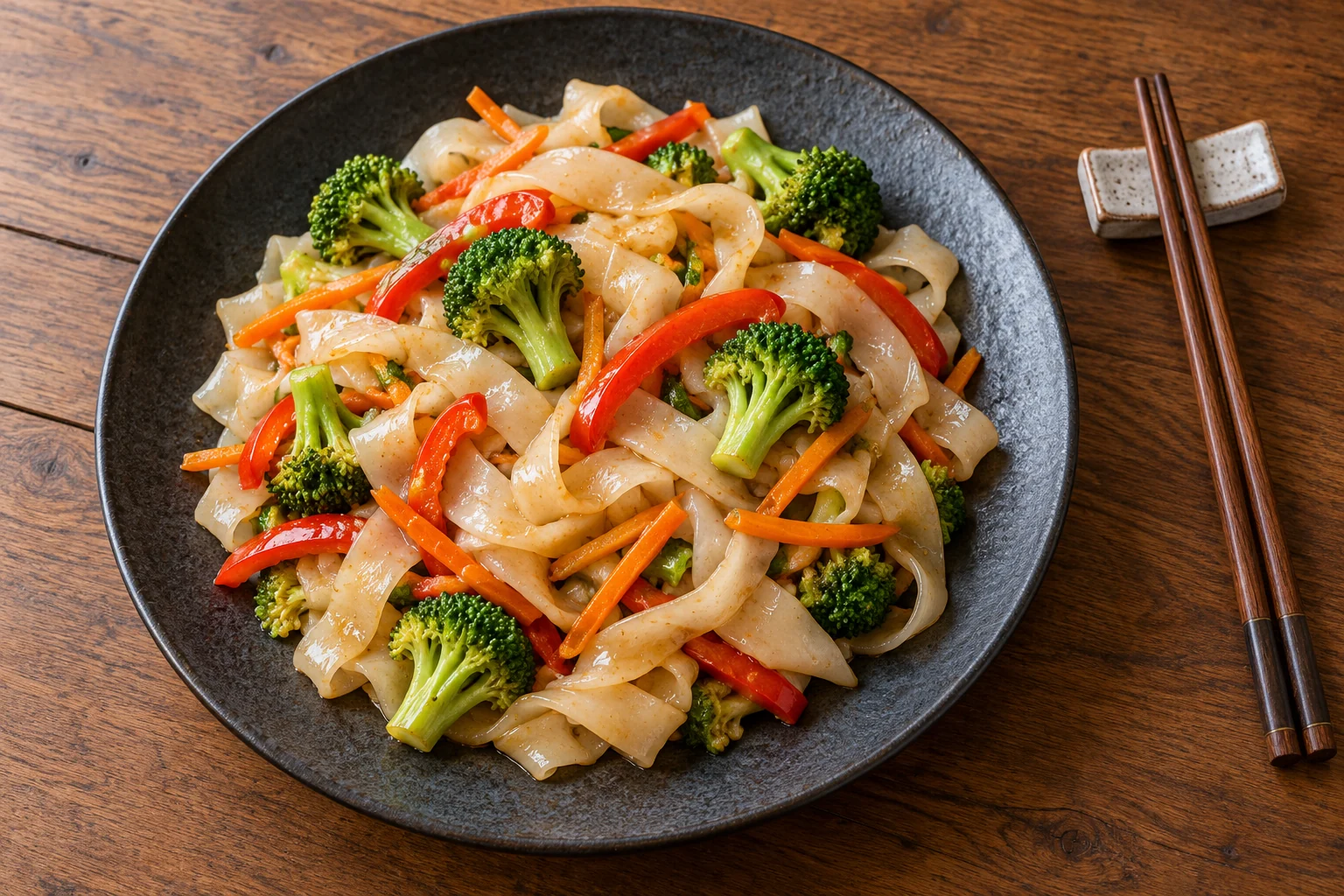
Start with a recipe written for the selected noodle format. Have the sauce and other components ready before the final combining step. Add and toss the noodles as the recipe directs, observing how easily the strands move through the pan. Vigorous handling is not a substitute for a method suited to the product.
A broad rice-style ribbon may appeal when you want visible folds on the plate, while a slender corn-style strand may suit another presentation. These are serving preferences rather than category-wide performance guarantees. If you switch products, check the preparation and finishing sequence again instead of copying the previous packet’s timing from memory.
Plan a useful first corn noodles vs rice noodles meal
Choose one simple dish and one noodle product for your first trial. Gather the package directions, suitable pan, draining equipment and a place to record observations. Prepare the other components before starting the noodle step. This is a kitchen planning exercise, not a laboratory comparison, and it does not require cooking two full dinners at once.
- Identify: record the exact noodle and its dry, fresh or prepared format.
- Check: read ingredients, relevant label information and the complete method.
- Prepare: follow the selected package and compatible recipe.
- Finish: combine with the rest of the dish at the intended stage.
- Observe: note texture and handling at the moment you eat.
- Adjust: change one appropriate factor on the next attempt.
If you later compare a second product, use a similarly simple dish and record its own directions. Do not force both noodles through an identical cooking schedule merely to make the exercise look fair. Product-specific preparation is part of the comparison. What matters is whether each noodle gives you a meal you enjoy using a method you can repeat.
Solve texture problems before changing your shopping list
The noodles are softer than expected
Review the full sequence, including time spent waiting or finishing in hot liquid. Check that you used directions for the actual format in your packet. If the method was unclear, ask the maker before the next batch. Do not conclude that the grain ingredient alone explains the result, particularly when this was your first use of that product.
The strands clump or break
Check the package’s draining, rinsing and handling instructions, and consider whether the noodles waited before the dish was ready. Note when the problem appeared: in the pan, during draining or while tossing. That observation is more actionable than adding oil, rinsing repeatedly or changing several steps without knowing whether the chosen product calls for them.
The flavour does not suit the dish
Try the prepared noodle with a simpler accompaniment on a future meal, following its directions again. A strong sauce can make it difficult to identify what you liked or disliked. Keep preferences separate from faults: a noticeable grain flavour may be welcome in one bowl and distracting in another. Your best corn noodles vs rice noodles choice may depend on the meal.
Frequently asked questions
Are corn noodles and rice noodles the same?
No. They describe different grain bases, but neither term identifies every ingredient or processing step. Compare the complete products, including shape, condition and directions. Two packets can look similar while needing different preparation, and two products within the same category can behave differently.
Which is better for corn noodles vs rice noodles soup?
Choose the specific product that fits your soup method and preferred texture. Check whether its directions call for separate cooking or another preparatory step. Neither category is automatically best for every broth, strand thickness or serving schedule.
Can I replace rice noodles with corn noodles?
Sometimes a different noodle can make an enjoyable dish, but it is an adaptation. Check shape, ingredients and preparation first. Use the replacement product’s directions and reconsider the final combining step. Do not assume a direct swap preserves cooking time or the recipe’s intended texture.
Are both noodle types gluten-free?
Do not infer that from the grain name. Check the actual product’s ingredients and applicable label claim. The FDA explains that gluten-free is a voluntary claim with defined requirements in the United States. This article does not verify any particular noodle’s status.
Do rice noodles always need soaking?
No universal method covers the whole category. Use the selected package’s directions, including whether soaking is called for and how the noodles are finished. Do not apply advice for one width, fresh format or brand to every rice-based noodle.
Are yellow corn noodles automatically whole grain?
No. Colour does not establish which parts of the grain remain in the ingredients. Read explicit product information rather than judging the serving picture. The same caution applies when evaluating whole-grain claims on rice-based products.
Which noodle should a beginner buy?
Buy a product with clear directions that fits a simple dish you want to make. Confirm the label information relevant to your household, then try a manageable quantity. A repeatable method and an appealing meal are more useful starting criteria than an unsupported category ranking.
Shopping and product questions
Use the current MAIBAHE shop to review the corn noodle listing and available product information. Ask for the current package label and preparation directions before choosing it for a particular method. This comparison does not establish a MAIBAHE rice-noodle listing, ingredient percentage or product certification.
For other grain meals, our cooking guide collection provides related pantry reading. If you are evaluating a business order, use the MAIBAHE wholesale inquiry page to describe the exact product, format and intended use. Confirm the current written terms rather than carrying a consumer comparison into a commercial specification.
For the supplier-document side of a larger purchase, the sister site’s product document and quality review page explains why scope and current records matter. Its buyer questions guide provides a separate starting point for purchasing enquiries. These pages are context for questions to ask, not proof that a particular noodle has passed a test or holds a certificate.
Sources and scope
Reviewed on 24 October 2026. The Whole Grains Council reference supports the grain-processing distinctions; the FDA pages support the limited label-reading and gluten-free-claim points above. The meal-selection steps and troubleshooting prompts are editorial guidance, not measured cooking trials. Images were generated for this guide and illustrate possible appearances only.
Use this corn noodles vs rice noodles guide to narrow your choice, then let the actual label, product directions and chosen recipe determine the details. Ingredient percentages, preparation times, nutritional values and suitability claims require product-specific evidence. A good purchase leaves you with both a noodle you want to eat and clear instructions for preparing it.