MAIBAHE GRAIN JOURNAL
Black Rice vs Wild Rice: 9 Essential Differences
Black rice vs wild rice is a comparison between two different grains, rather than two names for the same dark rice. Black rice is a pigmented rice; wild rice belongs to a different botanical group. For buying and cooking, start with the ingredient list, then compare the grain shape, expected texture and package directions. Choose a particular product for the meal you want instead of assuming that dark grains cook alike.
This guide explains nine practical differences and gives you a label checklist, a small kitchen comparison method and useful substitution decisions. It covers plain grains as well as the questions raised by blends and congee products. It does not provide a universal cooking ratio or rank either grain as a medical or nutritional treatment.
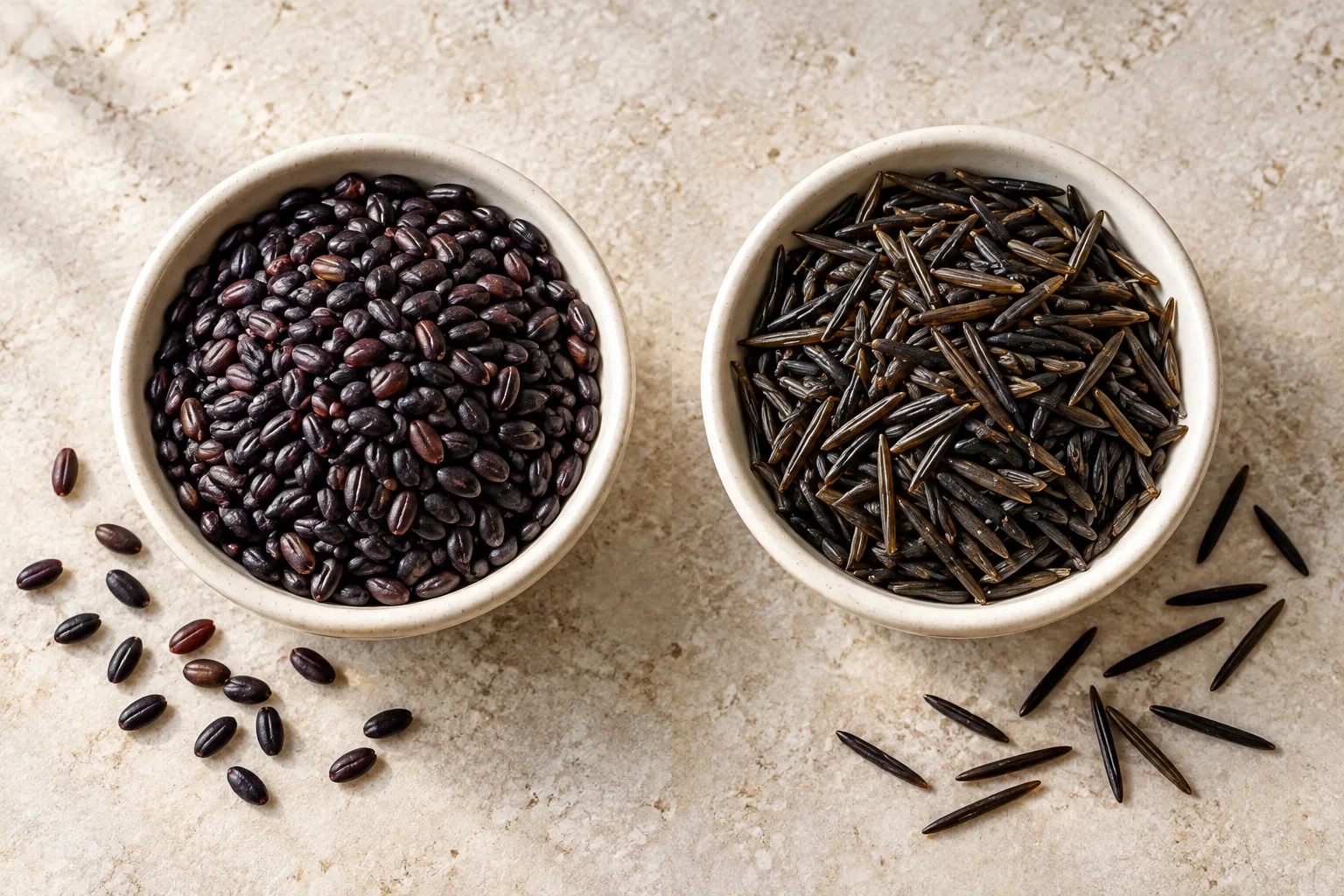
Black rice vs wild rice at a glance
The most useful first question is whether the package contains one grain or a mixture. A plain black rice product, a wild rice blend and a black rice congee kit can have quite different ingredients and directions. Read those details before using the comparison below. The examples describe general selection considerations, not a specification for every product bearing one of these names.
| Check | Black rice | Wild rice |
|---|---|---|
| Identity | Pigmented rice, generally within Oryza sativa | Seeds of aquatic grasses in Zizania |
| Typical dry appearance | Rice-shaped grains with dark outer colour | Usually noticeably long, slender grains |
| Texture decision | Confirm the variety and whether it is glutinous | Check the finished firmness and product format |
| Cooking method | Follow the exact package instructions | Follow its own instructions, including blend directions |
| Buying risk | Colour does not identify every variety or mixture | A front label may describe a blend rather than pure wild rice |
| Best starting point | Choose a documented product for your intended dish | Choose a documented product for your intended dish |
The Whole Grains Council’s grain directory lists rice under Oryza sativa and wild rice under Zizania. It also explains that whole-grain rice can have black, purple or red colouring. That establishes the basic distinction; it does not identify a particular package, certify a supplier or determine which grain you will enjoy more.
9 essential black rice vs wild rice differences
1. The names describe different grain identities
Black rice is rice with a dark outer appearance. Wild rice is a different grain despite its familiar English name. This distinction matters when you search for a substitute, compare ingredient declarations or ask a seller what a product contains. Calling both products simply “black grain” removes information that helps you make a sensible choice.
Use the ordinary product name together with the ingredient list. If the seller provides a botanical name, treat that as another piece of identification rather than a substitute for the rest of the label. For a mixture, list all the grains you are considering. The black rice vs wild rice question becomes much clearer when you know whether you are comparing two plain ingredients or two prepared products.
2. Grain shape offers a clue, not proof of identity
Wild rice is commonly recognised by long, thin grains, while black rice has the more familiar rice-shaped outline. These are useful visual clues when looking at loose grains or a clear packet. They are less reliable in a photograph with dramatic lighting, a cooked dish or a blend containing several similar-looking ingredients.
A product image can help you ask a question, but it cannot answer every question. Request a current label and product description if the name and photograph seem inconsistent. Do not identify origin, organic status or a particular variety from grain colour alone. The illustrations in this black rice vs wild rice guide deliberately show contrasting shapes, but they are not authentication tools or reference samples.
3. Black rice includes varieties with different texture goals
The words black rice do not tell you everything about the finished texture. A product intended to make a cohesive, sticky preparation may behave differently from one selected for more separate grains. Ask whether the rice is glutinous or non-glutinous when that distinction matters to the dish, and confirm the exact wording with the seller.
Here, glutinous describes a rice texture category; do not use the word alone to decide whether a packaged food suits a dietary requirement. The full ingredients and any relevant declarations still matter. Our Chinese black rice origin and cooking guide provides a separate starting point for product and source questions. Keep those questions distinct from choosing between black rice and wild rice.
4. Finished texture should be judged in the intended dish
For a grain bowl, you may want visible individual grains. For a spoonable breakfast, you may prefer a softer, more cohesive result. A texture described as pleasantly firm in one dish may feel distracting in another. Instead of declaring a universal winner, decide what the grain needs to do beside the rest of your ingredients.
Compare a plain spoonful before adding a strong sauce. Notice whether the grains feel separate or cling together, whether the centre is cooked to your preference and how the texture changes when combined with vegetables. These are kitchen observations you can make with your own products. The photographs here do not represent a measured black rice vs wild rice cooking trial, and your package directions remain the starting point.
5. A dark colour is not a complete flavour description
Expect the actual product to matter more than a dramatic colour name. Grain variety, processing and preparation can affect your impression, while broth, seasonings and toppings can hide the grain’s own character. If you want to learn which you prefer, make the first comparison with simple accompaniments rather than a heavily flavoured finished meal.
Write down ordinary observations such as mild, earthy, toasted or more noticeable beside mushrooms. Those words describe your experience; they do not establish a laboratory result or a promise about every future pack. For everyday use, a short preference note is more useful than copying someone else’s tasting description and assuming that black rice vs wild rice must produce the same result in every kitchen.
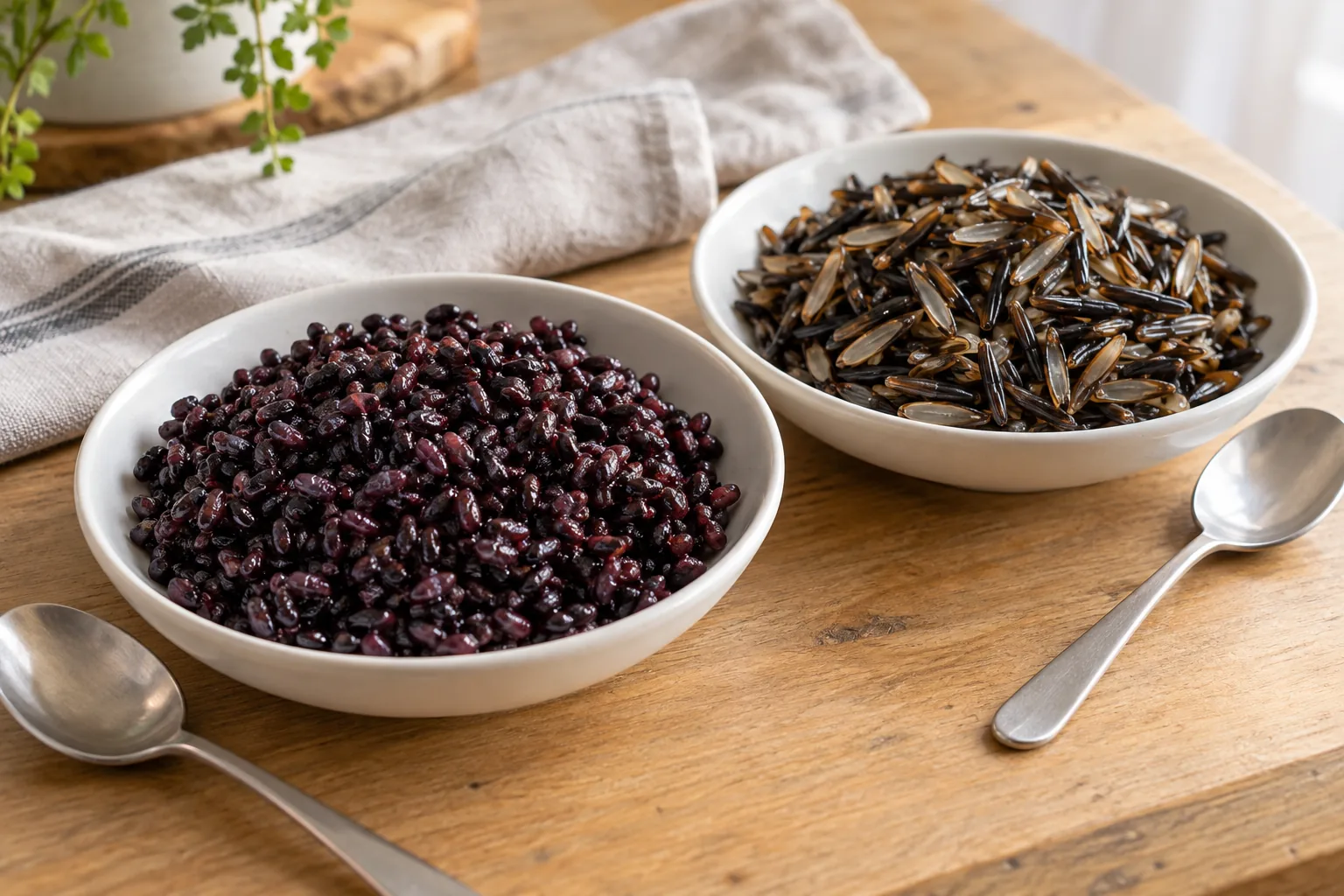
6. Cooking instructions are specific to the product and format
Do not transfer a water ratio, soaking step or timer from one dark grain to another without checking the product. Plain dry grain, a quick-cooking product and a mixed-grain packet may require different handling. Even the same broad grain type does not make every package interchangeable. Read the instructions before planning the rest of your meal.
The Whole Grains Council’s cooking guidance notes that cooking time varies with grain variety, age and cookware. This is why the black rice vs wild rice comparison here does not prescribe a single universal setting. If you use an appliance, check both the product directions and the appliance guidance for that format. Record adjustments to your own product instead of presenting them as a rule for all rice.
7. A blend changes what you are comparing
A package described as a wild rice blend can include other rice or grains. Similarly, a black rice mixture may contain several ingredients in addition to black rice. The visible dark grains may be only one part of the product. Compare the ingredient declarations before treating the front-of-pack names as a complete explanation.
For blends, follow the directions supplied for the blend rather than separating out an imagined recipe from its appearance. Check seasonings and other additions too. If your real choice is between a mixed dinner grain and a congee kit, compare their intended uses and instructions. That is a more useful decision than forcing both into a plain black rice vs wild rice table.
8. A congee product is different from a plain-grain purchase
Buying a named congee kit means choosing a specific product, not automatically buying plain black rice. Ask for the current ingredient list, preparation instructions and storage information. Added grains, fruit or other components can change both the method and the finished bowl. A serving suggestion on a website is not a replacement for the package label.
Our black rice congee kit guide helps frame those product questions. If you already have a mixture, use the multigrain porridge preparation guide to organise what you need to confirm. Wild rice is not an automatic direct replacement inside a kit. Changing one ingredient can change the preparation you need, even when the finished colour appears similar.
9. Origin, value and claims need their own evidence
Neither name proves where the grain was grown, which batch it came from or what certification applies. Those are separate purchasing questions. Ask for current product information when origin matters to you. An old catalog, a general brand statement or an illustration should not be treated as proof about the pack in front of you.
Compare value using equivalent information: product format, net quantity, ingredient mix and the current quoted offer. This guide does not publish a price ranking because different products and markets are not directly comparable. Likewise, black rice vs wild rice does not have one universal nutrition winner. Use the actual labels on a consistent basis if you want to compare declared nutrients, rather than inferring a health advantage from colour or grain length.
Choose black rice vs wild rice for the meal you want
Begin with the job the grain will do. For a bowl with clearly separated vegetables, select a product whose finished grain texture you enjoy in that setting. For a softer spoonable dish, choose a suitable grain or prepared mixture and use its applicable method. The meal comes first; the comparison helps you ask better questions about the product underneath it.
Think about the toppings next. A strongly seasoned mushroom mixture may work with a grain that remains noticeable after mixing. A fruit-based bowl may call for a different texture and a simpler base. These are flavour and serving choices, not rules about what a grain must traditionally accompany. Start with a small portion so you can change your mind without committing the whole meal.
If you enjoy planning toppings separately, our guide to sweet and savoury porridge toppings offers a useful organising method: one main flavour, one contrast and one small finish. The method can inspire serving decisions, although its millet examples do not establish cooking directions for black rice or wild rice. Keep preparation and topping decisions separate.
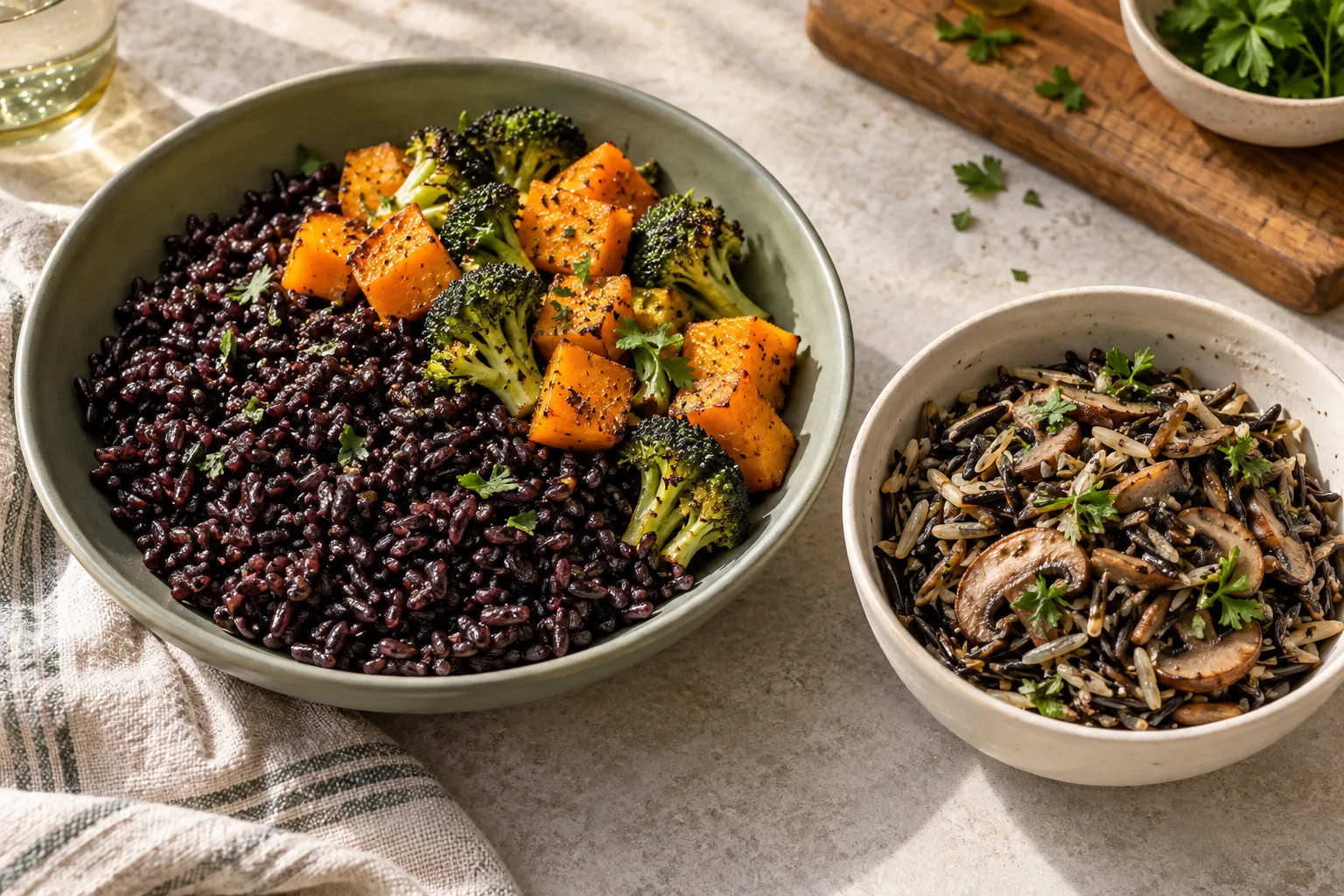
Can you substitute or combine the grains?
You can consider either grain in a meal where the grain is a flexible component, but a substitution needs its own preparation decision. Replacing a cooked grain in a bowl is different from replacing a dry grain inside a fixed recipe. In the first case, prepare each product correctly and choose the amount you enjoy. In the second, check whether the method still makes sense before changing it.
For a first black rice vs wild rice substitution, keep the vegetables and finishing sauce simple. Prepare a small amount of the replacement according to its directions, then assemble one serving. Ask whether the texture, grain size and flavour balance fit the meal. If the result feels too firm, too cohesive or too dominant, change the dish or product choice instead of adding more ingredients to hide it.
Combining cooked grains can make a useful comparison because you can control the final balance. Cooking two unfamiliar dry grains together is harder to judge when their instructions differ. Follow a tested blend recipe or manufacturer directions if you want a one-pot method. Otherwise, separate preparation lets you understand each component before deciding whether they work together in your own bowl.
A useful kitchen comparison in five steps
- Identify both products. Record the name, ingredients, plain or blended format and any variety information that affects preparation.
- Read the directions separately. Note relevant rinsing, soaking, cooking and appliance instructions without transferring one product’s settings to the other.
- Prepare a modest amount. Use the instructions appropriate to each product and avoid changing several variables at the same time.
- Compare plain, then in the meal. Notice the grain’s shape, texture and flavour before adding the same simple accompaniment to each.
- Keep a short record. Write down which product suited the dish, what you would repeat and what information you still need from the seller.
Keep the purpose modest. This is a personal kitchen exercise, not a nutrition trial, authenticity test or proof of supplier performance. Different preparation methods may be necessary, so the results explain your experience with those products rather than isolate one scientific variable. Do not publish the outcome as a universal claim about an entire grain category.
A useful note might say that one product made a more cohesive bowl while the other stayed more distinct beside mushrooms. Add the product name and the directions you followed. That record helps your next purchase more than a simple winner label. It also makes a later conversation with a seller more specific if the next packet behaves differently.
A label checklist before you buy
Check the complete product name, ingredient declaration, net quantity and preparation method. Then check the information relevant to your household, including any allergen statements and storage directions. Ask the seller to clarify anything missing. A photograph and a broad grain name cannot establish whether a prepared product meets a particular requirement.
For a retail congee option, visit the MAIBAHE Black Rice & Red Date Congee Kit page and request the current label before deciding. This article does not imply that the kit is plain black rice or contains wild rice. Confirm the selected product’s ingredients and directions instead of applying the plain-grain comparison to a named mixture.
Wholesale readers can use the maibahe.uk black rice sourcing page to frame product and origin questions. Its catalog references are historical context, while current variety, batch, format and label wording require confirmation. The maibahe.uk product document review page explains the need to agree applicable evidence for the selected product. Neither page establishes that a wild rice product is available.
For a retail inquiry, contact MAIBAHE with the product and preparation questions. Explain whether you want a plain grain, a mixture or a spoonable congee and mention the texture you prefer. Clear questions help connect the black rice vs wild rice comparison to an actual purchase without assuming a product’s stock, price, certification or contents.
Black rice vs wild rice: frequently asked questions
Are black rice and wild rice the same?
No. Black rice is pigmented rice, while wild rice belongs to Zizania, a different botanical group. Their dark appearance can make photographs confusing. Use the product name and complete ingredient declaration to identify what you are buying, especially when the package contains a blend.
Does black rice always have a sticky texture?
No single texture description covers every black rice product. Confirm the variety and whether it is glutinous when the distinction matters. Follow the actual instructions and judge the finished grain in the dish you plan to serve, rather than relying on colour to predict texture.
Can I use one cooking time for both grains?
Do not assume so. Product format, variety and processing can change the directions, and a blend may have its own method. Read both packages separately. A general grain-cooking chart provides context but does not replace the instructions for the products you have.
Is a wild rice blend pure wild rice?
A blend may contain other grains or ingredients. Read the full declaration instead of treating the front name or visible dark pieces as the whole formula. If you want a single-ingredient product, confirm that explicitly before buying and check the directions supplied with that product.
Which is better for a grain bowl?
Choose according to the texture you enjoy with the rest of the meal. Prepare a small amount correctly, taste it plain and then add your planned accompaniment. A more useful answer than a universal winner is knowing which particular product works in your own bowl.
Which is healthier in a black rice vs wild rice comparison?
This guide does not declare a universal health winner. If comparing nutrients, use the actual product labels and keep the dry or prepared basis consistent. A coloured grain, botanical name or serving illustration cannot establish medical suitability or a certified nutritional claim for a package.
Are these images actual MAIBAHE product photographs?
No. All three are new AI-generated editorial illustrations for this guide. They explain grain shape, texture and possible serving choices. They do not verify a product formula, growing region, measured recipe or supplier batch. Request current product information for those decisions.
Sources and your next decision
Source review: 15 October 2026. The Whole Grains Council’s grain directory supports the basic rice and wild rice identity distinction, and its cooking guidance explains why preparation varies. The meal choices, comparison worksheet and buying questions are editorial guidance, not claims that these organisations tested a MAIBAHE product or endorsed the pictured dishes.
For black rice vs wild rice, make the choice in this order: identify the product, read its directions, decide the texture you want and check how it fits the meal. That sequence helps you choose confidently while keeping grain identity, preparation and seller claims as separate questions that can each be checked.