MAIBAHE GRAIN JOURNAL
How to Cook Multigrain Porridge: Steps and Water Ratio Tips | MAIBAHE
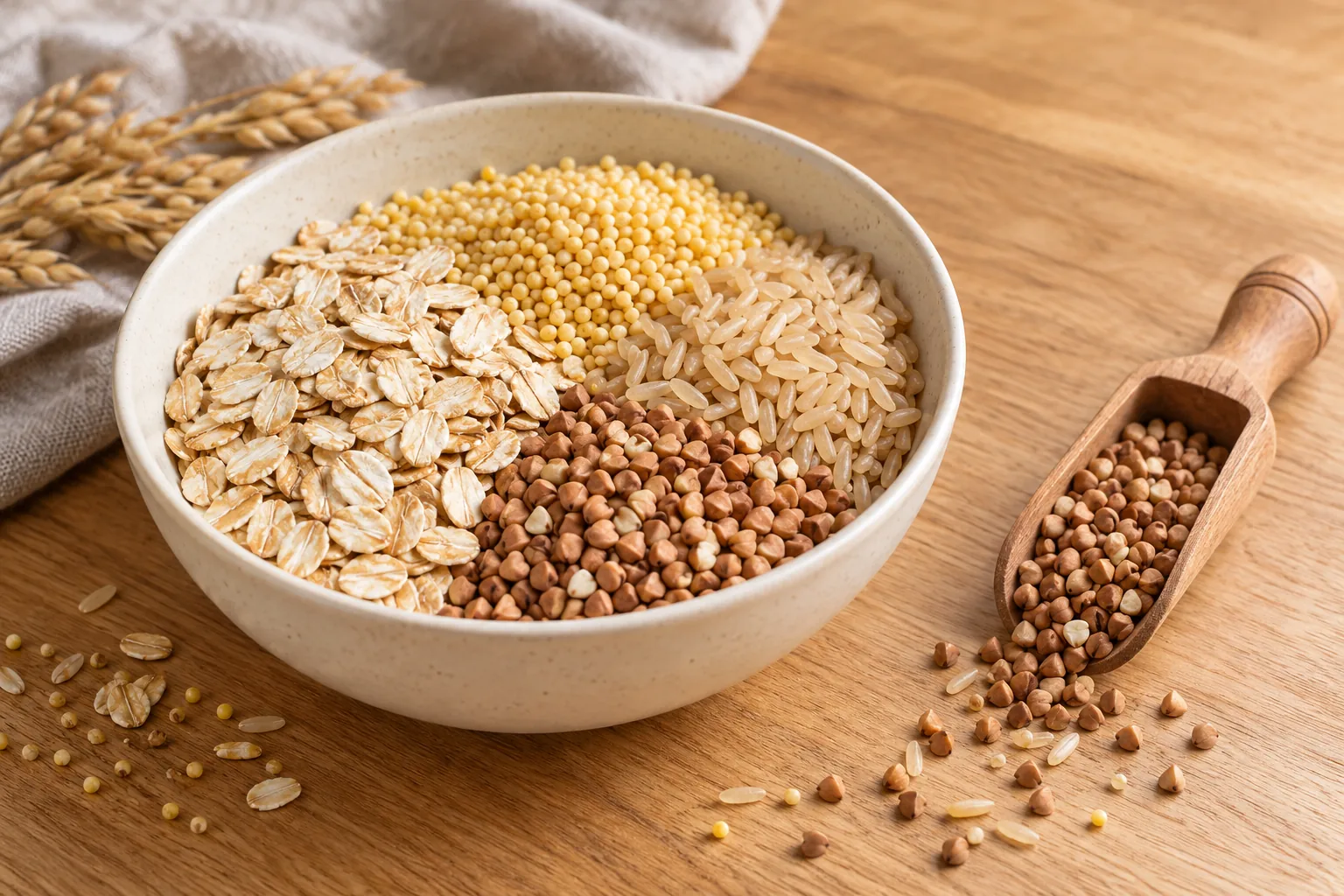
Learning how to cook multigrain porridge starts with the ingredient list, not a universal cooking time. A blend can contain grains of different sizes and processing levels, and it may include ingredients other than grains. Follow the directions for the actual mixture, check the tenderness of its firmer pieces, and adjust the finished consistency only after those pieces are ready.
Five-grain or mixed-grain porridge can bring several textures to one bowl. The name does not, by itself, identify five fixed ingredients or a single preparation method. This guide explains how to cook multigrain porridge thoughtfully: read the pouch, select supported equipment, monitor the texture and choose a finish. It does not prescribe a formula or tested time for an unidentified MAIBAHE blend.
How to cook multigrain porridge: read the whole mixture
Look for the named ingredients and their form. A flake, a cut grain and a whole kernel can behave differently during cooking. A blend made for quick preparation can also differ from a bag of loose, uncooked grains. Check whether the contents are all combined or divided into packets, and whether any additions should be held back until later.
Do not infer the formula from the colour of the finished bowl or the words five grains. Different producers can use different recipes under similar descriptions. The ingredient panel is more useful than guessing from an illustration. It also helps you distinguish an intended topping from an ingredient that needs to cook with the base.
| Label information | Why it matters | Your next action |
|---|---|---|
| Named ingredients and their form | The mixture determines the preparation | Read the full list, not just the front name |
| Cooking method and liquid quantity | Different blends are prepared differently | Measure using the stated units |
| Separate packets or additions | Ingredients may enter at different stages | Keep them separate until instructed |
| Allergen and storage statements | They apply to the complete product | Check before preparing or choosing toppings |
If oats are the main ingredient you recognise, the oatmeal cooking guide explains why oat form matters. It can help you read the mixture, but it does not replace directions for the other ingredients. For help choosing a meal format, see oatmeal versus multigrain porridge.
How to cook multigrain porridge in 7 practical steps
1. Decide what kind of product you have
Identify whether the pouch is a prepared porridge mix, a raw grain blend or another format. Look for words that describe preparation rather than relying on an attractive front image. If the cooking panel is incomplete, ask the seller before choosing a method. A clear starting point saves more time than trying to rescue a mixture cooked by guesswork.
2. Read soaking and washing instructions
Some loose grains have preparation instructions before heating; a ready-to-cook mix may be different. Follow the exact blend’s requirements. Do not soak every ingredient for an arbitrary overnight period, or wash a seasoned mixture automatically. If soaking is specified, use the stated conditions and handle the ingredients hygienically. Do not substitute an improvised room-temperature holding routine for proper preparation.
3. Measure a manageable first batch
Use the dry quantity and liquid measurement given by the pack. Keep track of whether a serving refers to dry ingredients or cooked food. Start with a batch that leaves room in the pan for stirring and bubbling. A smaller first batch also makes it easier to learn the blend’s texture before cooking for several people.
4. Choose supported equipment
A saucepan lets you observe the mixture and adjust it as needed. If the package supports a rice cooker or another appliance, also check that appliance’s manual for the grain combination, programme and maximum porridge quantity. A general rice capacity is not necessarily a porridge capacity. Never exceed the equipment’s fill guidance to accommodate a larger batch.
5. Control the heat and monitor the liquid
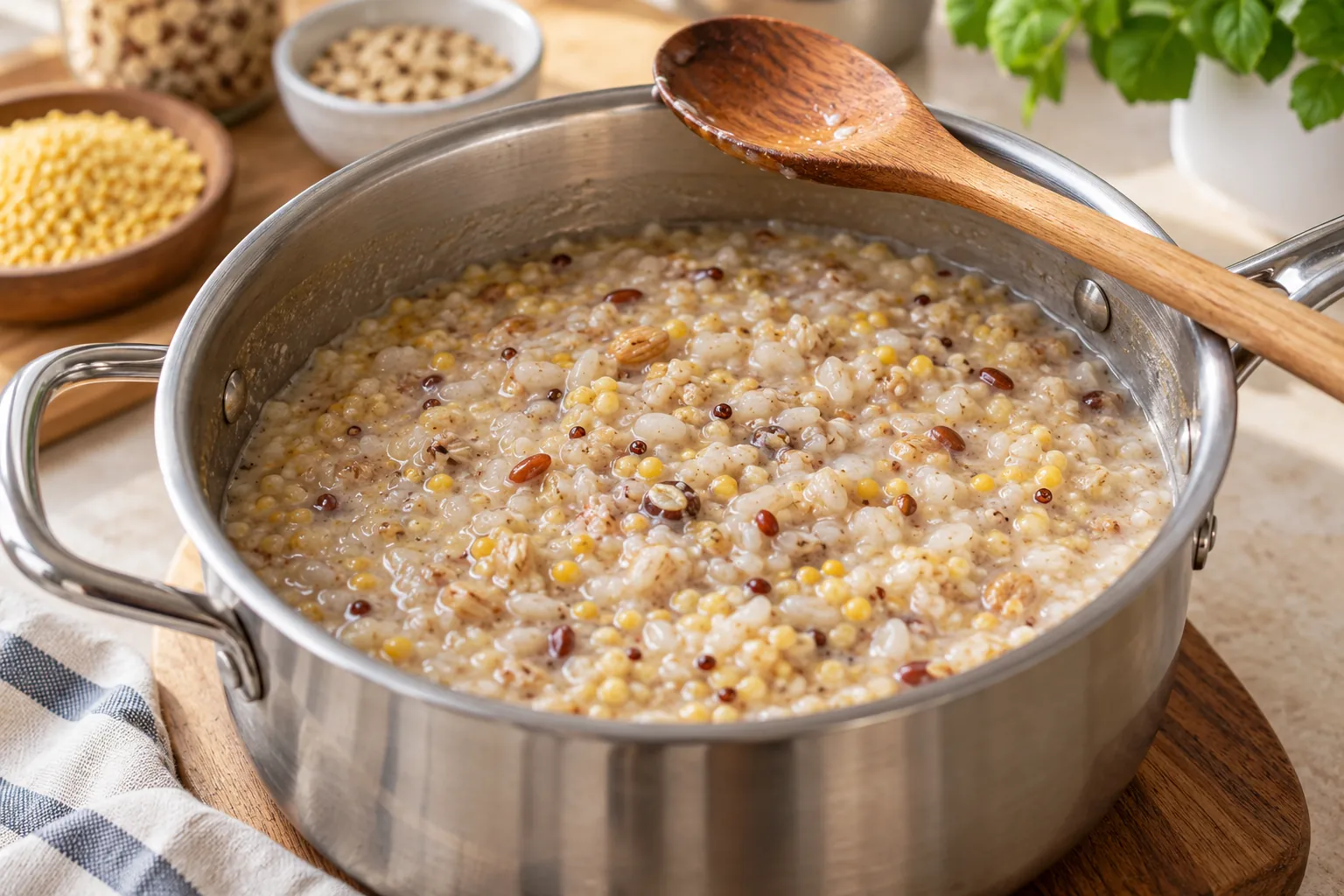
Bring the mixture through the heating stages specified by the directions. Once a simmer is required, keep it controlled rather than allowing the pan to boil aggressively. Observe the edges, foam and liquid level. If the method calls for stirring, pay attention as the mixture thickens; do not assume that a thick surface means the base of the pan is behaving the same way.
6. Check more than one grain
Near the expected finish, cool a small sample and check the pieces that remain most substantial. Softer ingredients can make the mixture appear finished while a larger kernel is still firm. If the blend needs longer cooking, use its directions for extending the process. Add suitable hot liquid gradually if needed, rather than making a large change that obscures what happened.
7. Choose the finish after tenderness is right
Once the mixture is cooked, decide whether you want a fluid bowl or a more spoonable porridge. Adjust a little at a time. Add separately prepared toppings when serving, especially if you want their textures to remain distinct. This order is central to how to cook multigrain porridge: tenderness comes before final thickness.
Why there is no single water ratio for every five-grain blend
A blend’s composition matters, but so does the way its grains have been prepared. Whole kernels, flakes and quick-cooking pieces do not necessarily absorb liquid or soften in the same pattern. Pan width, heat and lid position also change how much liquid remains. Start with the product’s stated quantity instead of averaging several unrelated grain ratios.
The Whole Grains Council’s cooking guidance notes that grain cooking time varies with factors including the grain and cookware. Its chart describes individual grains; it is not a ready-made formula for an unspecified mixed porridge. Use this distinction to avoid presenting a single-grain reference as evidence for an entire commercial blend.
Timing is useful for knowing when to begin checking. It is not proof of an identical result in every kitchen. If you want a more repeatable bowl, record your actual pouch, amount, liquid, pan and finished preference. Repeating those conditions is more helpful than claiming an exact universal number without knowing the ingredients.
Texture checks and simple troubleshooting
| Observation | Check | Response |
|---|---|---|
| Soft base, firm larger pieces | Which ingredients remain firm | Continue the supported method; add liquid gradually if needed |
| Tender grains, very loose liquid | The intended serving consistency | Finish gently rather than raising heat abruptly |
| Very thick before grains are ready | Evaporation and original measurement | Correct liquid in small amounts |
| Sticking or a scorched smell | Heat, pan and stirring guidance | Reduce heat; avoid mixing burnt material into the meal |
| Foaming near the rim | Batch size and pan headroom | Control the heat and choose adequate capacity next time |
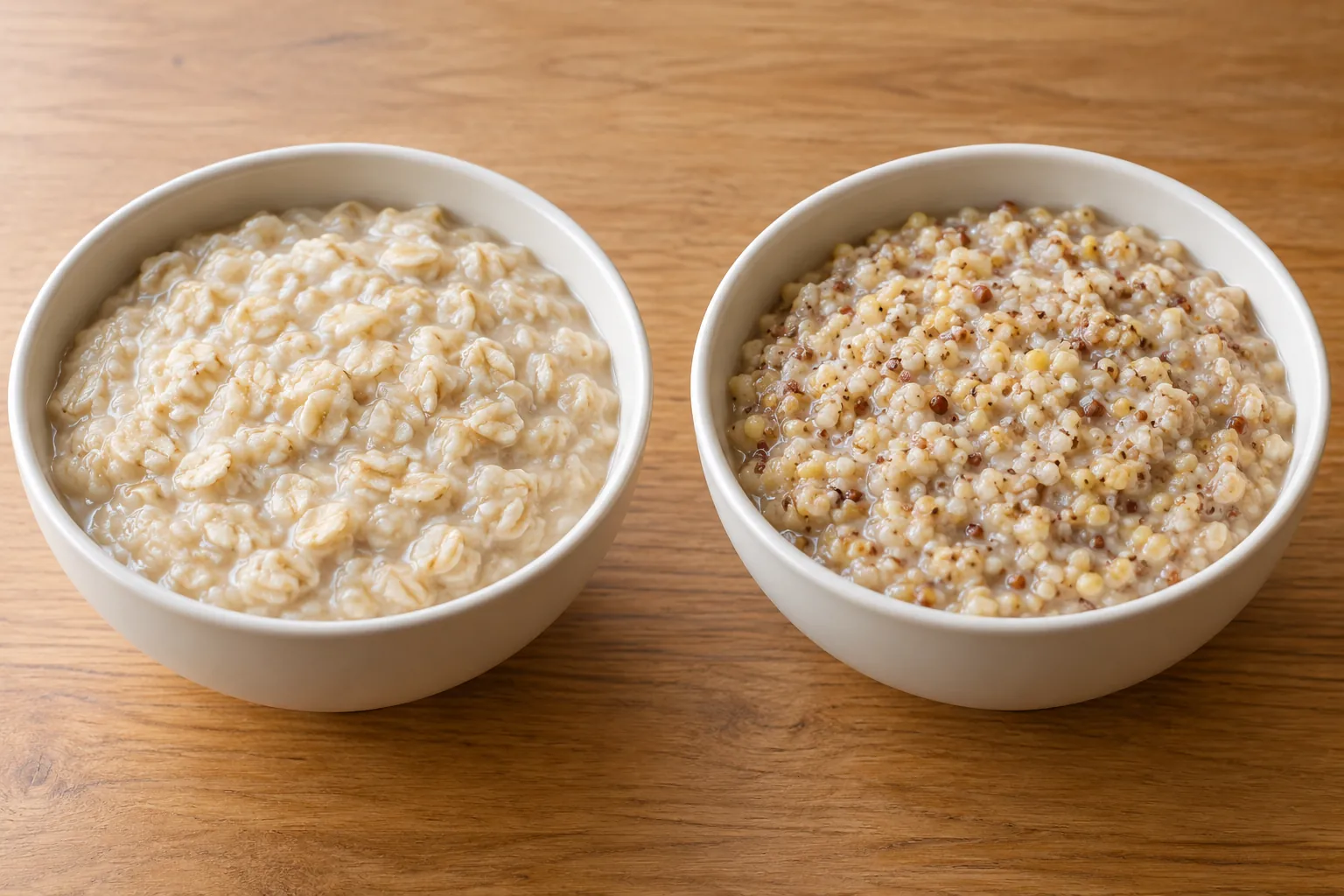
A mixture with distinct grains does not have to look completely uniform. Some people enjoy clearly recognisable pieces; others prefer a softer, more integrated bowl. The target should fit the ingredients and preparation instructions rather than a photograph. When learning how to cook multigrain porridge, use the label as the method reference rather than the appearance in an illustrative photograph.
Build a sweet or savoury bowl around the blend
Start by tasting the cooked base before adding a strong finish. A mixture that already contains a sweet ingredient may need less additional sweetness than a plain grain base. A savoury finish might include separately cooked mushrooms, chopped herbs or a little suitable broth. These are optional serving ideas, not statements about what the MAIBAHE mixture contains.
Choose one or two additions first. A bowl with many toppings can become difficult to assess, and it may hide the grain textures you wanted to enjoy. Keep crisp toppings separate until serving. If several people share a batch, a plain cooked base and separate topping dishes allow each bowl to be adjusted without changing the whole pan.
Review all ingredient labels for allergens and dietary suitability. Multigrain does not mean automatically gluten-free, and a picture cannot establish an allergen statement. Nuts, sesame, dairy and sauces can change a bowl’s ingredient profile. Use the actual labels for the blend and additions, including any specific instructions supplied with the product.
Explore MAIBAHE serving inspiration and the pantry selection when planning a meal. Product questions should go through the contact page with the exact pouch name and label details.
Storage and reheating for a cooked grain bowl
USDA leftover guidance recommends refrigeration within two hours, or one hour above 90°F; shallow containers; three to four days in the refrigerator; and reheating to 165°F. Follow any more specific instructions for your food. These rules do not establish unopened-pouch shelf life.
Portion the cooked mixture so that you can reheat only what you intend to eat. Add suitable liquid as necessary to restore the texture and distribute the heat appropriately. Treat separately added ingredients according to their own requirements, and keep serving utensils clean.
Questions about how to cook multigrain porridge
Does five-grain porridge always contain the same five grains?
No fixed formula can be inferred from the name alone. Read the actual ingredients and preparation panel. Similar front names can describe different blends.
Should I use the cooking time of the fastest grain?
Use the blend’s instructions. A softer ingredient can be ready before the larger pieces. Check those pieces rather than declaring the whole bowl finished because one ingredient is soft.
Do I need to soak every mixed-grain product?
No universal soaking rule applies. Follow the product directions, including the conditions and any separate preparation steps. Ask for clarification if a relevant instruction is missing.
Can I add all packets at once?
Only when the directions call for it. A separate packet may be intended for a different stage or for serving. Read the full preparation sequence before combining the contents.
Can I use a rice cooker?
Check both the blend’s instructions and the model manual. Confirm supported grains, programme, liquid and porridge capacity rather than assuming an ordinary rice method applies.
Where should I go next?
Compare oatmeal and multigrain porridge, return to the Grain Journal for related guides, or read shipping and returns before an order.