MAIBAHE GRAIN JOURNAL
Crystallized Honey: 9 Essential Tips for Easy Everyday Use
Crystallized honey is honey whose texture has become grainy, thick or set as some sugars form crystals. Crystals alone do not mean a jar has spoiled, and they do not prove purity, origin or raw processing. If the product has been stored as directed and there is no separate reason to question its condition, you can use the texture as a spread or gently soften a suitable portion for pouring.
This guide helps you decide what to do with an everyday jar: keep the texture, soften a portion, choose an easier container, or ask the seller a precise question. It covers plain honey rather than homemade honey mixtures with fruit, herbs or other ingredients. Follow the current product label and container instructions whenever they are more specific.
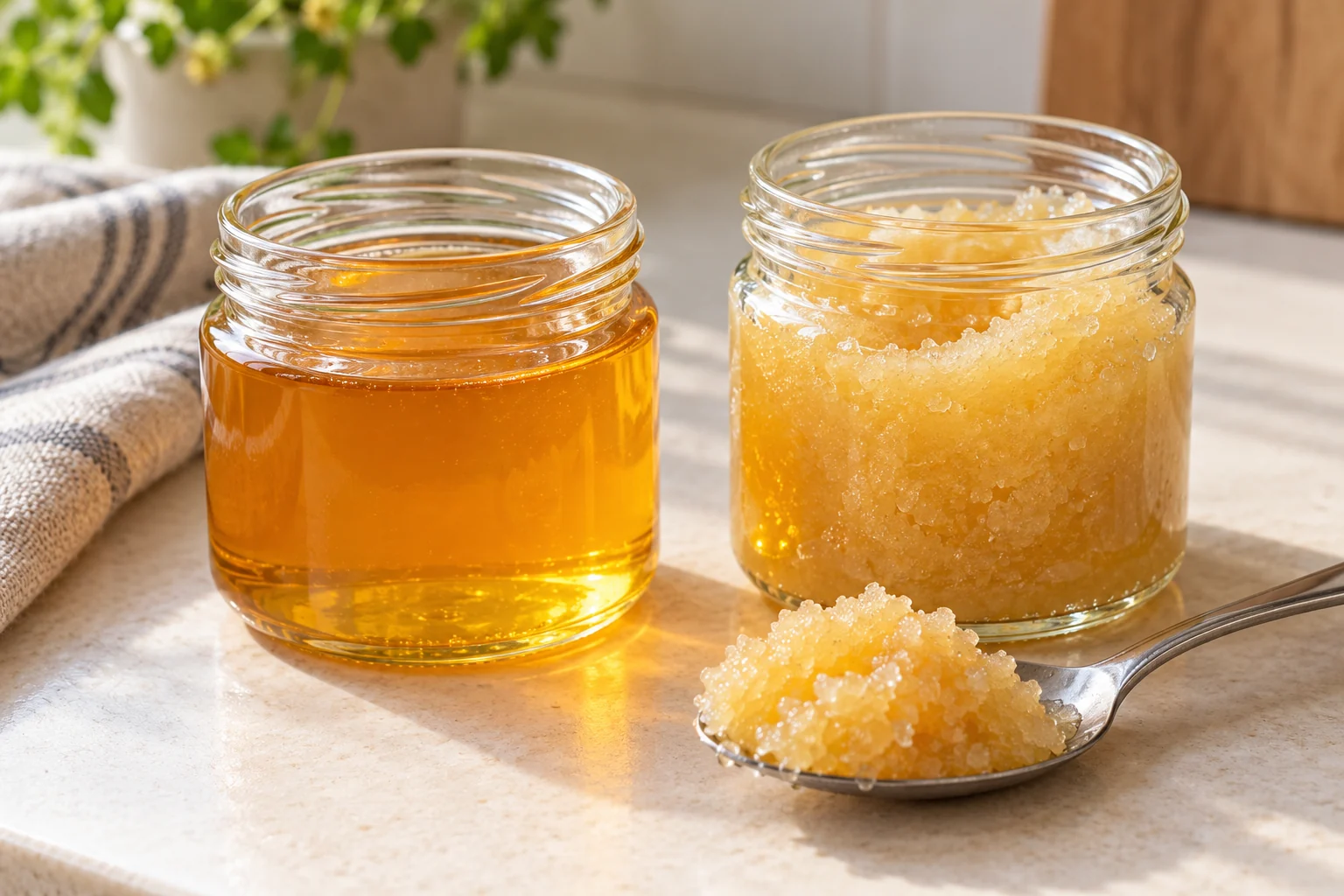
What crystallized honey tells you about the jar
The first useful distinction is between appearance and identity. A jar can look clear, cloudy or set, while its botanical source, ingredients, handling and origin remain separate questions. The National Honey Board explains that crystallization involves glucose leaving the liquid phase and forming crystals, and that different honey varieties behave differently. Its guide to unreliable honey home tests also rejects simple kitchen tests as proof of authenticity.
For your pantry, that means a photograph of two jars is a starting observation, not a verdict about which one is better. Compare what is actually declared on their labels. Then think about the job you want the honey to do. A firm texture can be convenient on toast, while a flowing texture is easier when you want a narrow drizzle. Neither task requires turning the other presentation into an inferior product.
Keep a separate note of anything that makes you question the product beyond crystals: a damaged container, an uncertain storage history, an ingredient you did not expect or a discrepancy in the label. This article cannot establish the condition of an individual jar from a description. If there is a separate concern, put that jar aside and ask the seller; warming is a texture adjustment, not a way to verify a questionable food.
9 essential tips for using crystallized honey
1. Decide whether you need to change the texture
Start with the serving task, not the assumption that every jar must pour. If you want a little honey on bread, try the existing texture with a clean spoon or spreading knife. If you plan to stir a small amount into a warm bowl, the honey does not need to be perfectly clear before you begin. A decorative drizzle is a different task and may justify softening a portion.
This small decision can save you from repeatedly treating the whole container. Put a spoonful on a separate dish and see whether it does what you need. Judge ease of spreading or stirring, rather than trying to decide quality from shine. Crystallized honey can be a useful pantry format when your usual meals suit a spoonable ingredient.
2. Read the ingredients and storage directions first
Check that the product in your hand is the product this guide describes. Plain honey, a honey spread with other ingredients and a honey-flavored syrup are different products. The name on the front is only one part of the label; read the ingredient declaration and the handling directions as well. Do not carry plain-honey storage advice over to a homemade fruit mixture or another prepared food.
Also look at the container. A narrow squeeze opening may become awkward when the contents are firm, even if a wide-mouth jar would make the same texture easy to use. Do not force a hard squeeze or improvise heat treatment for packaging whose temperature limits you do not know. Product and packaging instructions belong together when deciding how to handle crystallized honey.
3. Work with a modest portion before the entire jar
Take out only what you need with a clean, dry utensil when that is practical. A small serving lets you experiment with texture without reorganizing the entire pantry. For example, a breakfast spoonful can go into a separate dish while the main jar is closed and returned to its storage place. Keep crumbs and ingredients from the meal away from the stored honey.
If the jar is too firm to portion comfortably, do not scrape with excessive force or use a sharp tool against the glass. Reconsider whether a suitable container can be gently warmed according to its instructions, or ask the seller for its recommended handling. The aim is an easy serving routine, not extracting the last spoonful at any cost.
4. Use gentle indirect warming when a flowing texture matters
Utah State University Extension describes a water bath as a way to dissolve honey crystals and notes that heat can affect color and flavor. Its storage guidance for sugars and honey is the general reference behind this method. For household use, first check whether the jar is suitable for warming and follow any product-specific directions.
Set a suitable container upright in warm water, keeping the water below its opening. Work on a stable surface and avoid splashing water into the honey. Check the texture as it softens, using a clean, dry utensil when stirring is appropriate. Remove the container carefully and dry its outside before returning it to storage. Do not place glass through an abrupt temperature change.
There is no universal warming time in this guide. Container size, the amount of honey and the starting texture differ. Stop when the honey suits your immediate use rather than chasing a completely transparent appearance. Direct flame, boiling the jar and unattended heating are unnecessary for this simple serving task.
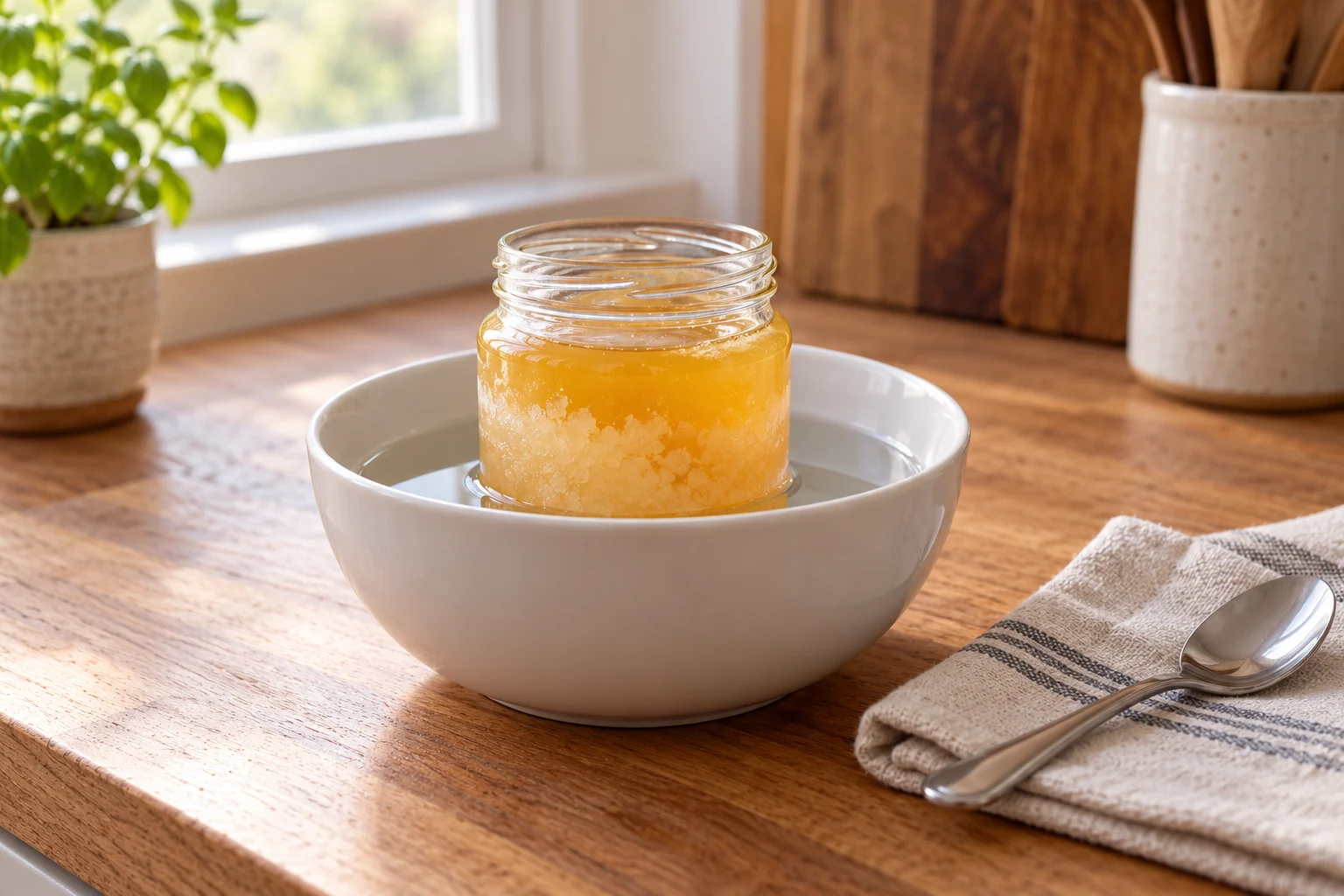
5. Keep the warming water outside the honey
A water bath surrounds the container; it is not an instruction to dilute the stored product. Arrange the bowl so that normal movement will not send water over the rim. Have a dry place ready for the jar afterward. If you use a spoon to check consistency, keep that spoon separate from a wet stirring utensil used elsewhere in the meal.
You can deliberately combine honey with water or another ingredient for a drink or dish, but make that mixture separately and follow handling guidance for the finished food. Do not add leftover tea, milk or other liquid to the main jar to make it easier to pour. A prepared mixture has a different composition from the plain honey described on the original label.
6. Choose a sensible everyday storage location
Follow the current label for your product. For plain honey in ordinary household use, a closed container in a dry cupboard is a practical arrangement. Avoid turning the jar’s storage place into a warming station beside a hot appliance. Keep the opening clean enough that the lid closes properly and the next serving does not start with sticky threads or crumbs.
Choose a location that makes the habit easy: a reachable shelf, the lid beside the jar while serving, and a dry spoon available. This is more useful than continually moving a jar around in pursuit of an unchanging appearance. Crystallized honey may return after you soften it; plan for a texture you can use rather than promising that one treatment will keep it liquid forever.
7. Match the container to your normal serving style
If you regularly use spoonable honey, a wide opening can make portions easier to reach. If you buy a squeeze bottle, ask whether its expected texture remains convenient for that opening and what the producer recommends when it firms up. Consider the practical difference before buying a large container, especially if you use honey only occasionally.
Do not transfer honey simply for the appearance of a matching kitchen jar. The original package preserves the label, lot information and specific directions. If a transfer is appropriate, use a suitable clean, dry food container and retain that information separately. Keep different purchases identifiable instead of topping up an old jar until its origin and opening history become unclear.
8. Treat texture and authenticity as separate buying questions
Neither a set jar nor a clear jar establishes botanical origin, processing history or purity by itself. Avoid choosing a product because a seller presents crystallized honey as a conclusive home test. Ask what the actual claim is and which information supports it. A useful reply addresses the named product and batch rather than relying on a striking comparison video.
Our Chinese linden honey origin and buying guide explains how source descriptions differ from a current product declaration. For MAIBAHE sourcing context, the Northeast black bee and linden honey information page provides a route to product-specific questions. Its historical assortment should not be treated as proof of current stock, processing or an available retail pack.
9. Use the texture in a meal instead of treating the jar as a project
Try a modest amount on warm toast, stir a portion into a bowl after cooking, or soften just enough for the serving you have planned. Start with less than you think you need and distribute it before deciding whether to add more. These are serving ideas, not a tested recipe or a claim that one texture produces a nutritional advantage.
For a grain breakfast, prepare the base according to its own directions before adding the honey. Our grain breakfast and recipe ideas can help you choose a bowl to build on. Keep the sweetener decision separate from the cooking method: changing the honey texture does not tell you how much water or time a particular grain needs.
Choose crystallized honey or a flowing texture for the task
The table below is a practical serving comparison, not a grading system. Begin with a jar whose identity and storage history you understand. Then choose the least complicated approach that suits the dish. You do not need to make every portion look identical to the jar when it was first opened.
On a narrow screen, swipe the table sideways to read every column. Keyboard users can focus the table region and use the arrow keys.
| Your task | Useful starting texture | Practical approach |
|---|---|---|
| Spread on toast | Spoonable or set | Try a small portion without warming the jar. |
| Stir into a warm grain bowl | Either presentation | Add a modest serving after preparing the base. |
| Make a thin decorative drizzle | Flowing | Gently soften a suitable portion if needed. |
| Compare two purchases | Record the texture you observe | Compare labels and instructions separately from appearance. |
| Investigate a damaged or uncertain jar | No texture preference resolves it | Set it aside and ask the seller; warming is not verification. |
Think about three different breakfast situations. For toast, you may prefer a spread that stays where you put it. For a warm bowl, distribution matters more than a perfect drizzle. For a cold dressing or another mixed preparation, you may want the honey flowing before combining it with the other ingredients. The finished dish then needs its own recipe and storage instructions.
This is also why one household can reasonably keep different honey presentations. A person who mostly spreads it may never need a pouring bottle, while someone decorating breakfast bowls may value a more fluid serving. Choose for your routine rather than assuming that crystallized honey needs correction every time you see it.
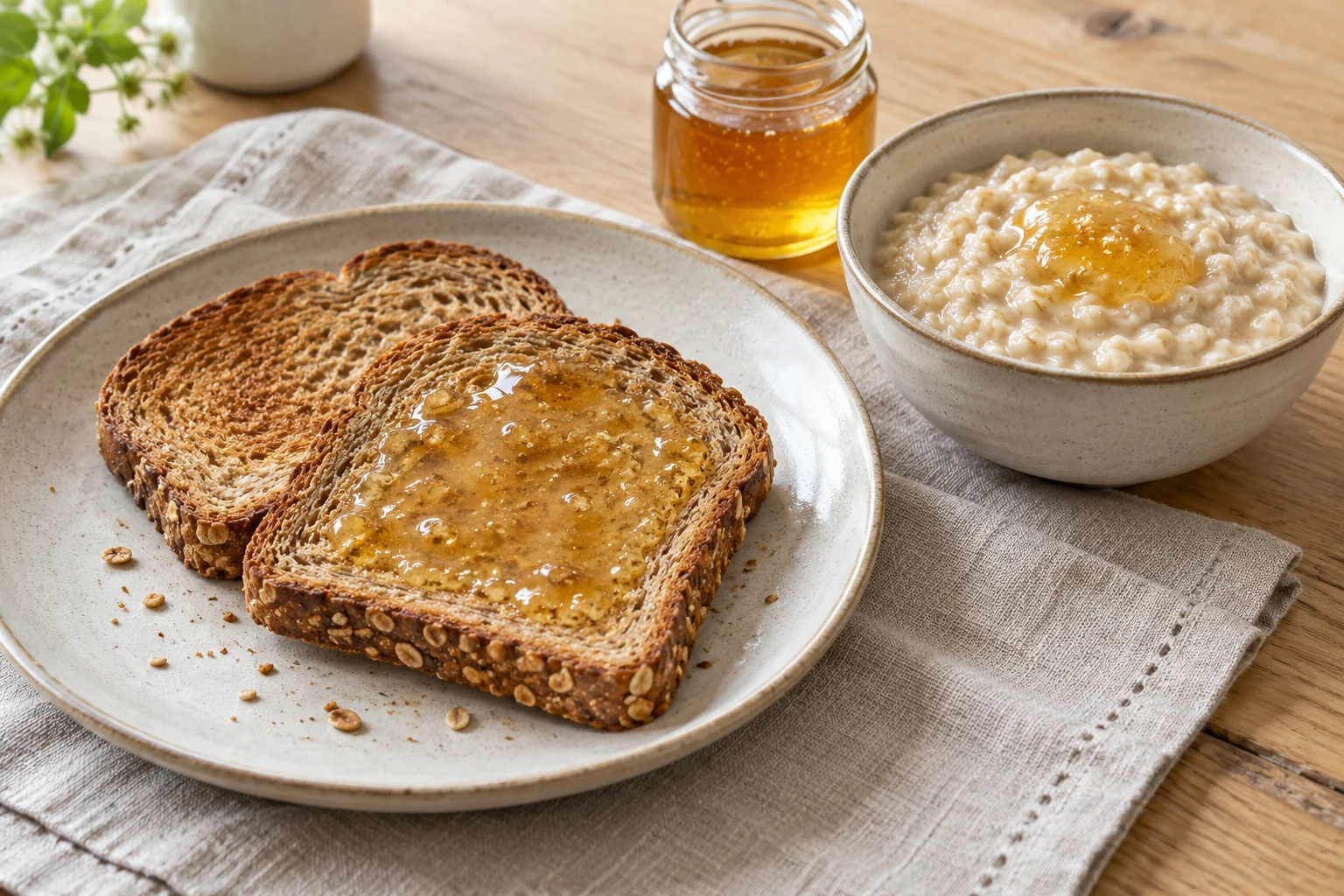
Build a simple routine for crystallized honey
Write down the immediate problem in plain language: “too firm for the squeeze opening,” “grainy but easy to spread,” or “need one spoonful for breakfast.” Those descriptions point toward different actions. They are more useful than labeling every change as a bad jar. Keep the original label nearby so the product identity remains available when you ask for help.
Next, choose one small adjustment and observe whether it solves that problem. You might use a spoon instead of a drizzle, prepare a separate serving, or ask about a more convenient opening at your next purchase. Change one thing at a time. Otherwise, a switch in container, storage place and warming method makes it difficult to know which change actually improved convenience.
For a shared kitchen, agree on a basic serving habit. Keep one utensil for the honey, put any meal portion on a separate dish, and close the main container before moving on to toast or cereal. A simple routine is easier to maintain than a long checklist nobody follows. It also keeps the product information with the jar instead of losing it among several unmarked containers.
Questions to ask before buying crystallized honey
Ask the seller what texture to expect, which storage directions apply, and how the packaging should be handled if the honey becomes firm. For an origin or processing claim, request the declaration relevant to that product. A short, precise question is easier to answer than asking whether the honey is “good” based only on its color.
For a larger purchase, separate presentation from documentation. Record the product name, ingredient declaration, lot reference, stated source, packaging and intended use. The MAIBAHE product document review page is a useful starting point for requesting current scope and supporting records; a webpage does not establish that every claim applies to every honey or shipment.
If your question concerns retail availability, check the current MAIBAHE shop assortment rather than assuming a historical honey presentation is on sale. For a commercial project, use the wholesale inquiry route with the product, quantity, destination and packaging you need. Prices, minimum quantities and supply arrangements require a current response for that project.
Frequently asked questions about crystallized honey
Does crystallized honey automatically mean the honey has gone bad?
No. Crystals alone are a texture observation, not automatic evidence of spoilage. Consider the actual product, label and storage history. If something else makes you question the jar, do not use warming as a way to settle that concern; set it aside and ask the seller for guidance.
Can I use the honey without making it liquid?
Yes, when the plain honey is otherwise appropriate to use. A spoonable texture can work as a spread or as a portion stirred into a warm dish. Start with the task you need it to perform. There is no requirement to make the whole jar clear before every serving.
Does crystallization prove the honey is pure or raw?
No. The National Honey Board rejects crystallization as a stand-alone authenticity test. Texture does not establish the origin, processing description or ingredient declaration of an individual product. Ask for information tied to the actual jar or lot instead of relying on a home demonstration.
How long should I warm the jar?
There is no single time that fits every amount, container and starting texture. Follow product and packaging directions, use gentle indirect warming when suitable, and check whether the honey is soft enough for your task. This guide does not provide a validated time-and-temperature treatment or a sterilization method.
Should I add water to the stored honey to make it pour?
No. Keep a warming bath outside the container. If you want honey mixed into a drink or dish, prepare that portion separately and follow instructions for the finished food. Do not assume the resulting mixture has the same storage properties or directions as the original plain honey.
Why did the honey become grainy again after softening?
Changing the texture for a serving does not promise a permanently liquid jar. Honey varieties and conditions differ. If the recurring texture suits spreading, you may simply use it that way. If a pouring presentation is important, ask the producer about suitable handling and packaging for the product you are buying.
Can honey be given to a baby once the crystals are warmed away?
No. The CDC guidance advises against honey before 12 months of age because of infant botulism risk. A change from set to liquid does not remove that restriction. The serving suggestions in this guide are not infant-feeding instructions.
Choose your next step for crystallized honey
For an ordinary pantry jar, choose the serving texture that fits your meal and follow its label. If you need a flowing portion, check the container before gently softening it. If your question is really about the product’s identity or condition, keep the jar and lot details together and ask that question directly. Crystallized honey becomes easier to handle when those decisions stay separate.
There is no need to turn a modest breakfast ingredient into a complicated daily treatment. A suitable opening, a clean dry spoon, a closed jar and a realistic serving plan are practical starting points. Keep any product-specific directions with the container and let those directions guide the next use.
Sources and scope
Sources and linked MAIBAHE pages were checked on 22 October 2026. The National Honey Board supports the explanation of crystals and the limits of home authenticity tests; Utah State University Extension provides general storage and water-bath guidance; the CDC provides the infant-feeding restriction. Practical serving comparisons and the jar routine are editorial suggestions. No batch testing, health benefit, fixed shelf life, current honey stock or guaranteed result is claimed.