MAIBAHE GRAIN JOURNAL
Steel Cut vs Rolled Oats: 9 Essential Tips for Easy Cooking
Steel cut vs rolled oats is mainly a choice between chopped oat pieces and flattened oat flakes, with different textures and preparation needs. Start with traditional steel-cut oats when you want a bowl with a noticeable grain bite and have time for its cooking method. Choose old-fashioned rolled oats when you prefer a softer flake texture and a shorter ordinary stovetop routine. Quick-cooking products can change that comparison, so read the exact package before deciding.
This guide helps you choose an oat format for the breakfast or savory bowl you actually want. It covers nine practical differences, a small comparison exercise, substitution decisions and a label checklist. It compares plain oats rather than promising that every flavored sachet, instant cup or mixed-grain product will behave the same way.
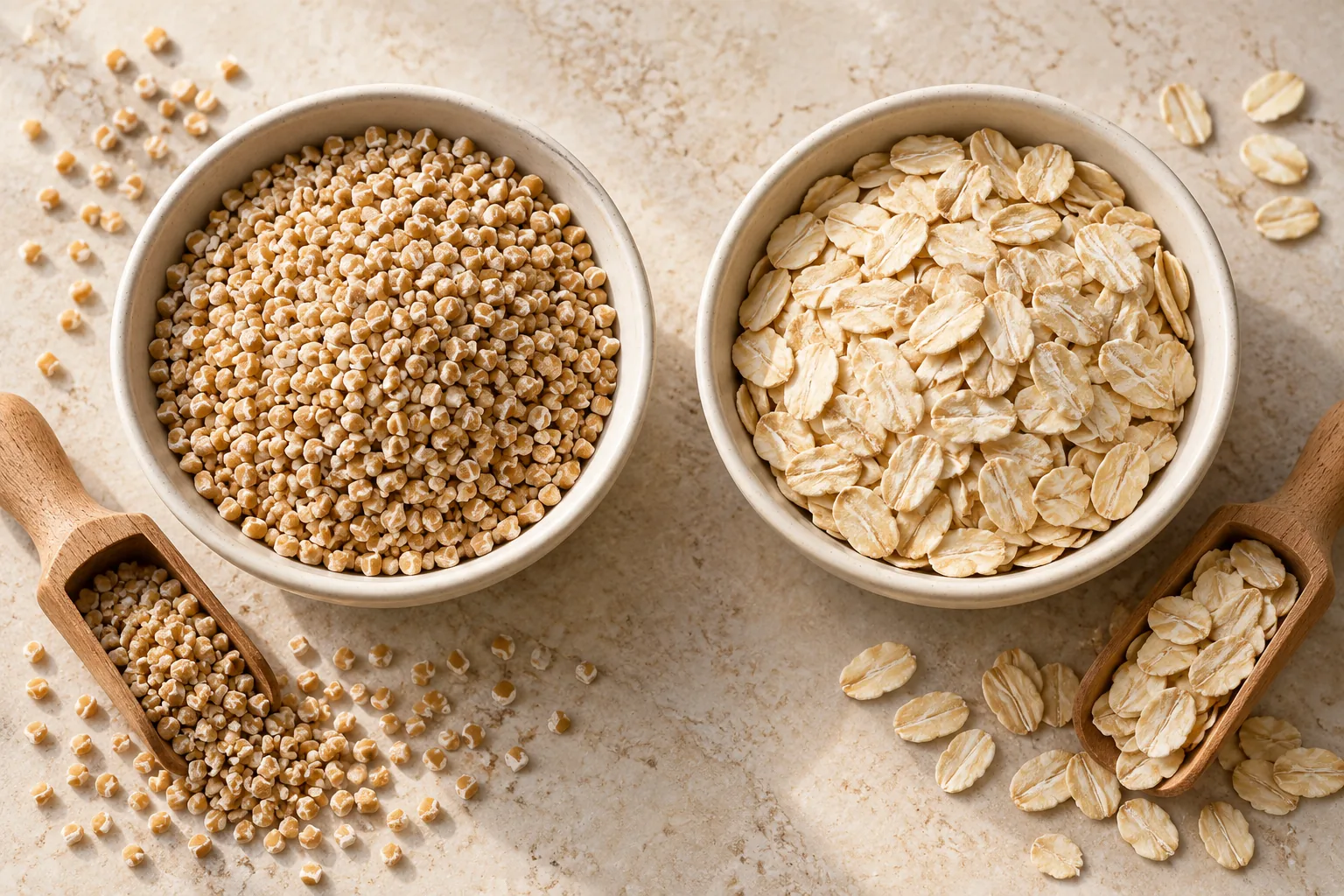
Steel cut vs rolled oats at a glance
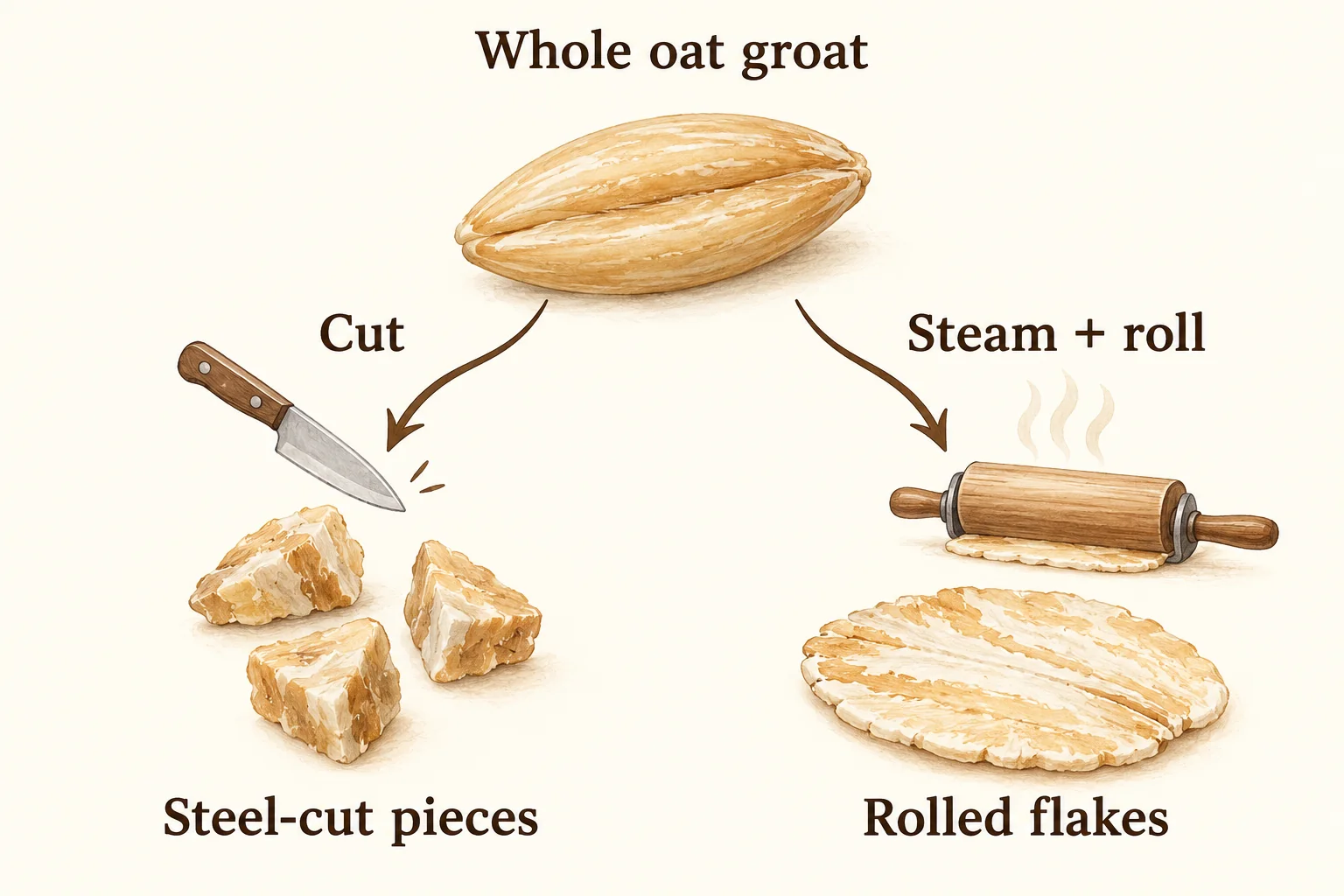
In a steel cut vs rolled oats comparison, both formats begin with oat kernels, often called groats. The difference you see in the dry ingredients reflects how those kernels have been prepared. Identify the actual format before comparing cooking directions, texture or value. A quick steel-cut product and a traditional steel-cut product deserve separate attention even when the largest words on their packets look similar.
On a small screen, swipe the comparison table sideways to read all three columns.
| Decision | Traditional steel-cut oats | Old-fashioned rolled oats |
|---|---|---|
| Dry form | Small chopped groat pieces | Steamed, flattened flakes |
| Typical eating character | More distinct grain bite | Softer flake texture |
| Ordinary hot preparation | Usually a longer simmer | Usually a shorter stovetop preparation |
| Important exception | Quick-cooking steel-cut formats | Quick or instant flakes and prepared mixtures |
| Recipe question | Does the recipe specify chopped oats? | Does the recipe rely on rolled flakes? |
| Best first check | Exact product and its directions | Exact product and its directions |
The Whole Grains Council’s illustrated oat types distinguishes cut groats from steamed and rolled flakes. It also separates Scottish oatmeal, which is traditionally ground, from steel-cut oats. These names describe useful format differences; they do not establish the origin, quality or certification of a particular packet.
9 essential steel cut vs rolled oats decisions
1. Look at the format, not just the word oatmeal
Oatmeal can describe the breakfast in a bowl as well as a product on a shelf. The word alone does not tell you which preparation method to use. Look for the more specific description: traditional steel-cut, old-fashioned rolled, quick-cooking or another named format. Keep that description with the cooking instructions rather than searching for a method for any oatmeal.
When the packet has a clear window, the contrast between small chopped pieces and broad flattened flakes can help you ask the right question. A photograph is less useful when it shows a cooked serving with toppings. If the listing is unclear, ask the seller for the current product description and preparation directions before choosing it for a particular recipe.
2. Decide how much grain bite you want
Texture is a useful starting point because a bowl can be perfectly prepared and still not be your favorite style. Think about whether you enjoy feeling distinct pieces as you eat or prefer a softer flake-based spoonful. The choice does not require one texture to be objectively better than the other.
The Whole Grains Council’s Notes on Oats guide describes steel-cut oats as chewy and distinguishes them from rolled and instant formats. Use that as background, then taste the product you buy. In a steel cut vs rolled oats comparison, your preferred tenderness and thickness are more useful targets than a photograph of someone else’s breakfast.
3. Check what quick-cooking means on each packet
The main format name is only part of the label. A product may also be described as quick-cooking, instant or specially prepared for a particular appliance. Those details can change the steps and time you need. Do not assume that every product described as steel-cut requires the same routine, or that all flakes share one method.
Compare two packets that serve the same purpose. If convenience is your priority, compare the full preparation process, including measuring, heating and any instructed standing time. If you are exploring a more traditional texture, compare suitable plain products. This makes the steel cut vs rolled oats decision relevant to your morning rather than a contest between labels.
4. Match the cooking method to the product
Follow the directions for the oats in front of you. A stovetop method, microwave method and appliance program are different preparations, even when they start with the same ingredient. Use a container and batch size suited to the stated method. Do not transfer an ordinary rolled-oat timer to traditional steel-cut pieces and expect an identical finish.
For a broader explanation of preparation sequence and texture adjustments, read our oatmeal cooking guide. This steel cut vs rolled oats comparison helps you decide which oat format to choose; the cooking guide helps you work through the method after you have identified it. Keep the package instructions available during the first preparation.
5. Keep the liquid reference attached to the batch size
A liquid quantity is meaningful only when you know the amount of oats, the method and the intended result. Read the complete direction rather than copying a number from a comparison chart. Also check whether the measure refers to dry oats or prepared porridge. Those are different starting points for planning breakfast.
Record what you used before making adjustments. If you change the oat format, pan, liquid and batch size together, you will have little information about why the texture changed. Begin with the relevant directions, then make one deliberate change on a later attempt if you want a different consistency. Keep small personal cooking notes alongside the product name.
6. Choose toppings after judging the oat base
Try a spoonful before adding a large amount of fruit, sweetener or sauce. That gives you a clearer sense of the base texture. Then add a familiar accompaniment and decide how the whole bowl works. A crunchy topping can provide contrast to a soft bowl, while a savory topping can make oats feel like a different meal entirely.
Sweet and savory are serving choices, not fixed rules for either format. You can plan a mushroom-and-herb bowl or a fruit-topped breakfast around the oats you enjoy. Keep toppings modest during your first steel cut vs rolled oats comparison so they do not hide the difference you wanted to understand.
7. Use nutrition labels on the same basis
If you want to compare nutrition information, first check that both figures use the same reference amount and product state. A dry serving and a cooked serving are different measures. A plain oat product and a sweetened mixture also contain different ingredients. The front name does not replace the complete label.
This guide does not assign either format a universal health ranking. Read the declarations for the finished product you intend to eat, including any additional ingredients. Where a dietary requirement affects your purchase, use the relevant product information. A texture comparison does not establish that a particular packet meets that requirement.
8. Compare steel cut vs rolled oats by quantity and routine
Check net weight and a consistent price unit before comparing package prices. Keep delivered costs separate until the seller has confirmed them. A larger packet may be useful for an ingredient you cook regularly, while a smaller first purchase may suit a format you are still learning to enjoy.
Also consider the routine around the bowl. Do you want to prepare breakfast immediately, or do you prefer a slower weekend cooking session? A format that suits one situation may be less convenient in another. Your steel cut vs rolled oats choice can change from day to day without either purchase being a mistake.
9. Separate plain oats from a formulated blend
A mixture containing oats, other grains, dried fruit or additional ingredients should be evaluated as that mixture. Read every ingredient and use the combined product’s preparation instructions. A prominent oat name on the front does not turn the whole packet into plain rolled oats or plain steel-cut oats.
Our oatmeal and multigrain porridge comparison addresses that separate buying question. When you compare steel cut vs rolled oats, decide whether you are choosing an ingredient format or choosing a convenient finished mixture. Keeping those questions separate makes both the shopping decision and the cooking session easier to understand.
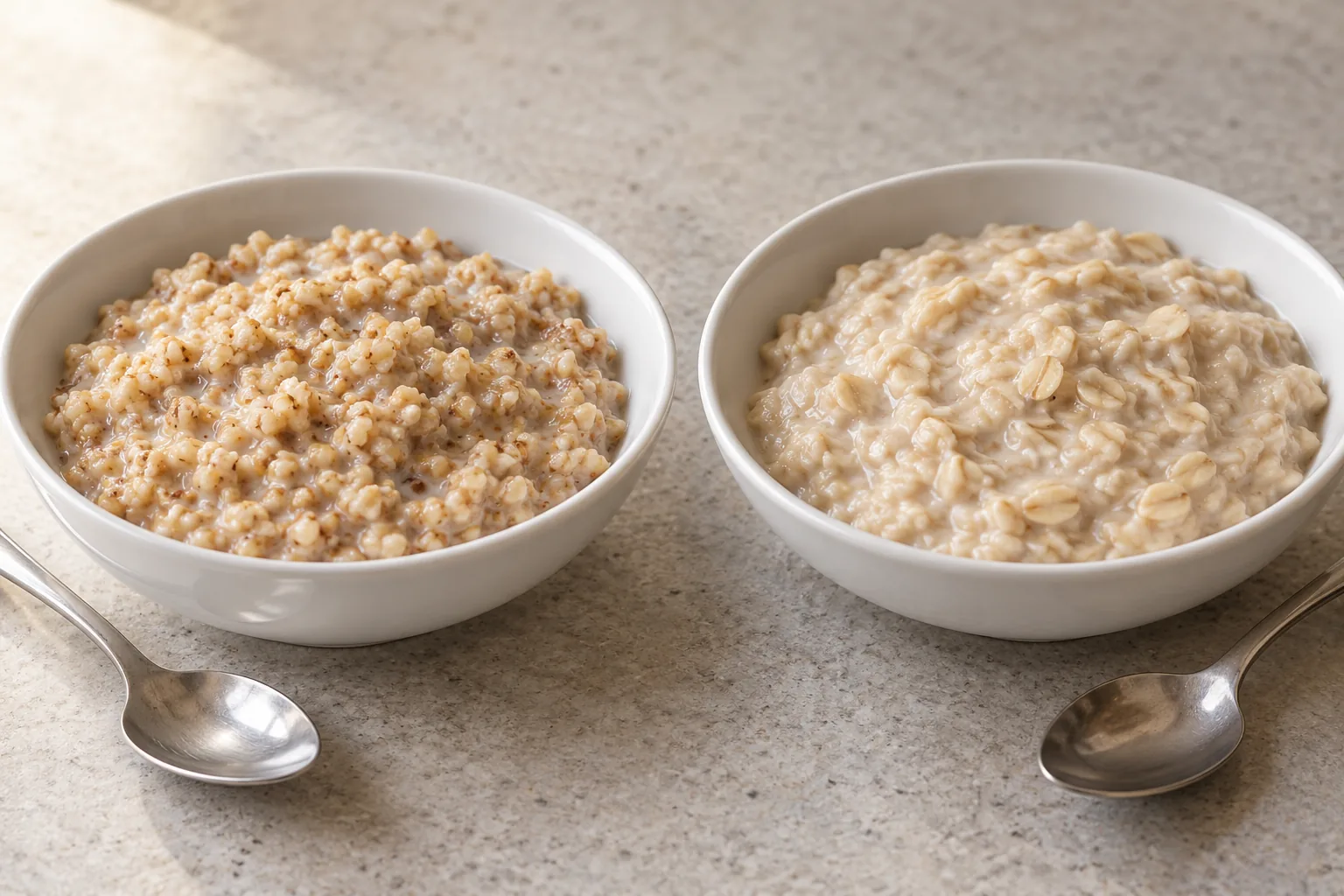
Steel cut vs rolled oats: plan time and texture together
A useful time estimate includes the whole preparation, not simply the simmering figure. You need time to measure the ingredients, heat the liquid, cook the oats and follow any finishing instructions. If you regularly rush breakfast, compare the actual steps for the products available to you before buying a large pack.
For the timed part of your comparison, copy the method from each actual package before starting. Record whether its directions specify an uncovered or covered pan, the heat setting, stirring and the recommended endpoint. Use those product-specific instructions to plan your cooking session. Do not substitute a generic timer for every steel-cut format or transfer a stovetop method to a microwave without applicable directions.
For the packet you choose, write down both the suggested time and the finished texture you want. If the oats are not at the tenderness you prefer, review the method before deciding what to adjust. Keep the distinction between tenderness and thickness clear: a bowl can be loose but still contain firm pieces, or thick while its flakes are already soft.
Three practical breakfast decisions
- A short preparation window: choose a product with directions you can realistically finish in that window.
- A bowl with a noticeable grain texture: try an appropriate steel-cut product and allow for its method.
- A softer flake-based bowl: begin with an old-fashioned rolled product and judge the finish before adding toppings.
For repeatable results, keep a note of the pan, amount of oats and liquid you used. Add a short comment such as “too firm for weekday breakfast” or “soft enough for the bowl I wanted.” These observations help you choose a next step. They are more informative than concluding that every steel-cut or rolled product will produce the same result.
Can you substitute steel-cut oats for rolled oats?
For a plain porridge bowl, you can choose a different oat format and prepare it using its own instructions. That is a change of ingredient and method, rather than an exact replacement within an unchanged recipe. Expect the finished texture and preparation time to differ, and choose the serving idea around that result.
For baking, granola or a recipe that depends on the structure of oat flakes, use the format specified by the recipe. Chopped groat pieces do not perform exactly like flattened flakes. A successful porridge substitution does not establish that the same swap will work in a biscuit, crumble topping or baked oat bar.
If you are experimenting with a mixed bowl, prepare the two oat products separately for your first attempt, then combine a little at serving. This lets you judge the balance without guessing a shared cooking schedule. A packaged blend may have its own instructions; follow those rather than extrapolating from the separate components.
For more ideas once you have chosen a base, explore MAIBAHE’s oatmeal and multigrain cooking collection. Save the product name with the recipe or method you enjoyed. If the next packet is a different thickness, cut or quick-cooking format, review the directions again rather than assuming your earlier notes still apply unchanged.
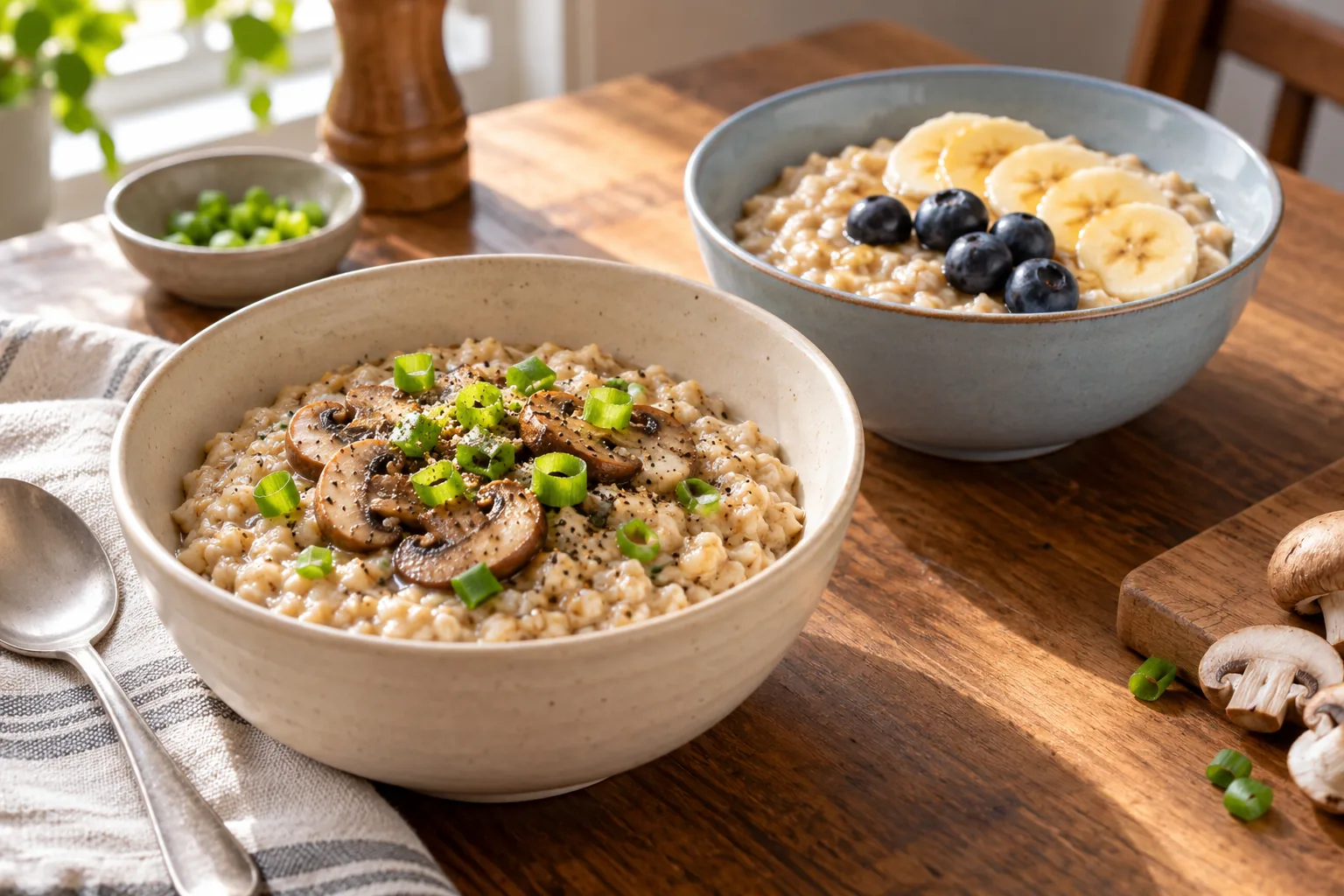
A useful steel cut vs rolled oats comparison at home
Start with one question: which texture and routine would you like to repeat? You do not need to recreate a professional test. Two small batches, their correct directions and a familiar topping can give you a practical answer. Keep the rest of the breakfast simple so the comparison remains easy to interpret.
- Identify both products. Record the full format description, including quick-cooking wording.
- Choose a purpose. Decide whether you are comparing breakfast convenience, texture or a savory serving.
- Prepare separately. Follow each packet’s own method and record its quantities.
- Judge the bases first. Note tenderness, thickness and the feel of the oat pieces or flakes.
- Add the same accompaniment. Use a familiar topping in a similar amount.
- Choose a next step. Repeat the preferred bowl, or change one preparation detail before deciding.
Try to judge the bowls at a similar stage of serving. If one has stood through the preparation of the other, note that difference rather than attributing every contrast to the oat format. You can also compare the products on separate mornings while keeping the topping and serving arrangement familiar.
Describe your result narrowly. “I prefer this rolled product for a quick fruit bowl” is a useful conclusion. “Rolled oats are always better” goes beyond what you tested. The same applies if you enjoy the bite of a steel-cut breakfast. A personal preference can guide your shopping without becoming a claim about every product or every eater.
Steel cut vs rolled oats: the buying checklist
Before ordering, confirm the oat format, ingredient list, preparation directions and net weight. A clear listing should help you understand the product you will receive. If an origin story or certification claim matters to your purchase, ask which current information supports that specific item rather than inferring it from a general brand description.
The sister site’s rolled oat format and sourcing page distinguishes historical catalog presentations and asks buyers to confirm current packaging and specifications. It is useful context for trade questions; a historical catalog entry does not establish today’s retail stock or the preparation method of a different packet.
- Is this traditional steel-cut, old-fashioned rolled or a quick-cooking variation?
- Does the packet contain plain oats or a mixture?
- Can you read the preparation method before choosing it for your routine?
- Are you comparing the same quantity and price basis?
- Do any claims apply to the actual product and current documentation?
- Will the pack quantity suit your use and the stated storage instructions?
For document questions, MAIBAHE’s product quality documentation guidance is a starting point for asking about scope, issuer and validity. Broad sourcing language should lead to a specific question about the selected goods. Do not extend a certificate or historical statement from one product family to every oat format.
Frequently asked questions
Are steel-cut oats and rolled oats different grains?
They are different formats of oats. Steel-cut products contain chopped groat pieces, while rolled products have flattened flakes. The processing and product instructions help explain the kitchen difference. Read the full label because a mixture or a quick-cooking variation adds another distinction beyond the main name.
Are old-fashioned oats the same as rolled oats?
Old-fashioned commonly describes regular rolled oats. Still check the packet for its exact wording and directions, especially when comparing it with quick or instant flakes. The steel cut vs rolled oats question is easiest to answer when both products are clearly identified rather than grouped under a broad oatmeal label.
Steel cut vs rolled oats: which format is creamier?
Rolled oats are a useful starting point for a softer flake-based bowl, while steel-cut oats can retain a more noticeable grain bite in a creamy base. Finished consistency also depends on the product and preparation. Decide whether you mean tender pieces, a thick bowl or a smooth spoonful before adjusting the method.
Do steel-cut oats always take half an hour?
No single timer covers every product. Traditional and quick-cooking versions can have different instructions, and appliance methods differ from stovetop methods. The manufacturer example in this guide applies only to the named traditional product. Use the directions on the packet you actually buy.
Can I use rolled oats in a steel-cut oat recipe?
For a simple bowl, prepare the rolled oats using their own method and accept a different texture. For a recipe with a fixed cooking schedule or a structural role for the oats, use the specified format or a recipe designed for the replacement. An unchanged timer is not a reliable substitution method.
Is one format automatically healthier?
This guide does not establish that ranking. Compare current product labels using the same reference amount, and consider the ingredients added to the finished bowl. A plain oat comparison does not describe every flavored sachet or formulated mixture. Specific dietary requirements need product-specific information.
Does MAIBAHE currently list both as plain retail products?
Check the current collection and confirm the exact product with sales. This article explains oat formats; it does not announce a new plain-oat listing. The current .us shop presents congee and corn noodle products, while the sister sourcing site provides oat format information for business inquiries.
Sources and your next bowl
This steel cut vs rolled oats guide uses the Whole Grains Council’s oat type and background pages for basic format and texture distinctions. Follow the actual product’s package for its cooking method. The comparison exercise and serving suggestions are editorial guidance, not results from a controlled trial. All four images are newly generated illustrations.
To explore MAIBAHE’s current pantry range, review the congee and corn noodle collection and ask about the selected product’s ingredients and preparation. Business buyers can use the wholesale inquiry guide to frame a specific request. Choose the format and meal you want first, then confirm the actual product information before ordering.