MAIBAHE GRAIN JOURNAL
Chinese Black Rice: How to Read Labels and Pick the Right Type | MAIBAHE
Chinese black rice is a useful starting point for a dark grain bowl, a rice blend or a spoonable congee. Choose it by the current ingredient declaration, grain format, stated origin and preparation directions. Its striking color is an identifying feature to investigate, not a substitute for product specifications.
This guide follows seven decisions from the origin story to your first bowl. It explains MAIBAHE’s historical Horqin sourcing reference, distinguishes plain rice from a congee kit, and offers a practical way to compare products without assuming that every black rice cooks identically.
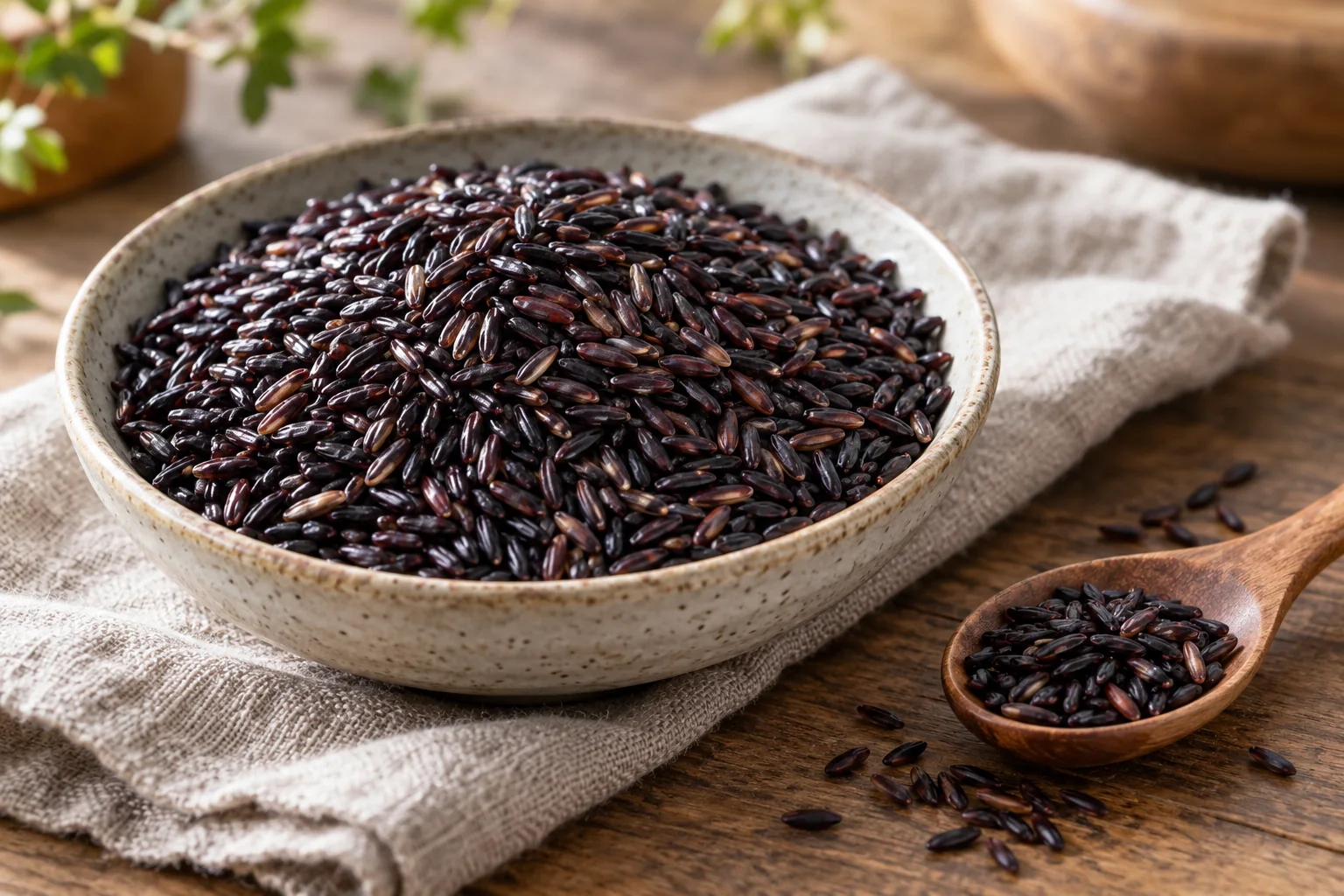
1. Identify the Chinese black rice you are considering
Black rice is a descriptive product name, not a complete cooking specification. Check the variety information supplied by the seller, the processing description and the full ingredient list. Plain Chinese black rice and a prepared mixture may both emphasize black rice while requiring different decisions in the kitchen.
The International Rice Research Institute’s Rice Today magazine discusses pigmented rice as a diverse group of varieties with cultural and breeding importance. That broader context is a reason to ask which rice a product contains rather than treating all dark grains as interchangeable. Source: IRRI’s discussion of pigmented rice.
For Chinese black rice, useful identity details include the named variety when available, whether the grain is sold on its own, and the milling or processing description. If a product name leaves a question open, ask for clarification before choosing a recipe.
A Chinese black rice photograph can help show presentation, but it cannot provide the whole specification. Lighting, serving style and photography can change how a grain looks. Use the label and supplier reply to establish the product you will receive.
Write down a short product identity
- Exact product name and ingredient declaration.
- Variety information supplied for that product.
- Plain grain, rice blend or multi-ingredient congee mixture.
- Processing description and supported preparation method.
- Declared growing origin and identifiable batch information.
This little record prevents a common shopping mistake: saving a cooking method for one grain and later applying it to a different packet because the front images look similar. The full name is a better reference than the photograph alone.
2. Read the Horqin origin reference carefully
Chinese black rice is sold with different origin descriptions. A country-level declaration provides broad context; a region or batch reference can make that context more useful. Keep the growing location separate from the milling, packing and dispatch locations when those details are available.
MAIBAHE’s black rice sourcing page records a May 2026 catalog entry with a Horqin, Inner Mongolia origin and a 450 g retail presentation. The page explicitly treats those details as historical catalog information and asks buyers to confirm the current offer.
That is a useful place to begin an inquiry about Chinese black rice. It is not evidence that a different product, such as a ready-mixed retail congee kit, uses the same origin or recipe. Product-level questions need product-level answers.
Use a simple sequence when reading an origin story. First identify what document the description cites. Next identify which grain or SKU it describes. Then ask how the selected current lot connects to that document. This makes a regional narrative useful without asking it to prove more than it can.
Four origin questions that improve a comparison
- Does the stated location describe where the rice was grown?
- Is the processing or packing location listed separately?
- Which product and catalog date does the description refer to?
- What current information applies to the batch being offered?
These questions also help when comparing a seller’s website with a delivered packet. If the descriptions are different, ask for an explanation. A clearer distinction between growing and packing can resolve an apparent mismatch without requiring a guess.
The origin adds context to the food, while the current specification establishes the purchase. That balance is especially useful for a pantry ingredient that appears both in plain-grain catalogs and in prepared mixtures.
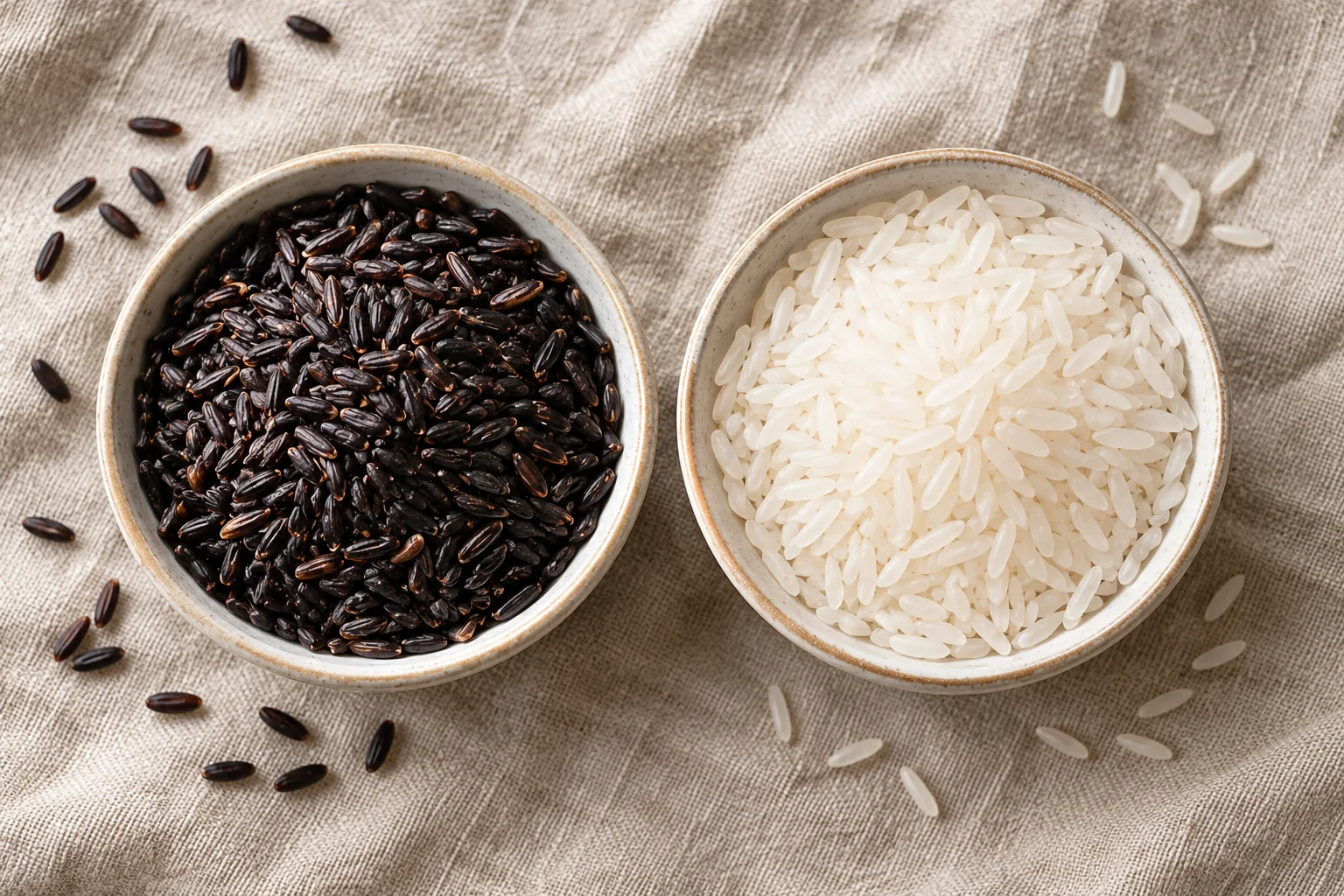
3. Choose plain Chinese black rice or a congee mixture
The right format depends on what you want to cook. Plain Chinese black rice gives you a single grain to prepare according to its directions. A congee mixture combines ingredients into a different product, usually with its own preparation sequence.
Read a mixture from the ingredient list outward. The name on the front may emphasize one grain and one dried ingredient, but the full declaration is what tells you the recipe. Do not infer percentages, allergens or other ingredients from a serving image.
MAIBAHE’s Black Rice & Red Date Congee product page belongs to the retail assortment on maibahe.us. Review its current label and directions if you are choosing that product. The plain-grain sourcing page on maibahe.uk serves a different purchasing discussion.
| Format | Useful for | Main preparation question |
|---|---|---|
| Plain black rice | A dish built around one grain | What method is specified for this rice? |
| Rice blend | A combined grain presentation | How are the different grains prepared together? |
| Congee mixture | A spoonable bowl from several ingredients | What are the full recipe and mixture directions? |
| Wholesale specification | A business’s agreed product format | Which current SKU, pack and documents are included? |
Choose the meal before comparing the Chinese black rice pack. If you want a soft breakfast bowl, look for directions that support that finish. If you want a separate grain component, ask whether the plain rice method suits it. A packet is easier to evaluate when you have a clear intended use.
When moving from plain rice to a congee mixture, begin again with the mixture’s instructions. The presence of Chinese black rice does not make the products equivalent. The other ingredients and proportions belong to the complete preparation.
4. Compare labels, pack quantities and documented claims
Start your Chinese black rice comparison with the current ingredient list, preparation directions, net weight and storage information. Date and batch information can help you ask a precise follow-up question. Keep the product link or a clear label reference with your shopping notes.
For Chinese black rice, a dark color is not evidence of a particular certified nutrition claim. If a claim matters to the purchase, ask which current product information supports it. A general article about pigmented rice does not establish the composition of a specific bag or mixture.
The same distinction applies to organic or other certification wording. Check the document, its validity and its named product scope. A catalog entry or regional reputation cannot substitute for the certificate relevant to the actual SKU.
For a household comparison, place equivalent pack weights beside one another. Compare product price on that basis, then note delivery charges or discounts separately. A small packet with a lower headline price may represent a different quantity from the alternative.
An easy comparison note
Create three columns: product identity, preparation fit and order quantity. Under product identity, write the complete ingredient declaration. Under preparation fit, note the supported equipment and method. Under order quantity, record the net weight and how many packets you plan to use.
This avoids mixing three different decisions into one vague ranking. You may prefer one Chinese black rice presentation for a savory plate and a different mixture for a breakfast routine. The comparison can recognize both preferences without claiming that one product is universally superior.
For business purchasing, use MAIBAHE’s quality documentation page to frame product-specific questions. Ask for the documents relevant to the selected rice and destination rather than collecting a general list with no connection to the order.
5. Plan the first Chinese black rice preparation
Use the current packet directions as the starting method. They should explain the required preparation, supported equipment and quantities. This guide does not assign one cooking time or water ratio to every Chinese black rice variety or mixture.
Read the whole sequence before you begin. Check whether it specifies rinsing, soaking, a particular pan or cooker, and any resting stage. Set out the equipment and measuring tool the method requires. A complete setup makes the first batch easier to observe.
For plain Chinese black rice, prepare a simple first batch before adding a complicated finish. For a mixture, follow the supplied combined method. Starting simply lets you distinguish the grain’s preparation result from the effect of additional ingredients.
Keep observations tied to the actual product
Record the dry quantity, liquid quantity, equipment and preparation sequence. Then describe the finished texture in ordinary terms: spoonable, separate, firm or soft. Those notes are useful when you ask a product question or decide what meal the grain suits.
If the result differs from the directions, provide the seller with the exact product and your observations. Avoid combining several unrelated recipes before establishing a reliable starting method. Once the method is clear, later adjustments can be made more deliberately.
MAIBAHE’s multigrain porridge guide explains a broader approach to reading a mixture before deciding on texture. It is a helpful companion when Chinese black rice is one ingredient in a prepared assortment.
For a repeated preparation, change one aspect at a time. Keep the same grain and supported method while comparing serving finishes, for example. If you switch the product, create a fresh note rather than silently carrying the earlier observations across.
Keep storage questions connected to the same packet too. The seller’s instructions for dry goods belong with that product. Follow the supplied guidance for the food you have prepared, and ask for clarification where necessary rather than inferring a storage period from the grain name.
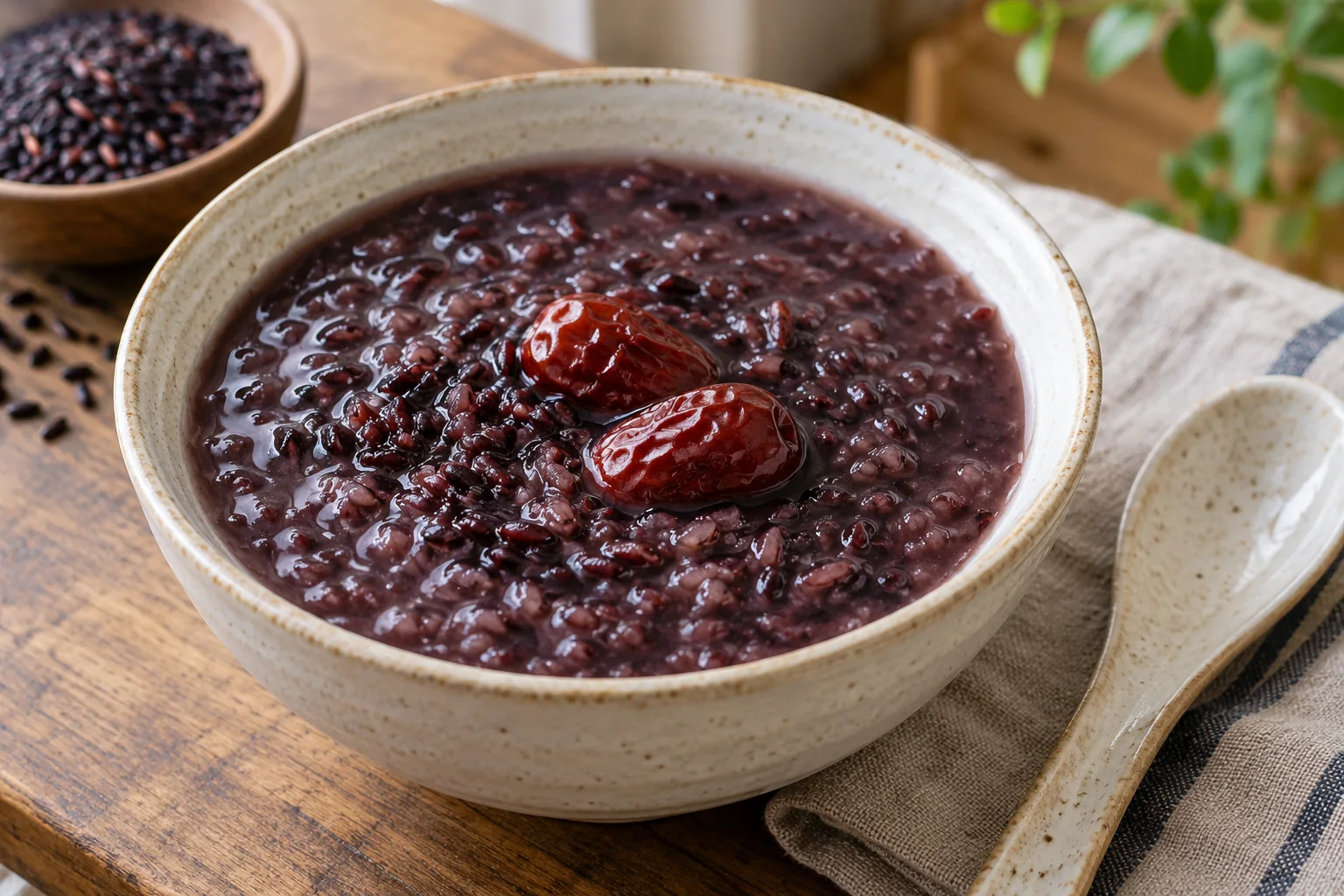
6. Build a serving style around your chosen rice
A grain bowl works best when the preparation and the finish suit each other. Decide whether your Chinese black rice is intended as a separate component or a soft porridge, then choose additions around that texture. Keep the first serving simple enough to adjust.
For a savory idea, pair a supported plain-rice preparation with vegetables and a seasoning you already enjoy. For a breakfast idea, use a product with directions suited to a spoonable bowl, then add a small topping at serving. These are flexible meal ideas rather than tested recipes for a particular SKU.
When using a retail congee kit, begin with its ingredient list before choosing extra additions. A mixture may already contain ingredients that influence the finished bowl. The product name and label should guide the next step rather than the photograph in this article.
Try a two-portion serving comparison
Prepare one batch according to its directions and divide it into two small serving portions. Give each portion a different finish, keeping the base identical. You can then compare what you enjoy without changing the grain, equipment and preparation at the same time.
Write down the more useful combination for your routine. A breakfast preference may differ from a dinner preference. There is no need to force one finish into every meal simply because it worked once.
For more ideas connected to the current retail range, explore MAIBAHE’s serving inspiration. Confirm the actual product directions before applying an idea to your packet.
7. Ask a precise Chinese black rice product question
A short, specific question usually produces a better answer than a broad request for the “best rice.” Name the product, give its link, state your intended meal and identify the detail you need. Separate identity questions from commercial questions.
A household cook might ask whether a product is plain rice or a mixture, and where to find its current preparation directions. A business buyer might ask about a current grain specification, pack format, origin declaration and proposed order quantity.
“Please confirm the ingredient declaration, grain variety or processing description, current growing origin and preparation directions for this black rice product. I plan to use it for [dish]. Does the current offer match the catalog entry linked here?”
Keep the answer attached to the exact product. If the supplier offers another Chinese black rice format, compare that format as a separate option. The relationship between the reply and the SKU makes the information useful on a repeat purchase.
For the congee kit specifically, the MAIBAHE black rice congee buying guide provides a retail-focused next step. For plain-grain sourcing, use the linked .uk product specification.
A Chinese black rice meal-planning example
Imagine that your household wants a rice-based dinner and a separate breakfast option. Your first decision is whether one plain Chinese black rice packet can serve both ideas using supported directions, or whether a congee mixture is a more convenient choice for breakfast. Treat those as two meal questions before comparing prices.
For dinner, describe the texture you need: a grain component served alongside other foods, for example. Check the plain rice’s directions and ask for clarification if they only discuss another finish. For breakfast, read the mixture’s entire ingredient declaration and confirm that its directions fit the equipment you use.
Now compare quantities using the stated net weight. Record how many packets you expect to use for each purpose and keep any delivery discussion separate. This is a practical purchasing plan, not a nutrition comparison between a plain grain and a complete mixture.
When the products arrive, keep their labels and preparation notes apart. A useful record identifies the product, the batch reference, the equipment and the supported method. Describe the result in terms that help the next meal: whether it suited a spoonable bowl, a separate grain component or another preparation described on the packet.
If you enjoy a serving finish, save it as a separate idea. That way, a vegetable pairing can be retained while a later Chinese black rice purchase receives its own preparation check. A change in the grain need not erase the meal idea, but it should prompt a review of the method.
On a repeat order, compare the current product identity with the record you kept. Ask about any changed variety, pack or ingredient declaration before carrying earlier observations into the new purchase. The meal plan remains useful because it follows the actual product.
Chinese black rice: frequently asked questions
Does the name identify one rice variety?
No. Ask for the product’s variety information and processing description when available. Color and a broad product name do not provide a complete preparation specification.
Is MAIBAHE’s Horqin catalog entry the same as the retail congee kit?
The .uk page describes a historical plain-grain entry. The .us congee kit is a separate product with its own current ingredient declaration and directions. This guide does not assume they share an origin or recipe.
Can I cook Chinese black rice using any white-rice method?
Use the instructions for the actual black rice or mixture. Do not transfer an unrelated method without checking that it suits the product and equipment.
Does a darker grain prove a particular nutrition claim?
No. Product-specific claims need relevant information for that product. Use the current nutrition declaration and supporting documentation where a claim matters.
What is the most useful buying decision?
Match Chinese black rice identity, documented origin and preparation directions to the dish you want. Compare equivalent quantities, then ask a precise question about anything the current label leaves unclear.